Menu
Currency
Main
Store
Blog

Loading Report

Preparing your ancestry journey

Connecting to ancient matches...

Preparing your report

Skip to main content
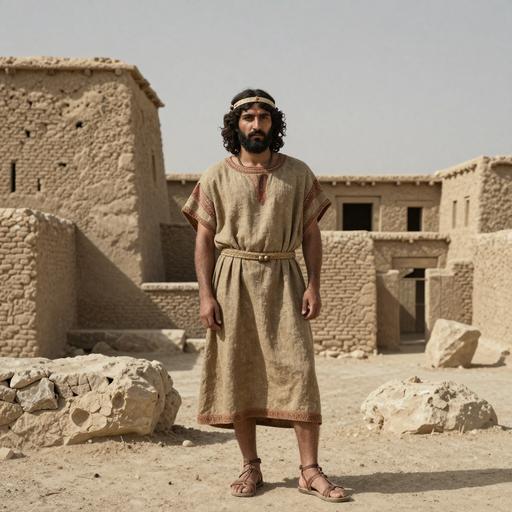
Portrait reconstruction of A man buried in Turkey in the Middle Late Bronze Age era
Ancient Individual

A man buried in Turkey in the Middle Late Bronze Age era

A man buried in Turkey during the Middle to Late Bronze Age Tell Atchana, Turkey

A fragment of the ancient world, preserved across millennia in strands of DNA.

ALA131
2000 BCE - 1200 BCE
Male
Turkey
Scroll to begin
Chapter I

Identity

The biological and cultural markers that define this ancient individual

Sample ID

ALA131

Date Range

2000 BCE - 1200 BCE

Cultural Period

Middle to Late Bronze Age Tell Atchana, Turkey

Biological Sex

Male

mtDNA Haplogroup

K1a4a

Y-DNA Haplogroup

J2a1a1a2b2a

Chapter II

Place

Where this individual was discovered

Country Turkey
Locality Hatay. Tell Atchana (Alalakh)
Coordinates 36.2378, 36.3847
Chapter III

Time

When this individual lived in the broader context of human history

ALA131 2000 BCE - 1200 BCE
Chapter IV

Story

The narrative of this ancient life

Tell Atchana, also known as ancient Alalakh, is an archaeological site located in the Hatay region of modern-day Turkey. It offers a rich tapestry of cultural and historical data from the Middle to Late Bronze Age (circa 1900–1200 BCE) in the Near East. Its excavation has provided significant insights into the social, political, and economic facets of the era.

Historical Background

Tell Atchana was an important urban center in the kingdom of Mukish, playing a crucial role in the network of city-states and empires in the ancient Near East. Alalakh is referenced in various historical texts, including the famous Amarna letters, which highlight its strategic importance and interactions with neighboring states, such as Mitanni, Egypt, and the Hittites. The site's occupation spans several centuries, making it instrumental in understanding the transitions between the Middle and Late Bronze Ages.

Archaeological Findings

Architecture: The site features elaborate palatial structures, which demonstrate advanced architectural techniques and a complex hierarchical society. Key structures include the Royal Palace of the Late Bronze Age with its multiple rooms, throne room, and administrative areas. The construction methods reveal influences and connections with contemporary cultures, particularly those in Mesopotamia and Anatolia.

Artifacts: A wealth of artifacts has been recovered, including pottery, tools, weapons, and luxury goods. The pottery styles show both local and foreign influences, reflecting trade relations and cultural exchanges. Metal objects, especially those made from bronze, underscore the technological advancements of the period.

Tablets and Writing: Among the most significant finds are the cuneiform tablets, which provide a glimpse into the administrative and economic workings of the city. They include legal texts, trade agreements, and diplomatic correspondence, offering invaluable insights into the bureaucratic sophistication and literacy levels of the time.

Economy and Trade

Tell Atchana was a hub of economic activity, facilitated by its location along key trade routes. The economy was bolstered by agriculture, animal husbandry, and the production of goods like textiles. Furthermore, the site was integral in the trade of tin and copper, critical components for bronze-making. This extensive trade network connected Alalakh with regions as far as Egypt, the Aegean, and Mesopotamia.

Society and Culture

The society of Tell Atchana was stratified, with a ruling elite overseeing a diverse population that included merchants, artisans, and farmers. The culture was characterized by a rich tradition of art and craftsmanship, reflected in the intricately designed pottery and metalwork. Religious practices during this period were polytheistic, with various deities worshipped in local temples.

Political Landscape

Tell Atchana's political landscape was marked by its interactions and alliances with surrounding powers. Throughout its history, the city faced numerous sieges and military campaigns, reflecting the turbulent nature of the period. The fluctuating dominance of powers like the Hittites and Mitanni influenced the city's political status and autonomy.

Decline and Legacy

The decline of Tell Atchana coincided with the widespread upheavals around the Late Bronze Age collapse, a time marked by the fall of several major civilizations in the Eastern Mediterranean. Factors contributing to the decline likely included invasions, economic disruptions, and possibly environmental changes.

Despite its eventual downfall, the legacy of Tell Atchana endures through its contributions to our understanding of Bronze Age civilization in the Near East. The findings from Tell Atchana continue to shed light on the complexities of ancient societies and their interconnected worlds.

Context

Related Samples

This individual exists within a broader network of ancient samples. No ancient genome stands alone.

Sample ID Culture/Period Date Location Action
ALA118 Middle to Late Bronze Age Tell Atchana, Turkey 2000 BCE Hatay. Tell Atchana (Alalakh), Turkey View
ALA120 Middle to Late Bronze Age Tell Atchana, Turkey 2000 BCE Hatay. Tell Atchana (Alalakh), Turkey View
ALA123 Middle to Late Bronze Age Tell Atchana, Turkey 2000 BCE Hatay. Tell Atchana (Alalakh), Turkey View
ALA124 Middle to Late Bronze Age Tell Atchana, Turkey 2000 BCE Hatay. Tell Atchana (Alalakh), Turkey View
ALA110 Middle to Late Bronze Age Tell Atchana, Turkey 2000 BCE Hatay. Tell Atchana (Alalakh), Turkey View
ALA128 Middle to Late Bronze Age Tell Atchana, Turkey 2000 BCE Hatay. Tell Atchana (Alalakh), Turkey View
ALA130 Middle to Late Bronze Age Tell Atchana, Turkey 2000 BCE Hatay. Tell Atchana (Alalakh), Turkey View
ALA131 Middle to Late Bronze Age Tell Atchana, Turkey 2000 BCE Hatay. Tell Atchana (Alalakh), Turkey View
ALA135 Middle to Late Bronze Age Tell Atchana, Turkey 2000 BCE Hatay. Tell Atchana (Alalakh), Turkey View
ALA136 Middle to Late Bronze Age Tell Atchana, Turkey 2000 BCE Hatay. Tell Atchana (Alalakh), Turkey View
ALA138 Middle to Late Bronze Age Tell Atchana, Turkey 2000 BCE Hatay. Tell Atchana (Alalakh), Turkey View
Sample ID Culture/Period Date Location Action
ALA118 Middle to Late Bronze Age Tell Atchana, Turkey 2000 BCE Hatay. Tell Atchana (Alalakh), Turkey View
ALA120 Middle to Late Bronze Age Tell Atchana, Turkey 2000 BCE Hatay. Tell Atchana (Alalakh), Turkey View
ALA123 Middle to Late Bronze Age Tell Atchana, Turkey 2000 BCE Hatay. Tell Atchana (Alalakh), Turkey View
ALA124 Middle to Late Bronze Age Tell Atchana, Turkey 2000 BCE Hatay. Tell Atchana (Alalakh), Turkey View
ALA110 Middle to Late Bronze Age Tell Atchana, Turkey 2000 BCE Hatay. Tell Atchana (Alalakh), Turkey View
ALA128 Middle to Late Bronze Age Tell Atchana, Turkey 2000 BCE Hatay. Tell Atchana (Alalakh), Turkey View
ALA130 Middle to Late Bronze Age Tell Atchana, Turkey 2000 BCE Hatay. Tell Atchana (Alalakh), Turkey View
ALA131 Middle to Late Bronze Age Tell Atchana, Turkey 2000 BCE Hatay. Tell Atchana (Alalakh), Turkey View
ALA135 Middle to Late Bronze Age Tell Atchana, Turkey 2000 BCE Hatay. Tell Atchana (Alalakh), Turkey View
ALA136 Middle to Late Bronze Age Tell Atchana, Turkey 2000 BCE Hatay. Tell Atchana (Alalakh), Turkey View
ALA138 Middle to Late Bronze Age Tell Atchana, Turkey 2000 BCE Hatay. Tell Atchana (Alalakh), Turkey View
Sources

References

Scientific publications and genetic data that inform this profile.

Scientific Publication

Human mobility at Tell Atchana (Alalakh), Hatay, Turkey during the 2nd millennium BC: Integration of isotopic and genomic evidence

Authors Ingman T, Eisenmann S, Skourtanioti E, Akar M, Ilgner J et al.
Abstract

The Middle and Late Bronze Age, a period roughly spanning the 2nd millennium BC (ca. 2000-1200 BC) in the Near East, is frequently referred to as the first 'international age', characterized by intense and far-reaching contacts between different entities from the eastern Mediterranean to the Near East and beyond. In a large-scale tandem study of stable isotopes and ancient DNA of individuals excavated at Tell Atchana (Alalakh, located in Hatay, Turkey), we explored the role of mobility at the capital of a regional kingdom, named Mukish during the Late Bronze Age, which spanned the Amuq Valley and some areas beyond. We generated strontium and oxygen isotope data from dental enamel for 53 individuals and 77 individuals, respectively, and added ancient DNA data of 10 newly sequenced individuals to a dataset of 27 individuals published in 2020. Additionally, we improved the DNA coverage of one individual from this 2020 dataset. The DNA data revealed a very homogeneous gene pool. This picture of an overwhelmingly local ancestry was consistent with the evidence of local upbringing in most of the individuals indicated by the isotopic data, where only five were found to be non-local. High levels of contact, trade, and exchange of ideas and goods in the Middle and Late Bronze Ages, therefore, seem not to have translated into high levels of individual mobility detectable at Tell Atchana.

Use code for 25% off Expires Jul 13