Menu
Currency
Main
Store
Blog

Loading Report

Preparing your ancestry journey

Connecting to ancient matches...

Preparing your report

Skip to main content
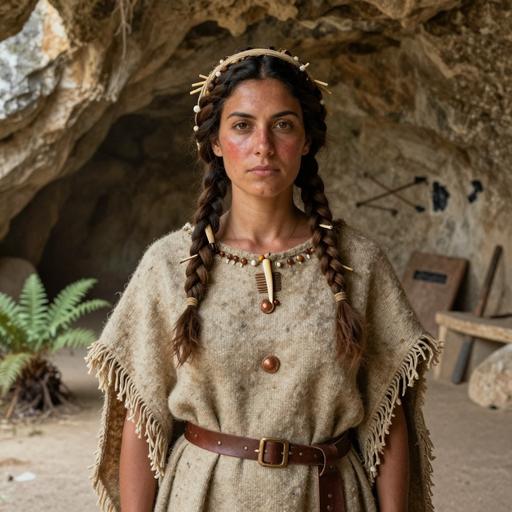
Portrait reconstruction of A woman buried in Spain in the Bronze Age era
Ancient Individual

A woman buried in Spain in the Bronze Age era

A woman buried in Spain during the Bronze Age Spain

A fragment of the ancient world, preserved across millennia in strands of DNA.

ATP9
1863 BCE - 1564 BCE
Female
Spain
Scroll to begin
Chapter I

Identity

The biological and cultural markers that define this ancient individual

Sample ID

ATP9

Date Range

1863 BCE - 1564 BCE

Cultural Period

Bronze Age Spain

Biological Sex

Female

mtDNA Haplogroup

U5b1b

Y-DNA Haplogroup

N/A (Female)

Chapter II

Place

Where this individual was discovered

Country Spain
Locality El Portalon Cave. Sierra de Atapuerca
Coordinates 42.3525, -3.5183
Chapter III

Time

When this individual lived in the broader context of human history

ATP9 1863 BCE - 1564 BCE
Chapter IV

Story

The narrative of this ancient life

The Bronze Age in the Iberian Peninsula, including what is now modern-day Spain, is a fascinating and complex period that roughly spans from 2300 BCE to 700 BCE. This era marks significant advancements in metallurgy, societal structuring, and cultural development, influenced by various interactions between local and foreign cultures.

Geography and Environment

Bronze Age Spain was characterized by diverse geographical zones including the Mediterranean coastal areas, the interior Meseta, the northern mountainous regions, and the western areas along the Atlantic. These diverse landscapes influenced settlement patterns and economic activities, with coastal regions engaging more in trade while inland areas focused on agriculture and metallurgy.

Social Structure and Settlements

Society during this era was predominantly agricultural, with evidence of small, scattered villages and some larger fortified settlements, particularly in southern Spain. The emergence of such settlements suggests a stratified society, likely with chieftains or tribal leaders who controlled local resources and trade. The presence of fortified sites indicates concerns about security and possibly conflicts or rivalries among different groups or tribes.

Economy and Trade

The economy of Bronze Age Spain was primarily based on agriculture, supplemented by hunting and gathering. The introduction of metallurgy, particularly bronze working, was transformative. Copper ore was widespread, and tin, although less abundant, could be sourced or traded for, allowing for the production of bronze tools and weapons. Trade networks extended across the Mediterranean, connecting Iberian communities with those in the eastern Mediterranean, North Africa, and Europe. This trade was facilitated by the region's coastal access, which played a crucial role in the exchange of goods and cultural influences.

Cultural Influences and Developments

Bronze Age Spain was a melting pot of various cultures. Indigenous cultures such as the Los Millares and El Argar in the southeast were integral to the cultural landscape. The Los Millares culture, in particular, is noted for its significant advancements in fortifications and burial practices, while El Argar culture is known for its social stratification and sophisticated metalworking. These cultures developed distinctive pottery styles and burial practices, including tholos tombs and pit graves.

Contact with other Mediterranean cultures such as the Phoenicians and Mycenaeans likely influenced local Iberian cultures, leading to technological advancements and the adoption of new customs and social structures. The Phoenicians, who settled on the southern coast, significantly impacted local cultures through trade and cultural exchange, introducing new technologies and artistic styles.

Religion and Burial Practices

Religious beliefs during the Bronze Age in Spain are inferred from archaeological finds, including sanctuaries and burial sites. There was a variety of burial practices, which included individual and collective tombs. Megalithic structures, such as dolmens and standing stones, remained significant throughout this period. These structures often served as communal burial sites and possibly as territorial markers or places of worship.

Technological Innovations

The major technological advancement of this era was the development and refinement of metallurgy. The ability to create bronze from copper and tin allowed for the production of stronger and more durable tools and weapons, spurring advancements in agriculture, warfare, and craftsmanship. Artifacts such as swords, axes, and jewelry from this period demonstrate high levels of skill and artistry.

Conclusion

Bronze Age Spain was a dynamic and formative period in the history of the Iberian Peninsula, characterized by technological innovation, increasing social complexity, and cultural exchanges. These developments laid the groundwork for the subsequent Iron Age cultures and the eventual Romanization of the region. The archaeological record from this period, consisting of settlements, artifacts, and burial sites, provides valuable insights into the lives of the people who lived in prehistoric Iberia.

Context

Related Samples

This individual exists within a broader network of ancient samples. No ancient genome stands alone.

Sample ID Culture/Period Date Location Action
ATP9 Bronze Age Spain 1863 BCE El Portalon Cave. Sierra de Atapuerca, Spain View
ATP7 Chalcolithic Spain 3345 BCE El Portalon Cave. Sierra de Atapuerca, Spain View
ATP17 Chalcolithic Spain 3008 BCE El Portalon Cave. Sierra de Atapuerca, Spain View
ATP3 Chalcolithic Spain 3516 BCE El Portalon Cave. Sierra de Atapuerca, Spain View
ATP20 Chalcolithic Spain 2291 BCE El Portalon Cave. Sierra de Atapuerca, Spain View
ATP3 3516 BCE El Portalon Cave. Sierra de Atapuerca, Spain View
ATP7 3345 BCE El Portalon Cave. Sierra de Atapuerca, Spain View
ATP9 1863 BCE El Portalon Cave. Sierra de Atapuerca, Spain View
ATP17 3008 BCE El Portalon Cave. Sierra de Atapuerca, Spain View
ATP20 2291 BCE El Portalon Cave. Sierra de Atapuerca, Spain View
Sample ID Culture/Period Date Location Action
esp005 Bronze Age Spain 1600 BCE La Rioja. Cueva de los Lagos, Spain View
ATP9 Bronze Age Spain 1863 BCE El Portalon Cave. Sierra de Atapuerca, Spain View
pir001 Bronze Age Spain 2100 BCE Andalusia. Priego de Córdoba, Spain View
COV20126 Bronze Age Spain 1751 BCE Lucena. Covacha del Angel, Spain View
Sources

References

Scientific publications and genetic data that inform this profile.

Scientific Publication

Ancient genomes link early farmers from Atapuerca in Spain to modern-day Basques

Authors Günther T, Valdiosera C, Malmström H, Ureña I, Rodriguez-Varela R et al.
Abstract

The consequences of the Neolithic transition in Europe--one of the most important cultural changes in human prehistory--is a subject of great interest. However, its effect on prehistoric and modern-day people in Iberia, the westernmost frontier of the European continent, remains unresolved. We present, to our knowledge, the first genome-wide sequence data from eight human remains, dated to between 5,500 and 3,500 years before present, excavated in the El Portalón cave at Sierra de Atapuerca, Spain. We show that these individuals emerged from the same ancestral gene pool as early farmers in other parts of Europe, suggesting that migration was the dominant mode of transferring farming practices throughout western Eurasia. In contrast to central and northern early European farmers, the Chalcolithic El Portalón individuals additionally mixed with local southwestern hunter-gatherers. The proportion of hunter-gatherer-related admixture into early farmers also increased over the course of two millennia. The Chalcolithic El Portalón individuals showed greatest genetic affinity to modern-day Basques, who have long been considered linguistic and genetic isolates linked to the Mesolithic whereas all other European early farmers show greater genetic similarity to modern-day Sardinians. These genetic links suggest that Basques and their language may be linked with the spread of agriculture during the Neolithic. Furthermore, all modern-day Iberian groups except the Basques display distinct admixture with Caucasus/Central Asian and North African groups, possibly related to historical migration events. The El Portalón genomes uncover important pieces of the demographic history of Iberia and Europe and reveal how prehistoric groups relate to modern-day people.

Use code for 25% off Expires Jul 12