Menu
Currency
Main
Store
Blog

Loading Report

Preparing your ancestry journey

Connecting to ancient matches...

Preparing your report

Skip to main content
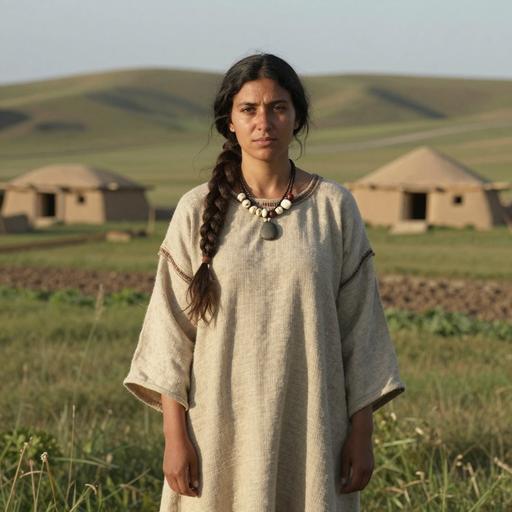
Portrait reconstruction of A woman buried in Turkey in the Neolithic era
Ancient Individual

A woman buried in Turkey in the Neolithic era

A woman buried in Turkey during the Neolithic Turkey

A fragment of the ancient world, preserved across millennia in strands of DNA.

Bar8
6221 BCE - 6021 BCE
Female
Turkey
Scroll to begin
Chapter I

Identity

The biological and cultural markers that define this ancient individual

Sample ID

Bar8

Date Range

6221 BCE - 6021 BCE

Cultural Period

Neolithic Turkey

Biological Sex

Female

mtDNA Haplogroup

J2b1a

Y-DNA Haplogroup

N/A (Female)

Chapter II

Place

Where this individual was discovered

Country Turkey
Locality Northwest Anatolia. Marmara. Barcın
Coordinates 40.3037, 29.6085
Chapter III

Time

When this individual lived in the broader context of human history

Bar8 6221 BCE - 6021 BCE
Chapter IV

Story

The narrative of this ancient life

The Neolithic period in Anatolia, present-day Turkey, represents a transformative era in human history, marked by the shift from nomadic hunter-gatherer societies to settled agricultural communities. This period, spanning from approximately 10,000 to 3,200 BCE, laid the foundations for the rise of civilizations by introducing significant cultural, technological, and social advancements.

Geographic Context

Anatolia, also known as Asia Minor, is a region that presents a diverse range of environments, from fertile plains and river valleys to mountainous regions. This geographic diversity provided a rich array of resources and habitats that facilitated the emergence of early agricultural societies. The climate during the Neolithic was conducive to the domestication of plants and animals, with conditions favorable for mass cultivation.

Cultural and Socio-Economic Developments

  1. Settlement Patterns: Neolithic Anatolia witnessed the birth of permanent settlements, a shift that marked a profound change in human lifestyles. The establishment of villages and proto-cities such as Çatalhöyük and Göbekli Tepe exemplifies this transition. Çatalhöyük, in particular, is one of the largest and best-preserved Neolithic sites, showcasing a densely packed settlement with complex social structures.

  2. Agriculture and Animal Domestication: The era was characterized by the domestication of wheat, barley, and legumes, alongside the herding of animals such as sheep, goats, cattle, and pigs. This agricultural revolution allowed for surplus production, which in turn supported larger populations and the development of complex societies.

  3. Technology and Craftsmanship: Neolithic Anatolian communities developed advanced tool-making techniques, producing polished stone tools and pottery. The introduction of pottery was a significant technological advancement, providing efficient storage solutions for surplus food. Additionally, weaving and textile production began during this period, as evidenced by loom weights and spindle whorls found at archaeological sites.

  4. Religious and Ritualistic Practices: Spiritual and religious practices were central to Neolithic life. Göbekli Tepe, for example, is considered one of the oldest known ceremonial sites in the world, with circular stone structures adorned with intricate carvings of animals and abstract symbols. These sites suggest complex religious beliefs and social practices centered around communal gatherings and rituals.

  5. Social Organization: Neolithic societies in Anatolia were likely organized along lines of kinship and clan affiliation, with evidence of some degree of social stratification emerging. Artifacts such as figurines and burial goods indicate the presence of ritual leaders or revered individuals within these communities.

Art and Symbolism

The Neolithic period in Anatolia saw the flourishing of symbolic expressions and art, including pottery with geometric patterns, wall paintings, and figurines. These artworks often carried spiritual or cultural significance, portraying deities, fertility symbols, and scenes of daily life. The rich iconography discovered at sites such as Çatalhöyük reflects a sophisticated symbolic world that played a key role in community identity and cohesion.

Interactions and Exchanges

Anatolia's position as a crossroads between Asia and Europe facilitated interactions and cultural exchanges with neighboring regions. Such interactions possibly influenced the technological and cultural developments seen within Anatolia, including the dissemination of agricultural practices and technological innovations.

Conclusion

The Neolithic era in Anatolia was a pivotal period that witnessed the transformation of human societies through agricultural innovation, technological advances, and complex social structures. The cultural heritage of Neolithic Turkey is not only significant in understanding the history of the region but also in tracing the broader patterns of human civilization's emergence and development. This era laid the groundwork for the Bronze Age cultures and ultimately the ancient civilizations that would arise in this strategically important region.

Context

Related Samples

This individual exists within a broader network of ancient samples. No ancient genome stands alone.

Sample ID Culture/Period Date Location Action
Klei10 Late Neolithic 2 Greece 4446 BCE Kleitos, Greece View
Pal7 Late Neolithic 2 Greece 4449 BCE Paliambela, Greece View
Rev5 Neolithic Greece 6434 BCE Revenia, Greece View
Bar8 Neolithic Turkey 6221 BCE Northwest Anatolia. Marmara. Barcın, Turkey View
Bar31 Neolithic Turkey 6417 BCE Northwest Anatolia. Marmara. Barcın, Turkey View
Bar31 6417 BCE Northwest Anatolia. Marmara. Barcın, Turkey View
Bar8 6221 BCE Northwest Anatolia. Marmara. Barcın, Turkey View
Klei10 4446 BCE Kleitos, Greece View
Pal7 4449 BCE Paliambela, Greece View
Rev5 6434 BCE Revenia, Greece View
Sample ID Culture/Period Date Location Action
I1100 Neolithic Turkey 6500 BCE Northwest Anatolia. Marmara. Barcın, Turkey View
I1102 Neolithic Turkey 6500 BCE Northwest Anatolia. Marmara. Barcın, Turkey View
I1099 Neolithic Turkey 6500 BCE Northwest Anatolia. Marmara. Barcın, Turkey View
I1103 Neolithic Turkey 6500 BCE Northwest Anatolia. Marmara. Barcın, Turkey View
I1101 Neolithic Turkey 6500 BCE Northwest Anatolia. Marmara. Barcın, Turkey View
I1097 Neolithic Turkey 6420 BCE Northwest Anatolia. Marmara. Barcın, Turkey View
I0744 Neolithic Turkey 6400 BCE Northwest Anatolia. Marmara. Barcın, Turkey View
I1096 Neolithic Turkey 6500 BCE Northwest Anatolia. Marmara. Barcın, Turkey View
I1098 Neolithic Turkey 6419 BCE Northwest Anatolia. Marmara. Barcın, Turkey View
I0708 Neolithic Turkey 6224 BCE Northwest Anatolia. Marmara. Barcın, Turkey View
I0745 Neolithic Turkey 6387 BCE Northwest Anatolia. Marmara. Barcın, Turkey View
I0746 Neolithic Turkey 6070 BCE Northwest Anatolia. Marmara. Barcın, Turkey View
I0707 Neolithic Turkey 6225 BCE Northwest Anatolia. Marmara. Barcın, Turkey View
I0709 Neolithic Turkey 6223 BCE Northwest Anatolia. Marmara. Barcın, Turkey View
I0725 Neolithic Turkey 6400 BCE Menteşe, Turkey View
I0736 Neolithic Turkey 6500 BCE Northwest Anatolia. Marmara. Barcın, Turkey View
I0726 Neolithic Turkey 6400 BCE Menteşe, Turkey View
I11949 Neolithic Turkey 6500 BCE Barcın (Northwest Anatolia. Marmara), Turkey View
I1510 Neolithic Turkey 6150 BCE Ilıpınar (Marmara. Bursa. Orhangazi), Turkey View
I3121 Neolithic Turkey 6150 BCE Ilıpınar (Marmara. Bursa. Orhangazi), Turkey View
I1583 Neolithic Turkey 6424 BCE Northwest Anatolia. Marmara. Barcın, Turkey View
I0723 Neolithic Turkey 6008 BCE Menteşe, Turkey View
I0724 Neolithic Turkey 6400 BCE Menteşe, Turkey View
I0727 Neolithic Turkey 6400 BCE Menteşe, Turkey View
I1580 Neolithic Turkey 6381 BCE Northwest Anatolia. Marmara. Barcın, Turkey View
I1581 Neolithic Turkey 6386 BCE Northwest Anatolia. Marmara. Barcın, Turkey View
I1585 Neolithic Turkey 6217 BCE Northwest Anatolia. Marmara. Barcın, Turkey View
I1579 Neolithic Turkey 6221 BCE Northwest Anatolia. Marmara. Barcın, Turkey View
I0854 Neolithic Turkey 6228 BCE Northwest Anatolia. Marmara. Barcın, Turkey View
Bar8 Neolithic Turkey 6221 BCE Northwest Anatolia. Marmara. Barcın, Turkey View
Bar31 Neolithic Turkey 6417 BCE Northwest Anatolia. Marmara. Barcın, Turkey View
Sources

References

Scientific publications and genetic data that inform this profile.

Scientific Publication

Early farmers from across Europe directly descended from Neolithic Aegeans

Authors Hofmanová Z, Kreutzer S, Hellenthal G, Sell C, Diekmann Y et al.
Abstract

Farming and sedentism first appeared in southwestern Asia during the early Holocene and later spread to neighboring regions, including Europe, along multiple dispersal routes. Conspicuous uncertainties remain about the relative roles of migration, cultural diffusion, and admixture with local foragers in the early Neolithization of Europe. Here we present paleogenomic data for five Neolithic individuals from northern Greece and northwestern Turkey spanning the time and region of the earliest spread of farming into Europe. We use a novel approach to recalibrate raw reads and call genotypes from ancient DNA and observe striking genetic similarity both among Aegean early farmers and with those from across Europe. Our study demonstrates a direct genetic link between Mediterranean and Central European early farmers and those of Greece and Anatolia, extending the European Neolithic migratory chain all the way back to southwestern Asia.

Use code for 25% off Expires Jul 12