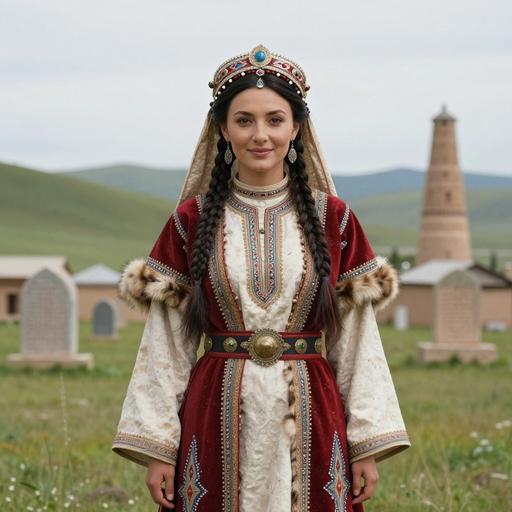
During the medieval period, the region now known as Kyrgyzstan was a vibrant and dynamic landscape influenced by various cultures, empires, and nomadic tribes. This era saw the rise and fall of several significant historical entities and was profoundly affected by the movements and interactions of Turkic nomadic groups. Here is a detailed exploration of the era and culture of medieval Kyrgyzstan, with a focus on the Chüy Valley, the Burana Tower, and the impact of the Black Death.
Turkic Nomadic Culture
Social Structure and Lifestyle
Nomadism: The people of medieval Kyrgyzstan primarily followed a nomadic lifestyle, moving with their herds across the steppes and mountains. This mobility was essential for their survival, allowing them to utilize various resources throughout different seasons.
Tribal Confederations: Society was organized into clans and tribes, often forming larger confederations for mutual protection and cooperation. Leadership was typically hereditary, but strong leaders could rise to prominence through displays of valor, wisdom, and skill.
Economy: The economy was predominantly pastoral, centered on livestock such as sheep, horses, camels, and yaks. Trade played a crucial role as well, with the Silk Road facilitating the exchange of goods such as wool, leather, and textiles for silk, spices, and other luxury items.
Culture and Beliefs: The Turkic nomads had a rich oral tradition, with epics, songs, and poetry being integral to their culture. Shamanistic beliefs coexisted with the gradual spread of Islam, which began to take root in the region during this period.
Influence and Interaction
Silk Road: The Chüy Valley was an integral part of the Silk Road, serving as a bridge between East and West. This brought diverse influences to the region, including cultural, religious, and technological exchanges.
Military Prowess: The Turkic tribes were known for their formidable cavalry, which was both a defensive necessity and an offensive force. Conflicts with neighboring empires, such as the Tang Dynasty and later the Abbasid Caliphate, were common.
Chüy Valley and the Burana Tower
The Chüy Valley, located in the northern part of Kyrgyzstan, was a significant hub during the medieval period. It was dotted with various settlements and cities that facilitated trade and cultural exchange.
Burana Tower: The most iconic remnant of this era in the Chüy Valley is the Burana Tower, which stands near the ruins of the ancient city of Balasagun. The tower is believed to be a minaret for a mosque and is part of a larger complex that once included a cemetery, castle, and various burial mounds.
Balasagun: Founded by the Sogdians and later serving as a capital for the Karakhanid Khanate, Balasagun was a crucial city that illustrated the syncretism of the period—merging Turkic, Persian, and Islamic influences.
The Impact of the Black Death
During the 14th century, the Black Death swept through Asia, Europe, and Africa, leaving a profound impact on the populations it touched. While the historical documentation of the plague's effects in Central Asian regions like Kyrgyzstan is sparse, the consequences would have been significant.
Demographic Shifts: As with elsewhere, it likely led to severe population declines, disrupting the social and economic fabric of the Turkic nomads.
Economic Consequences: The decrease in population would have affected the pastoral economy and trade along the Silk Road, leading to periods of stagnation and economic transformation.
Cultural and Religious Shifts: In the aftermath of the plague, religious and cultural attitudes may have shifted, potentially accelerating the region's Islamic assimilation as communities sought solace and meaning in spiritual matters.
Legacy
The medieval period laid the foundations for the rich tapestry of cultures seen in Kyrgyzstan today. The resilience and adaptability of the Turkic nomadic tribes, the integration of diverse cultural elements, and the strategic importance of trade routes like the Silk Road continue to influence the region's identity and historical narrative. The Burana Tower remains a testament to this era's architectural and cultural achievements, symbolizing a time of significant change and interaction in Central Asia's heart.