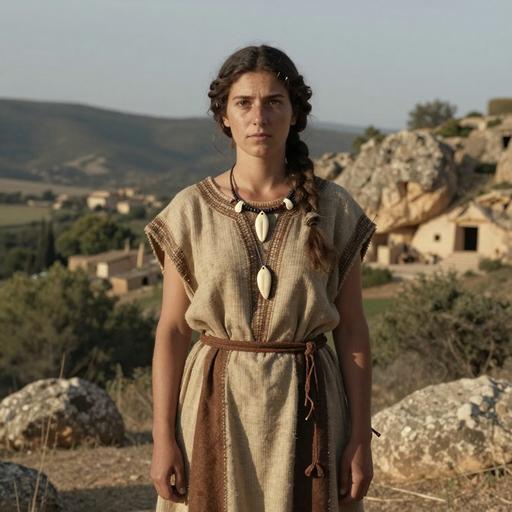
The Early Neolithic period in Spain marks a significant era in the prehistory of Western Europe, characterized by profound socio-economic changes brought about by the advent of agriculture and sedentism. This period, generally placed between 6000 and 4500 BCE, saw the transition from hunter-gatherer societies to more settled farming communities, fundamentally altering the landscape, societal structures, and cultural practices in the region.
Geography and Settlement
During the Early Neolithic, Spain's geography played a crucial role in shaping human settlement and development. The region is characterized by diverse landscapes, including coastal areas, mountainous zones, and rich river valleys, such as those of the Ebro, the Tagus, and the Guadalquivir. Early Neolithic communities often established themselves in fertile areas conducive to agriculture, which led to the development of permanent or semi-permanent villages. These villages typically consisted of small clusters of rectangular or oval-shaped dwellings made from perishable materials like wood, clay, and reeds.
Agriculture and Economy
The introduction of agriculture is one of the defining features of the Neolithic period in Spain. Early Neolithic communities cultivated a variety of crops, including einkorn and emmer wheat, barley, peas, lentils, and flax. This agricultural practice marked a departure from the Mesolithic reliance on hunting, gathering, and foraging, leading to increased food production and surplus storage.
Animal domestication was also pivotal, with cattle, sheep, goats, and pigs being integral to Neolithic life. These animals provided not only meat but also secondary products such as milk, wool, and labor for plowing fields. The shift to agricultural subsistence allowed communities to support larger populations and facilitated the accumulation of goods, setting the stage for economic diversification and complexity.
Tools and Technology
The Early Neolithic era saw advancements in tool technology, reflecting the changing needs of agricultural communities. Stone tools were predominant, with polished stone axes and adzes being essential for land clearance and woodworking. The development of pottery marked another technological leap, with Early Neolithic ceramics typically being simple, round-bottomed vessels used for storage and cooking.
Given the region's varied environment, communities developed specific tools tailored to their local resources and needs, demonstrating early technological innovation and adaptation.
Social Organization and Culture
The establishment of more permanent settlements led to more complex social organizations. Although kinship likely remained a fundamental organizing principle, evidence suggests increasing social differentiation during the Early Neolithic. This can be inferred from burial practices, where grave goods indicate varying levels of status and wealth among individuals.
Cultural expressions during this period include megalithic structures, such as dolmens and passage graves, which were used as communal burial sites. These structures demonstrate advanced architectural skills and may reflect emerging religious beliefs and social hierarchies.
Rock art provides insight into the symbolic and spiritual life of Early Neolithic communities. Notable examples include the Levantine rock art of eastern Spain, which often depicts human figures, animals, and abstract patterns, possibly related to ritualistic and ceremonial practices.
Trade and Interaction
The Early Neolithic period in Spain was also a time of increasing interaction and trade among different communities. Archaeological evidence points to the exchange of goods such as obsidian, flint, and certain types of pottery, indicating extensive trade networks that connected various parts of the Iberian Peninsula and beyond. This exchange facilitated not only the movement of goods but also ideas, technologies, and cultural practices.
Environmental Impact
The transition to agriculture had a profound environmental impact. Deforestation for fields and settlements led to soil erosion and changes in local ecosystems. However, Neolithic communities also managed and manipulated their landscapes, developing early forms of land management that would influence the agricultural practices of future generations.
Conclusion
The Early Neolithic era in Spain was a transformative period that laid the foundations for subsequent cultural and societal developments. It was characterized by the rise of agriculture, the development of new technologies, and the emergence of complex social structures. These changes had long-lasting impacts on the Iberian Peninsula and contributed significantly to the broader story of human civilization in Western Europe.