Menu
Currency
Main
Store
Blog

Loading Report

Preparing your ancestry journey

Connecting to ancient matches...

Preparing your report

Skip to main content
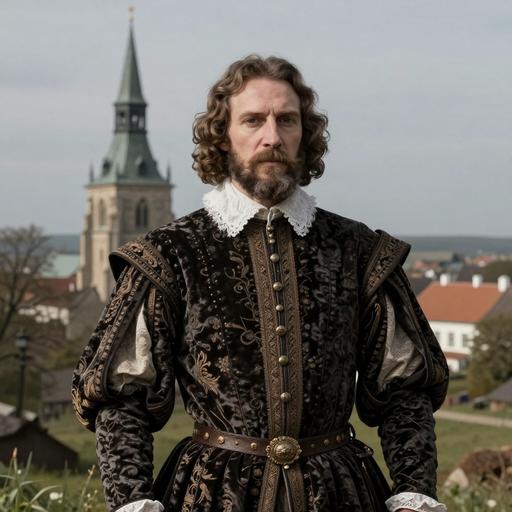
Portrait reconstruction of A man buried in Denmark in the Post-Medieval era
Ancient Individual

A man buried in Denmark in the Post-Medieval era

A man buried in Denmark during the Danish Post-Medieval

A fragment of the ancient world, preserved across millennia in strands of DNA.

CGG100454
1536 CE - 1806 CE
Male
Denmark
Scroll to begin
Chapter I

Identity

The biological and cultural markers that define this ancient individual

Sample ID

CGG100454

Date Range

1536 CE - 1806 CE

Cultural Period

Danish Post-Medieval

Biological Sex

Male

mtDNA Haplogroup

U4a3a

Y-DNA Haplogroup

R1b1a

Chapter II

Place

Where this individual was discovered

Country Denmark
Locality Vor Frue Kirkegård (Aalborg)
Coordinates 57.0500, 9.9200
Chapter III

Time

When this individual lived in the broader context of human history

CGG100454 1536 CE - 1806 CE
Chapter IV

Story

The narrative of this ancient life

The Danish Post-Medieval era is characterized by a fusion of cultural, political, and economic transitions that occurred in Denmark from the late 16th century through the 18th century. This period, often overlapped with the Renaissance and the early modern period, was marked by significant transformations that set the stage for modern Danish society. Below is a detailed overview of the era's culture, politics, economy, society, and more.

Historical Context

The Post-Medieval era in Denmark begins roughly with the end of the medieval period and spans through the Renaissance, the Reformation, and into the Age of Enlightenment. It includes the reigns of notable monarchs such as Christian IV, who ruled from 1588-1648, and marks a period of transition from the medieval feudal system to a more centralized and bureaucratically organized state.

Politics and Governance

  1. Monarchical Power: The period is characterized by the consolidation of power by the Danish monarchy. Kings like Christian IV played crucial roles in strengthening the nation's political structure, expanding its territories, and fostering cultural development.

  2. The Kalmar War: Lasting from 1611 to 1613, this conflict with Sweden over control of the Baltic Sea's strategic regions, highlights the era's frequent regional conflicts that shaped Danish foreign policy and military endeavors.

  3. The move towards Absolute Monarchy: By the late 17th century, Denmark saw the rise of absolute monarchy, particularly under Frederick III, who established absolute rule in 1660 after a national crisis caused by the disastrous Second Northern War.

Economy

  1. Trade and Exploration: The Danish economy during this period was bolstered by trade, particularly in the Baltic region. The era was marked by Danish attempts to control important trade routes and commodities such as herring, grain, and timber.

  2. Colonial Ventures: Denmark began establishing overseas colonies, including holdings in the West Indies and parts of India, marking Denmark’s participation in the broader European colonial pursuits.

  3. Agricultural Reforms: The period saw modest attempts at agricultural modernization, influenced by new farming techniques and crop rotations that increased productivity.

Society and Culture

  1. Religious Transformation: The Reformation (initiated in the 1530s) deeply influenced Danish society, leading to the establishment of Lutheranism as the state religion. This shift resulted in the closure of monasteries and a restructuring of religious practice and education.

  2. Cultural Flourishing: The Danish Renaissance was marked by a flourishing of arts and culture, heavily influenced by the rest of Europe, with significant advancements in architecture, literature, and science.

  3. Education and Thought: The era saw the foundation of institutions like the University of Copenhagen in 1479, which became pivotal in promoting education and intellectual thought influenced by Humanism.

Arts and Architecture

  1. Renaissance Influences: Danish art and architecture began to show strong influences of the Renaissance, visible in both ecclesiastical and secular buildings. The use of red brick and half-timbered houses became prevalent, and structures like Frederiksborg Castle epitomized Renaissance grandeur.

  2. Literature and Drama: The post-medieval period witnessed the growth of Danish literature, with figures such as Ludvig Holberg laying the groundwork for modern Danish drama and satire.

Key Developments and Legacies

  1. Military and Naval Enhancements: The era saw Denmark's military and naval capacity strengthened, which played a crucial role in the region's power balance throughout the Northern Wars and beyond.

  2. Enlightenment Influence: By the 18th century, Enlightenment ideas began to permeate Danish thought, contributing to liberal reforms and laying groundwork for future democratic developments.

  3. Transition to Modernity: This period acted as a bridge from medieval structures and ideas to modern statehood and society, fostering a unique blend of tradition and progress that continued to shape Danish identity.

The Danish Post-Medieval era is a rich tapestry of change and continuity, marked by a keen adaptation of new ideas while preserving essential aspects of national identity. Its multifaceted developments in governance, exploration, arts, and science laid a foundation for Denmark's evolution into the modern age.

Context

Related Samples

This individual exists within a broader network of ancient samples. No ancient genome stands alone.

Sample ID Culture/Period Date Location Action
CGG100317 Danish Post-Medieval 1536 CE Vor Frue Kirkegård (Aalborg), Denmark View
CGG100336 Danish Post-Medieval 1536 CE Vor Frue Kirkegård (Aalborg), Denmark View
CGG100341 Danish Post-Medieval 1536 CE Vor Frue Kirkegård (Aalborg), Denmark View
CGG100415 Medieval Danish 1400 CE Vor Frue Kirkegård (Aalborg), Denmark View
CGG100431 Danish Post-Medieval 1700 CE Vor Frue Kirkegård (Aalborg), Denmark View
CGG100434 Danish Post-Medieval 1600 CE Vor Frue Kirkegård (Aalborg), Denmark View
CGG100441 Medieval Danish 1200 CE Vor Frue Kirkegård (Aalborg), Denmark View
CGG100442 Medieval Danish 1300 CE Vor Frue Kirkegård (Aalborg), Denmark View
CGG100445 Danish Post-Medieval 1500 CE Vor Frue Kirkegård (Aalborg), Denmark View
CGG100447 Danish Post-Medieval 1700 CE Vor Frue Kirkegård (Aalborg), Denmark View
CGG100451 Danish Post-Medieval 1700 CE Vor Frue Kirkegård (Aalborg), Denmark View
CGG100452 Danish Post-Medieval 1700 CE Vor Frue Kirkegård (Aalborg), Denmark View
CGG100453 Danish Post-Medieval 1536 CE Vor Frue Kirkegård (Aalborg), Denmark View
CGG100454 Danish Post-Medieval 1536 CE Vor Frue Kirkegård (Aalborg), Denmark View
CGG100456 Danish Post-Medieval 1700 CE Vor Frue Kirkegård (Aalborg), Denmark View
CGG100460 Danish Post-Medieval 1536 CE Vor Frue Kirkegård (Aalborg), Denmark View
CGG100472 Danish Post-Medieval 1536 CE Vor Frue Kirkegård (Aalborg), Denmark View
CGG100481 Medieval Danish 1400 CE Vor Frue Kirkegård (Aalborg), Denmark View
CGG100492 Medieval Danish 1000 CE Vor Frue Kirkegård (Aalborg), Denmark View
CGG100493 Medieval Danish 1275 CE Vor Frue Kirkegård (Aalborg), Denmark View
CGG100497 Medieval Danish 1200 CE Vor Frue Kirkegård (Aalborg), Denmark View
CGG100498 Medieval Danish 1400 CE Vor Frue Kirkegård (Aalborg), Denmark View
CGG100501 Medieval Danish 1043 CE Vor Frue Kirkegård (Aalborg), Denmark View
CGG100507 Medieval Danish 1000 CE Vor Frue Kirkegård (Aalborg), Denmark View
CGG100510 Medieval Danish 1000 CE Vor Frue Kirkegård (Aalborg), Denmark View
CGG100512 Medieval Danish 1280 CE Vor Frue Kirkegård (Aalborg), Denmark View
CGG100513 Medieval Danish 1275 CE Vor Frue Kirkegård (Aalborg), Denmark View
CGG100519 Danish Post-Medieval 1536 CE Vor Frue Kirkegård (Aalborg), Denmark View
CGG100530 Danish Post-Medieval 1536 CE Vor Frue Kirkegård (Aalborg), Denmark View
CGG100535 Danish Post-Medieval 1536 CE Vor Frue Kirkegård (Aalborg), Denmark View
CGG100539 Medieval Danish 1275 CE Vor Frue Kirkegård (Aalborg), Denmark View
CGG100545 Medieval Danish 1275 CE Vor Frue Kirkegård (Aalborg), Denmark View
CGG100651 Medieval Danish 1300 CE Tjærby (Randers Municipality), Denmark View
CGG100653 Medieval Danish 1000 CE Tjærby (Randers Municipality), Denmark View
CGG100678 Medieval Danish 1300 CE Tjærby (Randers Municipality), Denmark View
CGG100679 Medieval Danish 1300 CE Tjærby (Randers Municipality), Denmark View
CGG100682 Medieval Danish 1300 CE Tjærby (Randers Municipality), Denmark View
CGG100683 Medieval Danish 1000 CE Tjærby (Randers Municipality), Denmark View
CGG100686 Medieval Danish 1000 CE Tjærby (Randers Municipality), Denmark View
CGG100687 Medieval Danish 1000 CE Tjærby (Randers Municipality), Denmark View
CGG100689 Medieval Danish 1300 CE Tjærby (Randers Municipality), Denmark View
CGG100691 Medieval Danish 1300 CE Tjærby (Randers Municipality), Denmark View
CGG100692 Medieval Danish 1000 CE Tjærby (Randers Municipality), Denmark View
CGG100700 Medieval Danish 1300 CE Tjærby (Randers Municipality), Denmark View
CGG100747 Medieval Danish 1000 CE Tjærby (Randers Municipality), Denmark View
CGG100748 Medieval Danish 1000 CE Tjærby (Randers Municipality), Denmark View
CGG100749 Medieval Danish 1300 CE Tjærby (Randers Municipality), Denmark View
CGG100750 Medieval Danish 1000 CE Tjærby (Randers Municipality), Denmark View
CGG100751 Medieval Danish 1300 CE Tjærby (Randers Municipality), Denmark View
CGG100759 Medieval Danish 1300 CE Tjærby (Randers Municipality), Denmark View
CGG100797 Medieval Danish 1300 CE Tjærby (Randers Municipality), Denmark View
CGG100802 Medieval Danish 1300 CE Tjærby (Randers Municipality), Denmark View
CGG100820 Medieval Danish 1300 CE Tjærby (Randers Municipality), Denmark View
CGG100908 Medieval Danish 1300 CE Tjærby (Randers Municipality), Denmark View
CGG100914 Medieval Danish 1350 CE Tjærby (Randers Municipality), Denmark View
CGG100918 Medieval Danish 1000 CE Tjærby (Randers Municipality), Denmark View
CGG100920 Medieval Danish 1300 CE Tjærby (Randers Municipality), Denmark View
CGG100921 Medieval Danish 1000 CE Tjærby (Randers Municipality), Denmark View
CGG100926 Medieval Danish 1000 CE Tjærby (Randers Municipality), Denmark View
CGG100951 Medieval Danish 1000 CE Tjærby (Randers Municipality), Denmark View
CGG101680 Medieval Danish 1300 CE Ahlgade 15-17 (Holbæk), Denmark View
CGG101689 Medieval Danish 1400 CE Ahlgade 15-17 (Holbæk), Denmark View
CGG101691 Medieval Danish 1300 CE Ahlgade 15-17 (Holbæk), Denmark View
CGG101808 Medieval Danish 1350 CE Ahlgade 15-17 (Holbæk), Denmark View
CGG101809 Medieval Danish 1350 CE Ahlgade 15-17 (Holbæk), Denmark View
CGG101811 Medieval Danish 1350 CE Ahlgade 15-17 (Holbæk), Denmark View
CGG101813 Medieval Danish 1300 CE Ahlgade 15-17 (Holbæk), Denmark View
CGG101822 Medieval Danish 1300 CE Ahlgade 15-17 (Holbæk), Denmark View
CGG101825 Medieval Danish 1000 CE Ahlgade 15-17 (Holbæk), Denmark View
CGG101827 Medieval Danish 1350 CE Ahlgade 15-17 (Holbæk), Denmark View
CGG101829 Medieval Danish 1000 CE Ahlgade 15-17 (Holbæk), Denmark View
CGG101833 Medieval Danish 1300 CE Ahlgade 15-17 (Holbæk), Denmark View
CGG101835 Medieval Danish 1350 CE Ahlgade 15-17 (Holbæk), Denmark View
CGG101837 Medieval Danish 1000 CE Ahlgade 15-17 (Holbæk), Denmark View
CGG101838 Medieval Danish 1300 CE Ahlgade 15-17 (Holbæk), Denmark View
CGG101839 Medieval Danish 1300 CE Ahlgade 15-17 (Holbæk), Denmark View
CGG101842 Medieval Danish 1000 CE Ahlgade 15-17 (Holbæk), Denmark View
CGG101843 Medieval Danish 1350 CE Ahlgade 15-17 (Holbæk), Denmark View
CGG101845 Medieval Danish 1350 CE Ahlgade 15-17 (Holbæk), Denmark View
CGG101850 Medieval Danish 1350 CE Ahlgade 15-17 (Holbæk), Denmark View
CGG101854 Medieval Danish 1400 CE Ahlgade 15-17 (Holbæk), Denmark View
CGG101855 Medieval Danish 1000 CE Ahlgade 15-17 (Holbæk), Denmark View
CGG101857 Medieval Danish 1300 CE Ahlgade 15-17 (Holbæk), Denmark View
CGG101864 Medieval Danish 1300 CE Ahlgade 15-17 (Holbæk), Denmark View
CGG101873 Medieval Danish 1000 CE Ahlgade 15-17 (Holbæk), Denmark View
Sample ID Culture/Period Date Location Action
CGG100317 Danish Post-Medieval 1536 CE Vor Frue Kirkegård (Aalborg), Denmark View
CGG100336 Danish Post-Medieval 1536 CE Vor Frue Kirkegård (Aalborg), Denmark View
CGG100341 Danish Post-Medieval 1536 CE Vor Frue Kirkegård (Aalborg), Denmark View
CGG100431 Danish Post-Medieval 1700 CE Vor Frue Kirkegård (Aalborg), Denmark View
CGG100434 Danish Post-Medieval 1600 CE Vor Frue Kirkegård (Aalborg), Denmark View
CGG100445 Danish Post-Medieval 1500 CE Vor Frue Kirkegård (Aalborg), Denmark View
CGG100447 Danish Post-Medieval 1700 CE Vor Frue Kirkegård (Aalborg), Denmark View
CGG100451 Danish Post-Medieval 1700 CE Vor Frue Kirkegård (Aalborg), Denmark View
CGG100452 Danish Post-Medieval 1700 CE Vor Frue Kirkegård (Aalborg), Denmark View
CGG100453 Danish Post-Medieval 1536 CE Vor Frue Kirkegård (Aalborg), Denmark View
CGG100454 Danish Post-Medieval 1536 CE Vor Frue Kirkegård (Aalborg), Denmark View
CGG100456 Danish Post-Medieval 1700 CE Vor Frue Kirkegård (Aalborg), Denmark View
CGG100460 Danish Post-Medieval 1536 CE Vor Frue Kirkegård (Aalborg), Denmark View
CGG100472 Danish Post-Medieval 1536 CE Vor Frue Kirkegård (Aalborg), Denmark View
CGG100519 Danish Post-Medieval 1536 CE Vor Frue Kirkegård (Aalborg), Denmark View
CGG100530 Danish Post-Medieval 1536 CE Vor Frue Kirkegård (Aalborg), Denmark View
CGG100535 Danish Post-Medieval 1536 CE Vor Frue Kirkegård (Aalborg), Denmark View
Sources

References

Scientific publications and genetic data that inform this profile.

Scientific Publication

100 ancient genomes show repeated population turnovers in Neolithic Denmark

Authors Allentoft ME, Sikora M, Fischer A, Sjögren KG, Ingason A et al.
Abstract

Major migration events in Holocene Eurasia have been characterized genetically at broad regional scales1-4. However, insights into the population dynamics in the contact zones are hampered by a lack of ancient genomic data sampled at high spatiotemporal resolution5-7. Here, to address this, we analysed shotgun-sequenced genomes from 100 skeletons spanning 7,300 years of the Mesolithic period, Neolithic period and Early Bronze Age in Denmark and integrated these with proxies for diet (13C and 15N content), mobility (87Sr/86Sr ratio) and vegetation cover (pollen). We observe that Danish Mesolithic individuals of the Maglemose, Kongemose and Ertebølle cultures form a distinct genetic cluster related to other Western European hunter-gatherers. Despite shifts in material culture they displayed genetic homogeneity from around 10,500 to 5,900 calibrated years before present, when Neolithic farmers with Anatolian-derived ancestry arrived. Although the Neolithic transition was delayed by more than a millennium relative to Central Europe, it was very abrupt and resulted in a population turnover with limited genetic contribution from local hunter-gatherers. The succeeding Neolithic population, associated with the Funnel Beaker culture, persisted for only about 1,000 years before immigrants with eastern Steppe-derived ancestry arrived. This second and equally rapid population replacement gave rise to the Single Grave culture with an ancestry profile more similar to present-day Danes. In our multiproxy dataset, these major demographic events are manifested as parallel shifts in genotype, phenotype, diet and land use.

Use code for 25% off Expires Jul 12