Menu
Currency
Main
Store
Blog

Loading Report

Preparing your ancestry journey

Connecting to ancient matches...

Preparing your report

Skip to main content
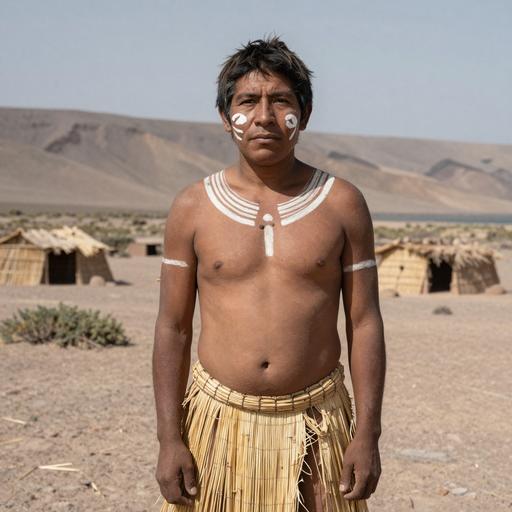
Portrait reconstruction of A man buried in Chile in the Ancient South America era
Ancient Individual

A man buried in Chile in the Ancient South America era

A man buried in Chile during the Late Archaic Chinchorro Culture, Chile

A fragment of the ancient world, preserved across millennia in strands of DNA.

Chinchorroi15
4354 BCE - 4180 BCE
Male
Chile
Scroll to begin
Chapter I

Identity

The biological and cultural markers that define this ancient individual

Sample ID

Chinchorroi15

Date Range

4354 BCE - 4180 BCE

Cultural Period

Late Archaic Chinchorro Culture, Chile

Biological Sex

Male

mtDNA Haplogroup

A2

Y-DNA Haplogroup

CT-M168

Chapter II

Place

Where this individual was discovered

Country Chile
Locality Arica. Maderas. Enco C2
Chapter III

Time

When this individual lived in the broader context of human history

Chinchorroi15 4354 BCE - 4180 BCE
Chapter IV

Story

The narrative of this ancient life

The Chinchorro culture is one of the most fascinating prehistoric cultures of the Andean regions, particularly known for its unique mortuary practices. Emerging around 7000 BCE and flourishing until approximately 1500 BCE, the Chinchorro people inhabited the coastal areas of what is today northern Chile and southern Peru. The Late Archaic period of the Chinchorro culture, which roughly spans from 3000 BCE to 1500 BCE, marks a significant phase characterized by notable advancements in their societal and cultural practices.

Geography and Environment

The Chinchorro culture was predominantly based along the Atacama Desert coast, one of the driest regions in the world. The environment posed significant challenges due to its aridness, but the coastal location provided access to a rich marine ecosystem. The Humboldt Current facilitated a diverse marine life, supplying an abundance of fish, shellfish, and sea mammals, which became the cornerstone of Chinchorro subsistence.

Subsistence and Economy

The Chinchorro were expert fishermen and gatherers, predominantly relying on marine resources for their sustenance. They developed sophisticated fishing and gathering techniques, utilizing hooks made from shell and bone, nets fashioned from plant fibers, and harpoons to capture marine life. Their diet was rich in protein and was supplemented by terrestrial resources such as small game, birds, and edible plants like cacti and algarrobo pods.

Social Structure

While specific details about their social hierarchy remain elusive, the presence of complex burial practices suggests that the Chinchorro society might have had some form of social organization. The community likely consisted of small, semi-nomadic bands with kinship structures that facilitated cooperation in fishing, gathering, and sharing resources.

Chinchorro Mummification Practices

The most distinctive feature of Chinchorro culture is their advanced mummification techniques, which predate the Egyptian mummies by about 2,000 years. The Chinchorro developed three primary types of mummification practices: the Black mummies, the Red mummies, and the Mud-Coated or Bandage mummies.

  1. Black Mummies (5000–3000 BCE): The earliest type involved removing the flesh from the dead, treating the bones with clay, and reinforcing the structure with sticks. The skin was then reattached, and the body was painted with a manganese-rich black paint.

  2. Red Mummies (2500–2000 BCE): This technique involved an incision to remove the internal organs, which were replaced by plant materials. The skin was reattached after drying. The exterior was painted in a mixture of red ochre.

  3. Mud-Coated Mummies (2000–1500 BCE): In this phase, bodies were treated with a layer of mud, possibly as a more accessible or efficient method of preservation.

These burial practices reflect a sophisticated understanding of the human body and reveal a profound cultural emphasis on ancestor veneration and the afterlife.

Art and Symbolism

Chinchorro art was predominantly functional, with a focus on the decoration of mortuary items and the mummies themselves. The meticulous detail in the mummification process indicates a symbolic or spiritual aspect, though the exact beliefs remain speculative. The creation of masks and wigs for the mummies further emphasizes the cultural importance of appearance in the afterlife.

Legacy and Influence

The Chinchorro culture eventually declined, likely due to environmental changes or integration with other emerging cultures such as the Tiwanaku. However, their unique mummification processes left a lasting legacy in archaeological and anthropological studies. The Chinchorro mummies provide significant insights into prehistoric Andean cultures and have contributed to our understanding of early human settlement and adaptation in extreme environments.

In summary, the Late Archaic Chinchorro culture is a testament to human ingenuity and adaptability. Their advanced mortuary practices not only mark them as pioneers in mummification but also offer a window into a society that deeply valued its ancestors, leaving behind a rich cultural and archaeological heritage that continues to fascinate scholars today.

Context

Related Samples

This individual exists within a broader network of ancient samples. No ancient genome stands alone.

Sample ID Culture/Period Date Location Action
F9 Pre-Columbian Mexico 4000 BCE Sierra Tarahumara, Mexico View
TA6 Modern Peru 2000 CE , Peru View
Bur1 Modern Russia 2000 CE Siberia, Russia View
Bur2 Modern Russia 2000 CE Siberia, Russia View
HU103 Modern Mexico 2000 CE , Mexico View
Kor1 Modern Russia 2000 CE Siberia, Russia View
Kor2 Modern Russia 2000 CE Voyampolka, Russia View
Tsimshian Modern Canada 2000 CE , Canada View
Y2040 Modern Venezuela 2000 CE , Venezuela View
MA577 North Tierra del Fuego Selknam Culture 100 Years Ago 1800 CE Tierra del Fuego. Strait of Magellan, Argentina View
AfontovaGora2 Afontova Gora 2 Site, Russia 15001 BCE Afontova Gora, Russia View
BC25 Pericues Culture, Mexico 1200 CE Piedra Gorda. Las Palmas culture, Mexico View
BC30 Pericues Culture, Mexico 1200 CE Piedra Gorda. Las Palmas culture, Mexico View
BC29 Pericues Culture, Mexico 1200 CE Piedra Gorda. Las Palmas culture, Mexico View
MOM6 Pre-Columbian Mexico 4000 BCE Sierra Tarahumara, Mexico View
BC27 Pericues Culture, Mexico 1200 CE Piedra Gorda. Las Palmas culture, Mexico View
BC23 Pericues Culture, Mexico 1200 CE Piedra Gorda. Las Palmas culture, Mexico View
BC28 Pericues Culture, Mexico 1200 CE Piedra Gorda. Las Palmas culture, Mexico View
AM74 Strait of Magellan Kaweskar Culture, Chile 100 Years Ago 1800 CE Strait of Magellan, Chile View
AM71 Strait of Magellan Kaweskar Culture, Chile 100 Years Ago 1800 CE Strait of Magellan, Chile View
AM66 Strait of Magellan Kaweskar Culture, Chile 100 Years Ago 1800 CE Strait of Magellan, Chile View
AM73 Strait of Magellan Kaweskar Culture, Chile 100 Years Ago 1800 CE Strait of Magellan, Chile View
Chinchorroi15 Late Archaic Chinchorro Culture, Chile 4354 BCE Arica. Maderas. Enco C2, Chile View
AM72 Strait of Magellan Kaweskar Culture, Chile 100 Years Ago 1800 CE Strait of Magellan, Chile View
XVII-B-939 Canada 6,500 Years Ago 4678 BCE Lucy Islands. British Columbia. Chatham Sound, Canada View
MARC1492 Canada 700 Years Ago 1231 CE Old Mission Point. Restigouche River. Atholville. prehistory Tjigog. New Brunswick, Canada View
Enoque65 Hunter-Gatherer Enoque, Brazil 1681 BCE Toca do Enoque Cave. Serra da Capivara. Piaui, Brazil View
MA1 MA1 Hunter-Gatherer, Russia 22621 BCE Mal'ta, Russia View
Yaghan895 Beagle Channel Yamana Culture 100 Years Ago 1800 CE Beagle Channel. Tierra del Fuego, Argentina View
Yaghan894 Beagle Channel Yamana Culture 100 Years Ago 1800 CE Beagle Channel. Tierra del Fuego, Argentina View
Yaghan890 Beagle Channel Yamana Culture 100 Years Ago 1800 CE Beagle Channel. Tierra del Fuego, Argentina View
MA572 North Tierra del Fuego Selknam Culture 100 Years Ago 1800 CE Tierra del Fuego. Strait of Magellan, Argentina View
MA575 North Tierra del Fuego Selknam Culture 100 Years Ago 1800 CE Tierra del Fuego. Strait of Magellan, Argentina View
XVII-B-939 4678 BCE Lucy Islands. British Columbia. Chatham Sound, Canada View
Chinchorroi15 4354 BCE Arica. Maderas. Enco C2, Chile View
Enoque65 1681 BCE Toca do Enoque Cave. Serra da Capivara. Piaui, Brazil View
Yaghan890 1800 CE Beagle Channel. Tierra del Fuego, Argentina View
Yaghan894 1800 CE Beagle Channel. Tierra del Fuego, Argentina View
Yaghan895 1800 CE Beagle Channel. Tierra del Fuego, Argentina View
AM71 1800 CE Strait of Magellan, Chile View
BC23 1200 CE Piedra Gorda. Las Palmas culture, Mexico View
BC25 1200 CE Piedra Gorda. Las Palmas culture, Mexico View
BC27 1200 CE Piedra Gorda. Las Palmas culture, Mexico View
BC28 1200 CE Piedra Gorda. Las Palmas culture, Mexico View
BC29 1200 CE Piedra Gorda. Las Palmas culture, Mexico View
BC30 1200 CE Piedra Gorda. Las Palmas culture, Mexico View
MA572 1800 CE Tierra del Fuego. Strait of Magellan, Argentina View
MA575 1800 CE Tierra del Fuego. Strait of Magellan, Argentina View
MA577 1800 CE Tierra del Fuego. Strait of Magellan, Argentina View
MOM6 4000 BCE Sierra Tarahumara, Mexico View
AM66 1800 CE Strait of Magellan, Chile View
AM72 1800 CE Strait of Magellan, Chile View
AM73 1800 CE Strait of Magellan, Chile View
AM74 1800 CE Strait of Magellan, Chile View
MARC1492 1231 CE Old Mission Point. Restigouche River. Atholville. prehistory Tjigog. New Brunswick, Canada View
Sample ID Culture/Period Date Location Action
Chinchorroi15 Late Archaic Chinchorro Culture, Chile 4354 BCE Arica. Maderas. Enco C2, Chile View
Sources

References

Scientific publications and genetic data that inform this profile.

Scientific Publication

POPULATION GENETICS. Genomic evidence for the Pleistocene and recent population history of Native Americans

Authors Raghavan M, Steinrücken M, Harris K, Schiffels S, Rasmussen S et al.
Abstract

How and when the Americas were populated remains contentious. Using ancient and modern genome-wide data, we found that the ancestors of all present-day Native Americans, including Athabascans and Amerindians, entered the Americas as a single migration wave from Siberia no earlier than 23 thousand years ago (ka) and after no more than an 8000-year isolation period in Beringia. After their arrival to the Americas, ancestral Native Americans diversified into two basal genetic branches around 13 ka, one that is now dispersed across North and South America and the other restricted to North America. Subsequent gene flow resulted in some Native Americans sharing ancestry with present-day East Asians (including Siberians) and, more distantly, Australo-Melanesians. Putative "Paleoamerican" relict populations, including the historical Mexican Pericúes and South American Fuego-Patagonians, are not directly related to modern Australo-Melanesians as suggested by the Paleoamerican Model.