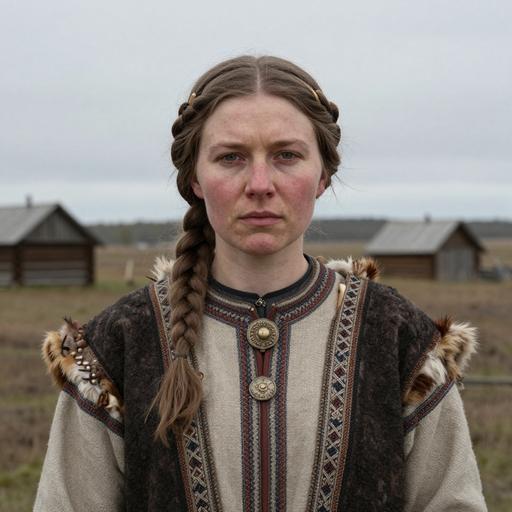
The Chalmny-Varre site is an archaeological location that provides insight into the culture and lifestyle of early Slavic peoples in what is now Russia. Situated in the Arctic region, the site has been crucial for understanding the migration patterns, adaptation strategies, and cultural practices of these early communities. Here's an extensive description of this fascinating era and culture:
Geographical Context
The Chalmny-Varre site is located in the northwestern part of Russia, near the contemporary borders of Norway and Finland. This area is characterized by its harsh Arctic climate, a factor that significantly influenced the lifestyle and cultural practices of its inhabitants. The landscape features a mix of tundra, taiga, and coastal areas, providing a diverse range of resources and challenges for early settlers.
Historical Background
The region saw a blend of influences from various migrating groups, including Finno-Ugric, Scandinavian, and Slavic tribes. The Chalmny-Varre site primarily represents the Slavic cultural sphere during the early medieval period, roughly between the 7th and 11th centuries. This timeframe overlaps with a period of significant sociopolitical transformations in Eastern Europe, including the establishment of early Slavic states and increased interaction with neighboring regions.
Archaeological Discoveries
Excavations at Chalmny-Varre have uncovered a range of artifacts that offer insights into the daily life, economy, and spiritual practices of its inhabitants:
Dwelling Structures: The site features remnants of semi-subterranean houses, which were designed to provide insulation against the harsh climate. These structures were typically made using wood and earth, with central hearths that served as a source of heat and a focal point for domestic activities.
Tools and Implements: A variety of tools, including bone and antler implements, have been discovered. These tools were used for hunting, fishing, and gathering, indicating a semi-nomadic lifestyle that was heavily reliant on the natural environment.
Ceramics and Pottery: Pottery fragments found at the site demonstrate the skill and artistry of the inhabitants. The ceramics often feature intricate designs and were used for both practical and ceremonial purposes.
Textiles and Clothing: Evidence of textile production, including spindle whorls and loom weights, suggests that the inhabitants engaged in weaving and fabric crafting. Clothing would have been essential for survival in the Arctic conditions and may have served as a status symbol within the community.
Burial Practices: The site includes burial grounds with grave goods, providing insights into the spiritual beliefs and social structures of the culture. The orientation and composition of the graves suggest a society that valued ritual and possibly believed in an afterlife.
Cultural Practices
Subsistence Strategies: The inhabitants of Chalmny-Varre adapted to their environment through a mix of hunting, fishing, and gathering. Marine resources, such as seals and fish, were particularly important, supplemented by terrestrial game and plant foraging.
Trade and Interaction: The site indicates that the community was not isolated but participated in broader trade networks. Artifacts such as foreign beads and metal objects suggest exchanges with neighboring cultures, including Viking and Finno-Ugric groups.
Spiritual Beliefs: The community likely practiced animism, attributing spiritual significance to natural elements and animals. Shamanistic rituals might have been conducted to ensure hunting success and community well-being, as suggested by certain ceremonial artifacts.
Social Organization
The social structure at Chalmny-Varre may have been organized around kinship groups, with leadership roles possibly held by elders or individuals with spiritual influence. The presence of grave goods indicates some level of social stratification, with distinctions made based on age, gender, or social role.
Conclusion
The Chalmny-Varre site provides a valuable window into the lives of early Slavic peoples living in the challenging Arctic environment. The study of this site helps reconstruct how these communities adapted to their surroundings, developed their cultural identity, and interacted with neighboring peoples. Overall, Chalmny-Varre represents a fascinating chapter in the prehistory of the Slavic world, highlighting resilience, adaptability, and cultural complexity.