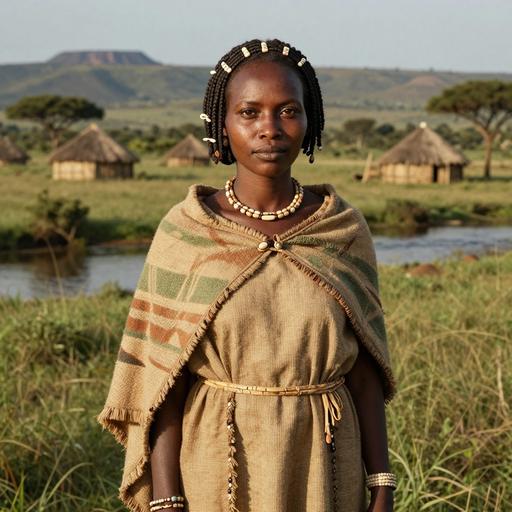
The Late Stone Age (LSA) period in Zambia is a fascinating epoch that marks significant cultural and technological advances, situated between the Middle Stone Age and the advent of more complex Iron Age societies. As an integral part of southern Africa's prehistory, this era is particularly notable for the presence and influence of early Bantu-speaking peoples, who began their migrations across sub-Saharan Africa around this time. The Late Stone Age in Zambia spans roughly from 10,000 BC to about 2,000 years ago and is characterized by notable changes in technology, subsistence strategies, and social organization.
Archaeological Context
The archaeological record in Zambia during the LSA is characterized by microlithic technology—small, flaked stone tools that were often used as composite implements. This period saw a transition from the larger and coarser tools of the Middle Stone Age to more refined, specialized tools, reflecting changes in resource use and adaptation to environmental conditions.
The LSA in Zambia is evidenced by numerous archaeological sites, such as Kalambo Falls and those in the Luangwa Valley, which provide insights into the lives of these prehistoric peoples. These sites often reveal remains such as hearths, stone tool assemblages, faunal remains, and, occasionally, human burials, which offer glimpses into the social and economic activities of the time.
Subsistence and Economy
During the LSA, the inhabitants of Zambia were primarily hunter-gatherers, exploiting a wide range of animal and plant resources. The use of bow and arrow technology is evidenced by the presence of stone microliths thought to be used as arrowheads, highlighting an adaptation towards more efficient hunting methods. Fishing and gathering of wild plants played a vital role in their subsistence strategies, as evidenced by faunal and botanical remains.
These communities showed remarkable adaptability to their environments, which ranged from wet savannas to woodland areas. Seasonal movement likely played a role in their survival, with groups relocating to exploit different resources throughout the year.
Cultural and Social Aspects
The Late Stone Age in Zambia coincides with a rich period of cultural expression. While direct evidence of art is scant compared to places like southern Africa's rock art sites, the presence of beads and other personal ornaments suggests an aesthetic and symbolic dimension to their existence.
Social organization during this time likely consisted of small bands or kin-based groups that practiced egalitarian social structures common among hunter-gatherer societies. The emergence of trade networks, though limited, is suggested by the distribution of certain tool types and raw materials not found locally, indicating some level of interaction between different groups.
The Bantu Migrations
The Bantu migrations, a major series of migrations by the Bantu-speaking peoples, began around 2000-3000 years ago and greatly impacted the cultural landscape of Zambia. While the Late Stone Age itself pre-dates this, the arrival of Bantu groups eventually started to emerge towards the end of the LSA period. These migrations introduced new elements like agriculture, pottery, and iron-working techniques, gradually transforming the local societies.
The encounter between LSA hunter-gatherers and incoming Bantu agriculturalists likely led to a complex process of cultural exchange, assimilation, and sometimes displacement, setting the stage for the Iron Age societies that followed.
Legacy
The Late Stone Age represents a critical period in the human history of Zambia, marked by innovation and adaptation in the face of environmental and social challenges. It laid the groundwork for the profound transformations brought by the Bantu migration and Iron Age developments. The archaeological and cultural heritage of this period continues to provide valuable insights into the resilience and ingenuity of human societies.
Today, the study of this era helps illustrate the long-term patterns of human adaptation and migration that have shaped Zambia's rich cultural mosaic.