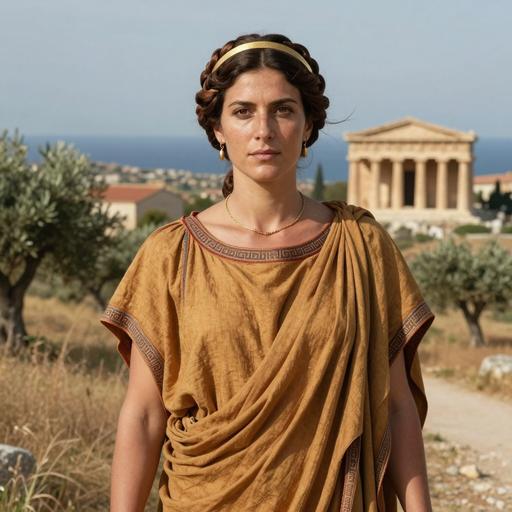
The Sicilian Greek culture, particularly in Himera, is a fascinating blend of Hellenic and indigenous elements, characterized by a rich tapestry of art, architecture, philosophy, and daily life that flourished around the 7th to 5th centuries BCE. Himera was one of the prominent Greek colonies on the island of Sicily, founded around 648 BCE by settlers from the Greek cities of Zancle (modern-day Messina) and Syracuse.
Geographical and Historical Context
Himera was strategically located on the northern coast of Sicily, near the river Himera (modern-day Grande) which provided fertile plains for agriculture and a natural defense. This favorable location made Himera a vibrant commercial hub and a critical point of interaction between the Greek settlers and the native Elymian population, as well as other cultures like the Phoenicians and Carthaginians.
Political Structure
The political structure of Himera, like in many Greek city-states, evolved from oligarchies to tyrannies, and eventually to more democratic forms of government. Initially governed by oligarchic rulers, Himera experienced the rise of tyrants, the most notable being Terillus, who was later deposed, leading to a brief period of democracy. Political life was deeply influenced by military alliances and conflicts, particularly with neighboring Carthage, culminating in significant battles like the Battle of Himera in 480 BCE, which saw a Greek coalition defeating a Carthaginian force.
Economy
The economy of Himera was robust, supported by agriculture, trade, and craftsmanship. The fertile hinterlands facilitated the production of wheat, olives, and vines, essential for both local consumption and trade. Himera's port enabled extensive trade with mainland Greece, other Sicilian cities, and Carthage, exchanging goods like ceramics, oil, and wine.
Cultural and Social Life
Social life in Himera was an amalgamation of Greek customs and local influences. The population was diverse, including Greek settlers, native Sicilians, and Carthaginian traders. This diversity was reflected in the city's social norms, religious practices, and artistic expressions.
Religion and Spiritual Life:
Religion played a crucial role in public and private life. The Greeks in Himera worshipped a pantheon of gods and goddesses, building temples and altars to deities like Zeus, Athena, and Apollo. Excavations have uncovered numerous votive offerings and religious artifacts, testifying to the importance of religious rituals and festivals which often included athletic competitions, theatrical performances, and banquets.
Art and Architecture:
The art and architecture of Himera exhibited a distinctive Greek character while incorporating local elements. Monumental buildings, such as temples and public spaces, were constructed following Greek architectural orders, primarily Doric. Sculptures and pottery from Himera reflect skilled craftsmanship, with artifacts displaying motifs from Greek mythology and daily life, often showcasing a fusion of Greek and indigenous styles.
Philosophy and Education:
Himera contributed to the intellectual life of the Greek world, though to a lesser extent than cities like Athens. Local philosophers and teachers would have engaged in discussions aligned with broader Greek philosophical traditions, focusing on ethics, politics, and the nature of the divine. Education included the study of rhetoric, mathematics, music, and physical training, reflecting the Greek ideal of a well-rounded individual.
Decline and Legacy
Despite its prosperity, Himera's existence was precarious due to external threats. In 409 BCE, the Carthaginians returned, determined to avenge their previous defeat, and successfully sacked the city. This marked the decline of Himera as a significant power; however, its cultural and historical legacy endured.
The contributions of Himera to Greek culture, particularly through its art, architectural innovations, and its role as a cultural intersection, have provided historians and archeologists with invaluable insights into the dynamics of Greek colonization and interaction with indigenous cultures. Today, Himera is recognized not only as a key archaeological site but also as a symbol of cultural synthesis and resilience in the ancient Mediterranean world.