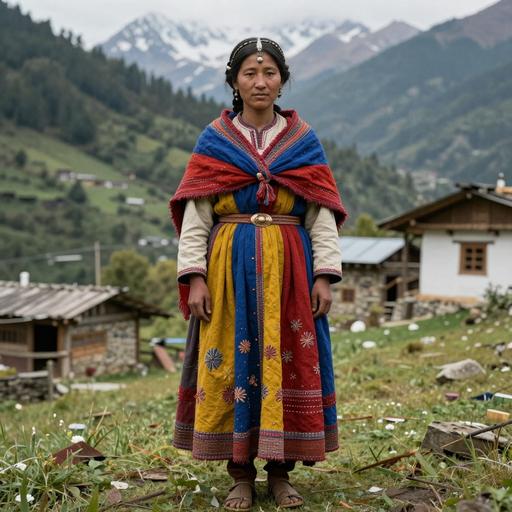
The Roopkund Skeletons B culture refers to one of the intriguing anthropological findings linked to the skeletal remains discovered at Roopkund Lake in Uttarakhand, India. Roopkund, often referred to as the \Skeleton Lake," is a high-altitude glacial lake located in the Himalayas. This site has captivated the curiosity of historians, scientists, and archaeologists due to the hundreds of human skeletons found scattered around and submerged in the lake. The origin, age, and identity of these remains have been subjects of extensive study and debate.
Discovery and Location
Roopkund Lake is situated at an elevation of approximately 5,020 meters (16,470 feet) in the Chamoli district of Uttarakhand. The harsh and rugged terrain, along with the unpredictable weather conditions, makes the lake difficult to access. The skeletal remains were first reported during the 1940s, but various studies have taken place over decades to understand their origin.
Identification of Skeletons
The skeletons are classified into two primary groups based on genetic and isotopic analyses:
Group A, which is composed of individuals with South Asian ancestry, and dates have shown them to be from around the 7th to 10th centuries.
Group B, which has been identified through genetic analysis as possessing distinct Eastern Mediterranean ancestry, with individuals presumed to have died during a single event in the 19th century.
The Culture of Skeletons B
The identification of the Roopkund Skeletons B group is an especially intriguing cultural phenomenon:
Genetic and Geographic Origin: Genetic analyses, specifically of mitochondrial DNA, indicate that the individuals in Skeletons B have a genetic makeup consistent with that of individuals from the Eastern Mediterranean region. This suggests migration, travel, or pilgrimage of people from regions such as Greece or nearby areas toward the Indian subcontinent.
Event and Era: The analysis indicates that the remains are relatively recent, dating back to the 19th century. This is significant as it points toward a fascinating example of cross-cultural interaction during a time when global exploration and cultural exchanges were increasing but still limited by the means of travel and communication of the time.
Potential Purpose: While the exact purpose of their journey remains speculative, theories suggest religious pilgrimage could be a reason. During the 19th century, there was a considerable amount of interest in explorations and religious pilgrimages, possibly linking these individuals to such motives. Roopkund is located on the Nanda Devi Raj Jat route, which is a religious pilgrimage path associated with the goddess Nanda Devi.
Demography: Group B consists of both males and females, which points toward either a traveling group of families or a collective pilgrimage. The absence of any particular occupational markers (like tools or specific artifacts) prevents conclusive deductions about their societal roles.
Archaeological and Scientific Studies
Advanced genetic and radiocarbon testing methods have been applied to these remains to piece together the origins of these individuals. The analyses have illuminated migration patterns and suggested that these individuals lived in relatively temperate climates before their demise in the harsh Himalayan environment.
Cultural Significance and Legacy
The Roopkund Skeletons B culture adds a significant layer to our understanding of 19th-century migration patterns, highlighting the diversity of global populations during this era. The fact that individuals from regions as far as the Mediterranean undertook arduous journeys across the globe to a remote location like Roopkund challenges some prior historical paradigms about travel and the spread of cultural and religious practices.
Current Perspectives
Today, Roopkund Lake remains an active area of study. The unique findings continue to draw interest from both scientific communities and the public, offering insights into past human behavior, migration, and the interconnectedness of ancient cultures. As research progresses with more advanced technology, our understanding of the Roopkund Skeletons B group remains dynamic, evolving with each new discovery.
In conclusion, the Roopkund Skeletons B embodies a mystifying chapter in the historical anthropology of South Asia and provides a crucial insight into the complex tapestry of human history, migration, and interaction during the relatively modern era of the 19th century."