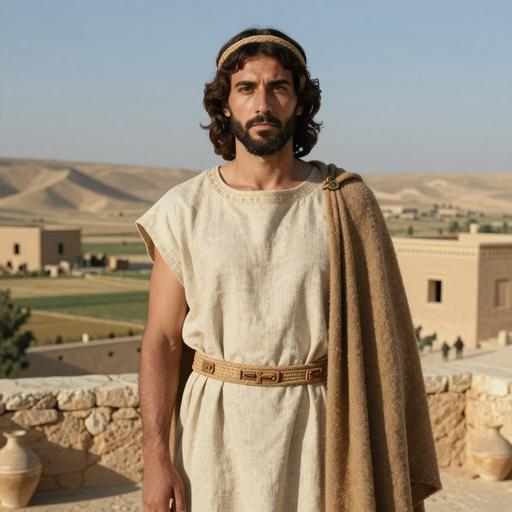
The Bronze Age in the region now known as Israel is a period marked by significant cultural, technological, and political developments, encompassing roughly the span from 3300 to 1200 BCE. This era is generally divided into the Early, Middle, and Late Bronze Ages, each characterized by distinct changes in social organization, trade, and urbanization.
Early Bronze Age (c. 3300–2100 BCE)
Society and Settlements
During the Early Bronze Age, the region saw the development of urban settlements. Agrarian communities began to consolidate into larger townships, paving the way for increased social complexity and stratification. Archaeological evidence points to advancements, such as better fortifications and water management systems, that supported population growth and urbanization.
Economy and Technology
This period marked the beginning of metalworking in the region, with bronze becoming a prominent material used for tools, weapons, and other artifacts. Trade networks expanded significantly, as evidenced by the widespread distribution of pottery and the importation of luxury goods and raw materials like copper and tin, which were essential to making bronze.
Culture and Religion
The religious practices of the Early Bronze Age communities were centered around polytheism, with deities often associated with natural elements and phenomena. Religious structures and temples have been excavated at sites such as Ai and Megiddo, suggesting organized worship and possibly the presence of priestly classes.
Middle Bronze Age (c. 2100–1550 BCE)
Society and Political Structures
The Middle Bronze Age saw the rise of powerful city-states, such as Hazor and Jericho, that exercised influence over surrounding territories. These cities were characterized by formidable fortifications, indicating both the capacity for and the need for defense against invasions or raids.
Economy and Trade
Trade networks became even more extensive during this period, connecting the region to Egypt, Mesopotamia, and Anatolia. The exchange of goods such as textiles, metals, and ceramics helped foster cultural exchanges that influenced local customs and practices.
Culture and Innovations
The Middle Bronze Age is notable for significant advancements in ceramics, as well as architectural innovations, including the development of distinctive Canaanite monumental architecture. Religious practices continued to be polytheistic, with efforts to integrate new deities and rituals likely influenced by increased interactions with neighboring civilizations.
Late Bronze Age (c. 1550–1200 BCE)
Society and Political Dynamics
In the Late Bronze Age, the political landscape was increasingly dominated by Egypt's influence, leading to the incorporation of the region into the Egyptian Empire. This period is marked by vassal city-states administered by local rulers under Egyptian oversight, as detailed in the Amarna Letters, a collection of diplomatic correspondences.
Economy and Trade
Trade reached its peak during the Late Bronze Age, facilitated by both overland routes and burgeoning maritime trade along the eastern Mediterranean. The economy was vibrant, supporting master artisans and facilitating the flow of goods like glass, ivory, and precious metals.
Culture and Religion
The cultural amalgamation and Egyptian suzerainty contributed to a vibrant, though complex, cultural milieu. Art and architecture from this period exhibit Egyptian influences, while local religious traditions persisted and evolved, with some gods like Baal and Asherah remaining prominent.
Collapse and Transition
The end of the Bronze Age was marked by societal collapse around 1200 BCE, evidenced by the destruction of many urban centers. This period of turmoil, often attributed to a combination of natural disasters, internal rebellions, and invasions by Sea Peoples and other groups, led to significant demographic and cultural shifts. As a result, the Iron Age began with new patterns of settlement and socio-political organization that would eventually lead to the emergence of the Israelite civilization and the biblical period.
In summary, Bronze Age Israel was a vibrant and dynamic region characterized by its cities, trade networks, cultural exchanges, and evolving social structures. These developments laid a foundation for the subsequent historical periods, influencing the cultural and historical trajectory of the broader Near East.