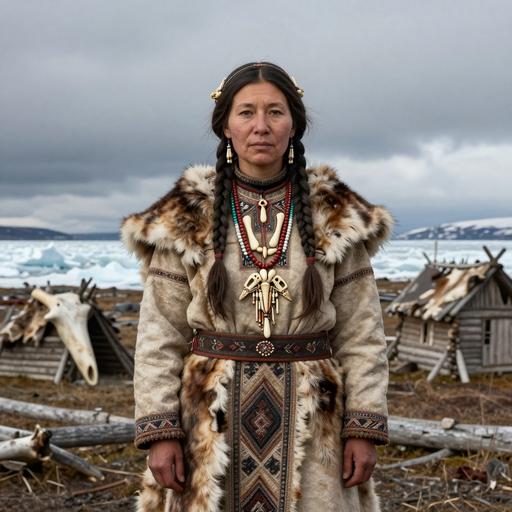
The Old Bering Sea culture is a fascinating prehistoric cultural complex that thrived along the coasts of the Bering Sea, particularly in the regions that are now part of eastern Siberia, including the vicinity of Uelen in Russia. This culture is a significant component of the broader Neoeskimo tradition and played a critical role in the peopling of the Arctic regions.
Overview:
The Old Bering Sea culture is believed to have developed around 2000 BCE and persisted until around 1000 CE. This culture is primarily noted for its unique adaptation to the harsh Arctic environment and its maritime focus. The people were adept at utilizing the Arctic and sub-Arctic seas for their survival, which is evident in their settlement patterns, subsistence strategies, and material culture.
Geographic and Environmental Context:
Uelen is located at the easternmost part of the Chukotka Peninsula, directly across from Alaska, where the Bering Strait separates Asia and North America. This location was strategically significant for the Old Bering Sea culture, as it offered abundant marine resources and served as a critical point for trade and cultural exchange between the Old World and the New World Arctic.
Subsistence and Economy:
The Old Bering Sea peoples were primarily hunter-gatherers and sea mammal hunters. They developed sophisticated technologies for hunting marine mammals, such as seals, walrus, and whales. Harpoon heads, made from ivory or bone, were intricately crafted and are among the most distinctive artifacts of this culture. These tools reflect not only the technological ingenuity but also the aesthetic sensibilities of the Old Bering Sea people.
Fishing and gathering supplemented their diet, alongside some terrestrial hunting of caribou and other available land animals. The Old Bering Sea people were also known to have engaged in limited trade, exchanging goods such as furs, ivory, and crafted artifacts with other Arctic cultures.
Material Culture and Art:
One of the hallmarks of the Old Bering Sea culture is its elaborate and sophisticated art, often carved into ivory artifacts. These decorations featured complex geometric motifs and animal figures, articulated with precision that suggests both spiritual significance and a keen artistic tradition. The art from this culture is considered one of the highest achievements of prehistoric Arctic artisans.
Ivory carvings—not only utilitarian harpoon heads but also ornamental objects—provide insights into their beliefs and social organization. The motifs often have links to symbolic meanings or clan identities.
Social Organization:
The Old Bering Sea culture likely consisted of small, kin-based, semi-nomadic groups that moved seasonally in pursuit of game and marine resources. Social structure would have been influenced by kinship ties, with leadership possibly based on skills in hunting and knowledge of the sea and land.
Housing:
The people of the Old Bering Sea culture lived in semi-subterranean dwellings, designed to maintain heat and provide insulation against the severe Arctic conditions. These structures were primarily constructed using driftwood, whale bones, and sod. The interior would have focused around a central living area, usually with a hearth.
Burial Practices and Spirituality:
Archaeological findings suggest that the Old Bering Sea people had complex burial practices, which included grave goods that reflected the status and role of the individual within the community. The presence of animal carvings and other artifacts in graves indicates the potential belief in a spiritual connection with the animal world, possibly hinting at shamanistic practices.
Interaction and Legacy:
The Old Bering Sea culture is an integral part of the prehistoric Arctic cultural sequence, preceding and influencing subsequent cultures, such as the Punuk and Thule. Its influence is seen in the continuity of artistic styles and technological innovations that were passed down through generations and across the Bering Strait.
In summary, the Old Bering Sea culture represents a highly adaptive and artistically sophisticated society that expertly navigated the challenges of the Arctic environment. Their legacy can be observed in the continuity of cultural practices, artistic expressions, and technological adaptations seen in later Arctic cultures.