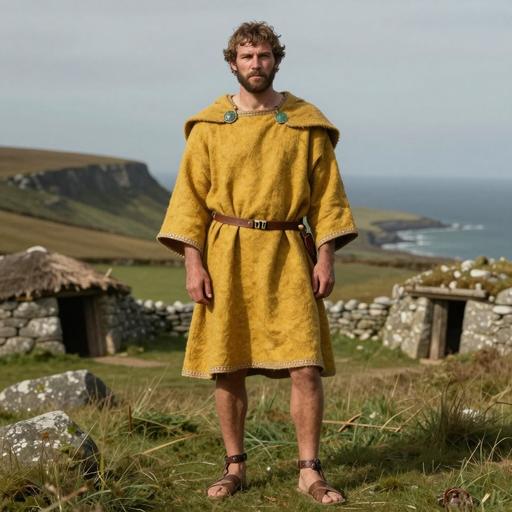
The Early Bronze Age in Northumberland, England, spanning roughly from 2500 to 1500 BCE, is a period marked by significant cultural and technological developments. During this era, the region, known for its rugged landscapes and proximity to the North Sea, became a platform for intermingling influences and innovations. While it is debated whether the people of this time directly identify as \Celtic," they certainly shared cultural traits that would later be more distinctly associated with Celtic societies.
Geography and Environment
Northumberland is characterized by its diverse landscapes, which include rolling hills, moorlands, and river valleys. These geographical features played a crucial role in shaping the lifestyle and habitat of the Early Bronze Age inhabitants. Access to raw materials, such as flint for tool-making and the fertile soil along the river valleys, significantly influenced settlement patterns and agricultural practices.
Archaeological Evidence
The archaeology of Northumberland from the Early Bronze Age reveals a society in transition from nomadic pastoralism to more settled agricultural communities. Settlements during this period were often small and dispersed, consisting of roundhouses and larger communal structures. Excavations have uncovered remnants of these dwellings, showing dome-shaped constructions with timber frames and thatched roofs.
Burial practices provide further insight into this culture. Barrow cemeteries, or burial mounds, are commonly found across the landscape, signifying a society that placed substantial emphasis on funerary rites and ancestor worship. Graves often contain grave goods, including pottery, personal ornaments, and weaponry, suggesting a belief in an afterlife and the importance of status even post-mortem.
Economy and Society
The economy of Early Bronze Age Northumberland was primarily based on mixed farming. The introduction of metalworking—specifically bronze—ushered in a new era of tool and weapon production, enhancing agricultural efficiency and altering social dynamics. The possession and exchange of bronze objects are markers of wealth and social status.
Trade networks expanded during this period, as evidenced by the presence of goods and materials from distant regions. Northumberland's proximity to coastal routes facilitated interactions with communities across the British Isles and mainland Europe. This trade contributed to cultural exchange and technological innovation.
Metalwork and Tools
One of the defining features of the Bronze Age is the advancement in metallurgy. Northumberland saw a transition from stone to metal tools, with bronze becoming predominant for making axes, knives, and other implements. The development of these tools revolutionized agriculture, enabling more efficient land clearing and cultivation.
Artisans crafted intricate metal objects, including jewelry and ceremonial weapons, reflecting skills that suggest significant technological understanding and aesthetics. Such objects often delineated social stratification and possibly functioned within ritual contexts.
Cultural and Spiritual Life
Understanding the spiritual and cultural life of Early Bronze Age communities involves interpreting archaeological finds, such as artifacts and rock art. Stone circles and standing stones, like those found at Duddo, suggest ritualistic practices and community gatherings. These sites likely served as focal points for worship, astronomical observations, or social cohesion ceremonies.
The people of Early Bronze Age Northumberland likely practiced a form of animism, attributing spiritual significance to natural features such as rivers, hills, and stones. This is hinted at by the consistent patterns of settlement and ritual sites in relation to these features.
Conclusion
The Early Bronze Age in Northumberland marked a period of significant transition and development, characterized by technological advances, evolving social structures, and rich cultural practices. While their identity may not have been explicitly "Celtic," the foundations laid during this era set the stage for the later Celtic presence and influence in the region. Through the combined study of archaeological evidence and environmental factors, a vivid picture of this dynamic era emerges, reflecting both local innovation and cross-cultural influences."