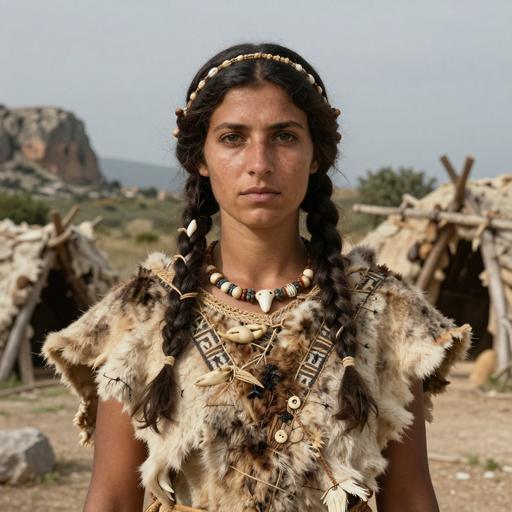
Region & Environment
Sicily offers distinct ecological settings, with coastal zones and interior terrains supporting different resource opportunities. During this Late Upper Paleolithic interval, climatic fluctuations would have altered vegetation, water availability, and animal distributions.
Historical Context
The Epigravettian is a Late Upper Paleolithic technical tradition in parts of Europe, and Sicily preserves its own regional expressions. The period also spans the approach to post-glacial transitions that gradually reshaped lifeways into later Mesolithic patterns.
Populations & Lifeways
Sicilian Epigravettian communities were hunter-gatherers, likely moving seasonally and using both coastal and inland areas as resources became available. Toolkits and site contexts support interpretations of repeated short-term activities rather than large, permanent agricultural settlements.
Archaeology & Material Culture
Archaeology in this era relies heavily on lithic assemblages characteristic of Epigravettian technology. Stone-working debris and tool types provide evidence for how resources were processed and for the planning involved in maintaining workable toolkits suitable for mobility.
Culture & Society
Cultural affiliation is expressed most clearly through shared technological choices in knapping and tool forms. Differences across sites in Sicily may reflect local raw-material procurement and differences in how groups organized hunting and foraging strategies.
Legacy & Transition
As environmental conditions changed toward the end of the Ice Age, hunter-gatherer strategies and toolkits evolved. The Epigravettian record on Sicily forms part of the background for later prehistoric developments that increasingly emphasized Mesolithic adaptations.