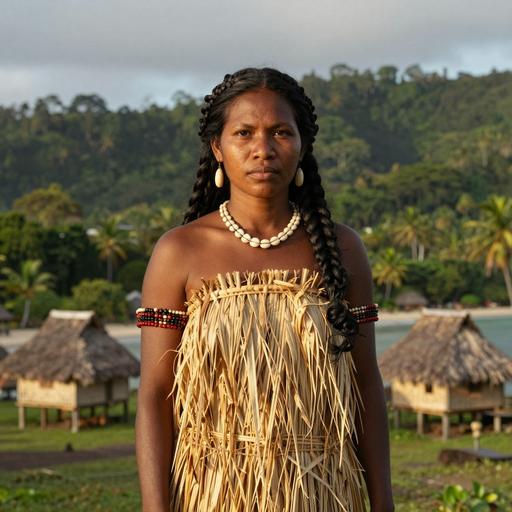
The Solomon Islands, located in the southwestern Pacific Ocean, comprise a double chain of islands that are part of the Melanesian subregion of Oceania. Five hundred years ago, around the early 16th century, the islands were already inhabited by Austronesian peoples who had migrated there thousands of years earlier. These Austronesian settlers played a pivotal role in shaping the culture, society, and history of the region. Below is an extensive and detailed description of the culture and lifestyle of the Solomon Islands around this time:
Social Structure and Organization
- Tribal Communities: The society in the Solomon Islands was organized into tribal communities, each led by a chief or a group of elders who held the authority. These leaders were responsible for maintaining order, settling disputes, and leading the community in ceremonies and during times of conflict.
- Clan System: The population was divided into clans, each tracing their lineage back to a common ancestor. The clan system was significant in social organization, dictating various aspects of life, including marriage, land ownership, and alliances.
- Kinship and Lineage: Kinship ties were crucial in the society, with an emphasis on extended family networks. Both matrilineal and patrilineal systems of descent were practiced, depending on the specific island or community.
Economy and Subsistence
- Agriculture: The people of the Solomon Islands practiced subsistence agriculture. They cultivated root crops such as taro and yams, along with bananas and coconuts. Shifting cultivation was common, involving the rotation of gardens to allow the land to rejuvenate.
- Fishing and Marine Resources: Given the island geography, fishing was a vital part of the diet. Techniques such as netting, trapping, and spearfishing were employed, and communities relied heavily on marine resources.
- Trade and Exchange: There was a network of inter-island trade where goods such as shell money, obsidian, pottery, and foodstuffs were exchanged. These interactions helped to maintain alliances and facilitated cultural exchanges.
Culture and Beliefs
- Religion and Spirituality: Spiritual beliefs were animistic, with reverence for ancestral spirits and natural elements. Rituals and ceremonies were commonplace, conducted to appease spirits or to seek their guidance and protection.
- Art and Craftsmanship: The Solomon Islanders were skilled artisans, known for their woodcarvings, especially in creating intricate canoes and totems. These artworks often had spiritual significance or served as symbols of social status.
- Oral Traditions: Storytelling was a vital part of preserving history and knowledge. Oral traditions, including myths, legends, and songs, were passed down through generations, serving both educational and entertainment purposes.
Housing and Settlement
- Village Life: Settlements were typically coastal or near rivers, composed of small villages. Houses were constructed from local materials such as wood, bamboo, and thatch, built to accommodate the tropical climate.
- Canoe Building: The construction of outrigger canoes was crucial not only for fishing and transport but also for maintaining connections between islands. Canoes were often elaborately decorated and represented a significant technological achievement.
Conflict and Warfare
- Inter-Tribal Warfare: Conflicts between tribes were not uncommon, often due to competition over resources or disputes over territory. Warfare involved raids and battles, and there was a strong warrior ethos among some communities.
- Peaceful Resolutions and Alliances: Diplomacy played a role, with marriages and trade serving as means to establish peace and alliances between tribes.
Environmental Interaction
- Resource Management: While the Solomon Islanders relied heavily on their natural environment, they practiced various sustainable methods to manage and preserve resources, understanding the importance of ecological balance.
- Weather and Navigation: Knowledge of the stars, wind, and ocean currents was essential for navigation, playing a key role in exploration and trade among the islands.
Overall, the cultural landscape of the Solomon Islands 500 years ago was rich and complex. The Austronesian inhabitants had established sophisticated societies characterized by intricate social structures, vibrant cultural practices, and a deep connection with their natural environment. Despite external challenges, these communities demonstrated resilience, adapting to their circumstances while maintaining their unique cultural identity.