Menu
Currency
Main
Store
Blog

Loading Report

Preparing your ancestry journey

Connecting to ancient matches...

Preparing your report

Skip to main content
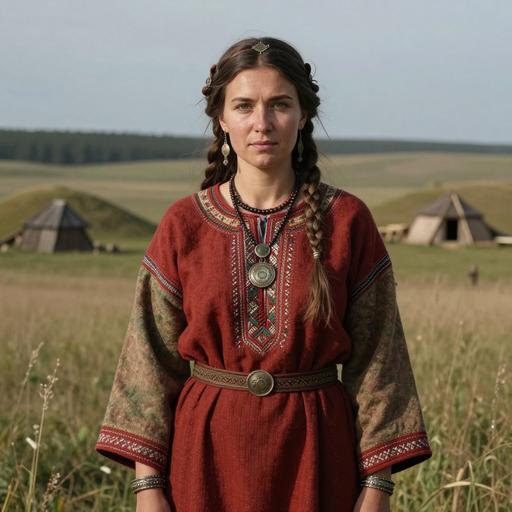
Portrait reconstruction of A woman buried in Ukraine in the Bronze Age era
Ancient Individual

A woman buried in Ukraine in the Bronze Age era

A woman buried in Ukraine during the Late Srubnaya Culture, Ukraine

A fragment of the ancient world, preserved across millennia in strands of DNA.

MJ-08
775 BCE - 486 BCE
Female
Ukraine
Scroll to begin
Chapter I

Identity

The biological and cultural markers that define this ancient individual

Sample ID

MJ-08

Date Range

775 BCE - 486 BCE

Cultural Period

Late Srubnaya Culture, Ukraine

Biological Sex

Female

mtDNA Haplogroup

T2a1b1a

Y-DNA Haplogroup

N/A (Female)

Chapter II

Place

Where this individual was discovered

Country Ukraine
Locality Kumy. Mound 1. burial 2
Coordinates 49.3256, 35.3704
Chapter III

Time

When this individual lived in the broader context of human history

MJ-08 775 BCE - 486 BCE
Chapter IV

Story

The narrative of this ancient life

The Late Srubnaya culture, also known as the Timber-Grave culture, is a significant Bronze Age archaeological culture that emerged around 1900–1200 BCE in the steppes of Eastern Europe, primarily present in what are now parts of Ukraine and Russia. This culture is notably associated with the Late Bronze Age era of the Indo-European speaking peoples and serves as a key contributor to understanding the migration and cultural patterns of that time.

Geographical Distribution

Situated on the Pontic-Caspian steppe, the Late Srubnaya culture primarily spanned the areas of modern-day Ukraine and parts of southern Russia. This region is characterized by its open grasslands, which encouraged both pastoral and agricultural lifestyles.

Cultural Characteristics

Burial Practices

The Srubnaya culture derives its name from its distinctive burial rites. \Srubnaya" translates to "timber-grave," which describes the method of constructing burial sites. Bodies were placed in pits and covered with timber and, occasionally, a mound. These structures served dual roles: protecting the deceased and as symbols or markers of social standing. Over time, the complexity of these timber constructions also reflected technological advancements.

Settlements and Economy

The settlements of the Late Srubnaya culture were predominantly rural, with a heavy reliance on pastoralism. The economy was largely based on cattle farming, supplemented by sheep, goats, and horses. Evidence suggests they might have practiced transhumance, a form of seasonal livestock movement. Agriculture was supplementary and likely involved the cultivation of cereals like barley and wheat.

The economy was supported by metallurgy, particularly the working of bronze, which facilitated the production of tools, weapons, and ornaments. Despite their relative isolation, the Late Srubnaya people engaged in trade, which is evident from the discovery of foreign goods in archaeological sites, indicating trade links with neighboring cultures.

Social Organization

Indo-European societies often exhibited hierarchical social structures, and the Late Srubnaya culture was no exception. The social organization appeared clan-based, with ties of kinship governing community interactions. This is reflected in the burial sites, where distinctions between graves suggest varying social statuses within the community.

Cultural and Religious Aspects

Much of what is known about the spiritual life of the Late Srubnaya people comes from their burial customs and artifacts found within the graves. They likely practiced a form of Indo-European polytheism, with rituals and beliefs centered around a pantheon of natural deities. The inclusion of personal belongings in graves suggests a belief in some form of an afterlife.

Ceramic styles, along with ornamentation and weaponry, provide insight into the aesthetic sensibilities and craftsmanship of the Srubnaya people. They created pottery with simple geometric designs, indicative of the broader artistic currents of the time.

Cultural Influences and Legacy

The Late Srubnaya culture stands as an essential phase in the prehistoric period that marked the transition toward more complex societies and the spread of Indo-European languages. Its influence can be traced in subsequent cultures that inhabited Eastern Europe. Additionally, it represents a link in the chain of Indo-European migrations that shaped European and Asian prehistory.

Interaction with Neighboring Cultures

Throughout its development, the Late Srubnaya culture experienced interactions, both hostile and peaceful, with neighboring cultures such as the Andronovo and the Catacomb cultures. These interactions influenced technological and cultural exchanges, leading to an enriched archeological record.

Archaeological Significance

Archaeologists focus on the study of the Late Srubnaya culture to understand the broader movements and transformations of Indo-European groups. The discoveries related to the Srubnaya culture provide insights into the adaptation strategies of prehistoric societies in response to environmental and socio-political changes.

In conclusion, the Late Srubnaya culture with its timber-grave burial practices, pastoral economy, and Indo-European social structures plays a crucial role in understanding the migration and cultural development of ancient peoples in Eastern Europe. It represents an era of transition characterized by significant socio-economic and technological growth that paved the way for future civilizations in the region."

Context

Related Samples

This individual exists within a broader network of ancient samples. No ancient genome stands alone.

Sample ID Culture/Period Date Location Action
MJ-34 Iron Age Western Scythian Culture, Ukraine 386 BCE Kolomak hillfort. №1842. pit 68. excavation IV, Ukraine View
MJ-12 Cimmerian Culture, Ukraine 990 BCE Cartal III. NW part of the burial ground. plot I. grave 101, Ukraine View
MJ-16 Iron Age Western Scythian Culture, Ukraine 755 BCE Medwin. Group I. mound 6/1, Ukraine View
MJ-13 Iron Age Western Scythian Culture, Ukraine 750 BCE Kup'evaha. Mound 25. burial 1. skeleton 3, Ukraine View
MJ-31 Cimmerian Culture, Ukraine 1284 BCE Dykyi Sad hillfort. "Citadel". Room №7 in the "Citadel, Ukraine View
MJ-19 Chernyakhiv Culture, Ukraine 261 CE Legedzine. Grave 20, Ukraine View
MJ-09 Bronze Age Catacomb Culture, Ukraine 2461 BCE Mamai-Gora. The central sector of the burial. Mound 162. burial 15. skeleton 2, Ukraine View
MJ-46 Iron Age Western Scythian Culture, Ukraine 366 BCE Mamai-Gora. The eastern sector of the burial. Object 165. burial 1, Ukraine View
MJ-06 Early Bronze Age Yamnaya Culture, Ukraine 2865 BCE Kumy. Mound 6. burial 8, Ukraine View
MJ-35 Iron Age Western Scythian Culture, Ukraine 751 BCE Kup'evaha. Mound 25. burial 1. skeleton 1, Ukraine View
MJ-37 Chernyakhiv Culture, Ukraine 248 CE Shyshaky. Grave 112 in the central part of the burial ground, Ukraine View
MJ-08 Late Srubnaya Culture, Ukraine 775 BCE Kumy. Mound 1. burial 2, Ukraine View
MJ-14 Iron Age Western Scythian Culture, Ukraine 778 BCE Medwin. Group I. mound 22/1, Ukraine View
MJ-33 Iron Age Western Scythian Culture, Ukraine 758 BCE Medwin. Group I. mound 18/1, Ukraine View
MJ-47 Iron Age Western Scythian Culture, Ukraine 725 BCE Mamai-Gora. The eastern sector of the burial. Object 175. burial 1, Ukraine View
MJ-36 Chernyakhiv Culture, Ukraine 247 CE Komariv-1. Grave 3, Ukraine View
MJ-44 Middle Sarmatian Culture, Southern Urals, Russia 367 BCE Chumarovo-1. Mound 10. burial 10, Russia View
MJ-41 Early Sarmatian Culture, Southern Urals, Russia 749 BCE Avlasovo. Mound 3. burial 2, Russia View
MJ-42 Eastern Scythian Culture, Southern Urals, Russia 793 BCE Nikolaevka II. Mound 1. burial 2, Russia View
MJ-43 Early Sarmatian Culture, Southern Urals, Russia 413 BCE Sibai-1. Mound 1. burial 1. skeleton 2, Russia View
LS-13 Early Sarmatian Culture, Southern Urals, Russia 481 BCE Novo-Muraptalovo-7. Mound 1. burial 2, Russia View
MJ-56 Early Sarmatian Culture, Southern Urals, Russia 727 BCE Perevolochan-2. Mound 4. burial 3, Russia View
MJ-39 Early Sarmatian Culture, Southern Urals, Russia 387 BCE Ivanovka-1. Mound 5. burial 3, Russia View
MJ-38 Sarmatian Culture, Russia 162 BCE Zolka. Mound 4. burial 30, Russia View
MJ-40 Eastern Scythian Culture, Southern Urals, Russia 396 BCE Manhar-2. Burial 1, Russia View
I3867 Early Iron Age Kazakhstan 750 BCE Almaty. Talgar. Birlik, Kazakhstan View
MJ-51 Saka Culture in Kazakhstan 775 BCE Taldy-2. Mound 4, Kazakhstan View
MJ-52 Tasmola Culture in Kazakhstan 795 BCE Aksu-Ayuly-4. Mound 3, Kazakhstan View
MJ-53 Tasmola Culture in Kazakhstan 393 BCE Nurken-2. Mound 6, Kazakhstan View
MJ-15 Iron Age Western Scythian-Cimmerian Culture, Ukraine 393 BCE Bidylo I. Mound 2. burial 1, Ukraine View
MJ-15-32_merge Scythian Culture 393 BCE Staryi-Merchik-2 (Kharkiv Oblast, Bohodukhiv District, Valkiv municipality), Ukraine View
MJ-15 393 BCE Bidylo I. Mound 2. burial 1, Ukraine View
I3867 750 BCE Almaty. Talgar. Birlik, Kazakhstan View
LS-13 481 BCE Novo-Muraptalovo-7. Mound 1. burial 2, Russia View
MJ-06 2865 BCE Kumy. Mound 6. burial 8, Ukraine View
MJ-08 775 BCE Kumy. Mound 1. burial 2, Ukraine View
MJ-09 2461 BCE Mamai-Gora. The central sector of the burial. Mound 162. burial 15. skeleton 2, Ukraine View
MJ-12 990 BCE Cartal III. NW part of the burial ground. plot I. grave 101, Ukraine View
MJ-13 750 BCE Kup'evaha. Mound 25. burial 1. skeleton 3, Ukraine View
MJ-14 778 BCE Medwin. Group I. mound 22/1, Ukraine View
MJ-15 393 BCE St Merchik. Group II. mound 1. burial 1, Ukraine View
MJ-16 755 BCE Medwin. Group I. mound 6/1, Ukraine View
MJ-19 261 CE Legedzine. Grave 20, Ukraine View
MJ-31 1284 BCE Dykyi Sad hillfort. "Citadel". Room №7 in the "Citadel, Ukraine View
MJ-33 758 BCE Medwin. Group I. mound 18/1, Ukraine View
MJ-34 386 BCE Kolomak hillfort. №1842. pit 68. excavation IV, Ukraine View
MJ-35 751 BCE Kup'evaha. Mound 25. burial 1. skeleton 1, Ukraine View
MJ-36 247 CE Komariv-1. Grave 3, Ukraine View
MJ-37 248 CE Shyshaky. Grave 112 in the central part of the burial ground, Ukraine View
MJ-38 162 BCE Zolka. Mound 4. burial 30, Russia View
MJ-39 387 BCE Ivanovka-1. Mound 5. burial 3, Russia View
MJ-40 396 BCE Manhar-2. Burial 1, Russia View
MJ-41 749 BCE Avlasovo. Mound 3. burial 2, Russia View
MJ-42 793 BCE Nikolaevka II. Mound 1. burial 2, Russia View
MJ-43 413 BCE Sibai-1. Mound 1. burial 1. skeleton 2, Russia View
MJ-44 367 BCE Chumarovo-1. Mound 10. burial 10, Russia View
MJ-46 366 BCE Mamai-Gora. The eastern sector of the burial. Object 165. burial 1, Ukraine View
MJ-47 725 BCE Mamai-Gora. The eastern sector of the burial. Object 175. burial 1, Ukraine View
MJ-51 775 BCE Taldy-2. Mound 4, Kazakhstan View
MJ-52 795 BCE Aksu-Ayuly-4. Mound 3, Kazakhstan View
MJ-53 393 BCE Nurken-2. Mound 6, Kazakhstan View
MJ-56 727 BCE Perevolochan-2. Mound 4. burial 3, Russia View
MJ-15 393 BCE St Merchik. Group II. mound 1. burial 1, Ukraine View
Sample ID Culture/Period Date Location Action
MJ-08 Late Srubnaya Culture, Ukraine 775 BCE Kumy. Mound 1. burial 2, Ukraine View
Sources

References

Scientific publications and genetic data that inform this profile.

Scientific Publication

Shifts in the Genetic Landscape of the Western Eurasian Steppe Associated with the Beginning and End of the Scythian Dominance

Authors Järve M, Saag L, Scheib CL, Pathak AK, Montinaro F et al.
Abstract

The Early Iron Age nomadic Scythians have been described as a confederation of tribes of different origins, based on ancient DNA evidence [1-3]. It is still unclear how much of the Scythian dominance in the Eurasian Steppe was due to movements of people and how much reflected cultural diffusion and elite dominance. We present new whole-genome sequences of 31 ancient Western and Eastern Steppe individuals, including Scythians as well as samples pre- and postdating them, allowing us to set the Scythians in a temporal context (in the Western, i.e., Ponto-Caspian Steppe). We detect an increase of eastern (Altaian) affinity along with a decrease in eastern hunter-gatherer (EHG) ancestry in the Early Iron Age Ponto-Caspian gene pool at the start of the Scythian dominance. On the other hand, samples of the Chernyakhiv culture postdating the Scythians in Ukraine have a significantly higher proportion of Near Eastern ancestry than other samples of this study. Our results agree with the Gothic source of the Chernyakhiv culture and support the hypothesis that the Scythian dominance did involve a demic component.

Use code for 25% off Expires Jul 12