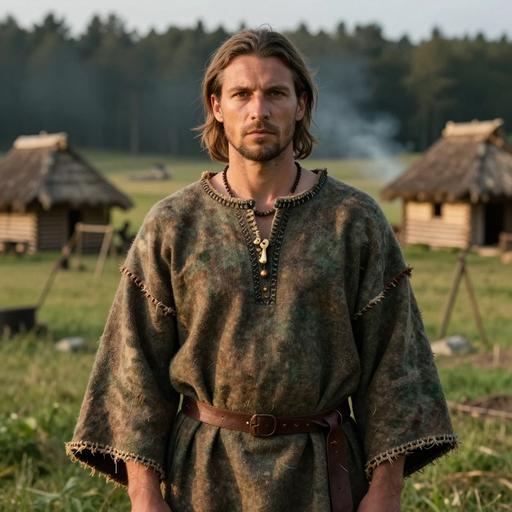
The Mierzanowice culture, part of the broader transitional period from the Neolithic to the Bronze Age in Central Europe, specifically flourished in the territories of modern-day Poland, Czech Republic, and Slovakia. Within this cultural scope, the site of Mokrzec provides an insightful glimpse into the practices, innovations, and daily life of inhabitants during the Early Bronze Age, approximately 2300-1600 BCE.
Geographic and Temporal Context
The Mokrzec site, located in what is now south-eastern Poland, was strategically positioned amidst fertile lands and natural resources. This location facilitated both agricultural development and exchanges with nearby cultures, acting as a crossroad between different cultural influences within the region. The Mierzanowice culture broadly represents a bridge between the more established Funnelbeaker (TRB) culture and the emerging Unetice and Bell Beaker cultures, marking a significant transition in technological and social structure.
Settlements and Architecture
Settlements from the Mierzanowice culture typically feature small, dispersed hamlet-like structures, often consisting of several longhouses made of wood and clay. These settlements were usually situated near water sources, reflecting the community's reliance on agriculture and livestock. Archaeological findings from Mokrzec suggest a stable community structure, with evidence of both individual farmsteads and larger communal buildings, likely used for gatherings or ritual purposes.
Economy and Subsistence
The economy of the Mierzanowice culture in Mokrzec revolved around a mixed farming system. Agriculture was advanced for its time, with the cultivation of crops such as wheat, barley, and legumes, complemented by animal husbandry involving cattle, pigs, sheep, and goats. The inclusion of both domesticated and wild resources in their diet reflects adaptability and an intimate understanding of their environment. There's also evidence to suggest trade in raw materials like flint and other stone tools, which were vital to daily life and local craft industries.
Technology and Craftsmanship
The technological hallmark of the Mierzanowice culture is its development in metallurgy. As part of the Early Bronze Age, Mokrzec inhabitants were among the pioneers in the manufacturing of bronze objects. The Mokrzec site has yielded numerous artifacts, including small tools, ornaments, and weapons, which indicate a sophisticated level of metallurgical knowledge. Pottery from this culture is characterized by specific styles, including variously decorated beakers and bowls, often with incised or impressed motifs demonstrating both practical and decorative craftsmanship.
Social Structure and Burial Practices
The Mierzanowice culture is notable for its complex social structures, as interpreted from its burial practices. Mokrzec, like other sites within this cultural zone, revealed flat cemeteries with graves arranged in a systematic manner, often oriented east-west. Burials frequently include grave goods, such as pottery, tools, and ornaments, which suggest a hierarchical society where status could be achieved or inherited. The presence of children, women, and men with different sets of accompanying grave goods indicates an organized societal structure. Some graves were richer, indicating leadership roles or high-status individuals, while others were simpler, reflecting a stratified social network.
Religion and Symbolism
Although direct evidence of religious practices is sparse, the complexity of burial customs implies a belief system that placed importance on an afterlife. The grave goods, along with the orientation and care apparent in burials, suggest rituals and beliefs concerning life and death. Symbolic decorations on pottery and artifacts may reflect religious or cosmological concepts, intertwining daily life with spiritual beliefs.
Cultural Interactions
The Mierzanowice culture, including the Mokrzec site, shows interactions with neighboring cultures, as seen in the exchange of goods and iterative styles of pottery and metalwork. These interactions facilitated cultural and technological diffusion, which contributed to the gradual transition into new cultural identities toward the end of the Early Bronze Age. Contacts with other contemporary cultures, such as the Unetice and the Corded Ware, are evidenced by shared motifs and technological techniques, pointing to dynamic cross-cultural exchanges in Central Europe during this era.
Conclusion
The Mierzanowice culture of Mokrzec during the Early Bronze Age encapsulates a period of innovation and social complexity, driven by advancements in agriculture, metallurgy, and trade. Through detailed archaeological findings, this culture exemplifies the shift from neolithic traditions to more hierarchically organized societies, laying foundations for subsequent cultural developments in Central Europe. The Mokrzec site offers a snapshot of resilience, adaptation, and interconnectedness, reflecting the broader human journey during an era of profound change.