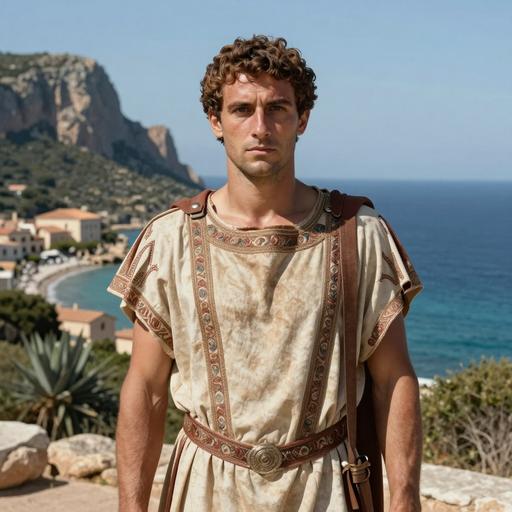
The Roman Imperial period in Sant'Imbenia, Sardinia, represents a fascinating chapter in the island's history, distinguished by the profound influence of Roman culture and administrative systems. Situated in the picturesque region of Alghero in northwestern Sardinia, the site of Sant'Imbenia offers a compelling glimpse into the transformational era of Roman dominance.
Historical Context
The Roman Empire's expansion into Sardinia began in earnest following the conclusion of the First Punic War in 238 BCE, when Rome annexed the island from Carthage. However, it was during the Imperial period, commencing with the reign of Augustus in 27 BCE, that Roman influence truly permeated Sardinian society. The island became a crucial part of the empire, valued for its strategic location in the Mediterranean and its abundant natural resources, such as grain, salt, and minerals.
Urban and Architectural Development
Sant'Imbenia, like many Sardinian settlements during the Roman Imperial era, witnessed significant urban and architectural transformations. The Romans introduced their advanced engineering and architectural techniques, resulting in the construction of roads, aqueducts, and public buildings that facilitated economic and social activities. The Roman grid layout, or centuriation, influenced the urban planning of towns, ensuring efficient land division and management.
The typical structures of Roman settlements, such as forums, baths, and temples, marked the landscape of Sant'Imbenia. These structures were not merely functional but also served as symbols of Roman culture and authority. The use of concrete, bricks, and marble introduced by the Romans allowed for more durable and monumental constructions.
Economy and Trade
During the Roman Imperial period, Sant'Imbenia became a thriving hub of economic activity. The region's economy was bolstered by agriculture, particularly the cultivation of grains, olives, and grapes, which were crucial for producing olive oil and wine—staple goods in the Roman diet. The abundance of these resources made Sardinia an important granary for the empire.
Trade flourished as well, facilitated by the establishment of Roman roads and maritime routes. Sant'Imbenia, with its proximity to the coast, likely participated in trade networks that connected Sardinia to other parts of the empire, including the Italian peninsula, North Africa, and the Iberian Peninsula. Archaeological evidence, such as amphorae and other artifacts, suggests the exchange of goods like pottery, metalwork, and luxury items.
Social and Cultural Dynamics
The Romanization of Sardinia, including Sant'Imbenia, entailed significant social and cultural changes. Local populations increasingly adopted Roman customs, language, and attire, a process that was often encouraged through settlement by Roman citizens and veterans. Latin became the lingua franca, and Roman law and citizenship were gradually extended to the local populace.
This era also saw the syncretism of religious practices. While indigenous deities and traditions persisted, Roman gods and imperial cults gained prominence. Temples and altars dedicated to figures such as Jupiter, Juno, and Minerva were erected, and religious festivals celebrated the might and unity of the empire.
Archaeological Discoveries
Excavations at Sant'Imbenia have unearthed a wealth of artifacts and structures that provide insight into its Roman past. Pottery remains, coins, and inscriptions reveal interactions between local and Roman cultures. Villa complexes, with their characteristic mosaics and frescoes, suggest the presence of affluent Roman families and demonstrate the adoption of Roman lifestyles.
Additionally, the discovery of small artifacts, such as personal items and domestic tools, sheds light on the daily lives of Sant'Imbenia's residents. These finds illustrate a community that, while integrated into the Roman world, retained unique local elements.
Conclusion
The Roman Imperial period was a transformative era for Sant'Imbenia and Sardinia as a whole. The integration into the Roman Empire brought about extensive economic, social, and cultural developments that have left an enduring legacy on the island. Today, the archaeological remnants of this time provide a window into a dynamic epoch of cultural convergence and imperial grandeur, enriching our understanding of Roman history and its peripheral provinces.