Menu
Currency
Main
Store
Blog

Loading Report

Preparing your ancestry journey

Connecting to ancient matches...

Preparing your report

Skip to main content
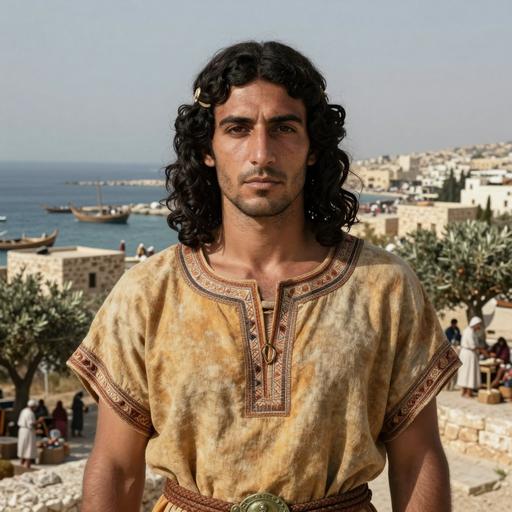
Portrait reconstruction of A man buried in Lebanon in the Iron Age era
Ancient Individual

A man buried in Lebanon in the Iron Age era

A man buried in Lebanon during the Iron Age III Lebanon

A fragment of the ancient world, preserved across millennia in strands of DNA.

SFI-45
540 BCE - 330 BCE
Male
Lebanon
Scroll to begin
Chapter I

Identity

The biological and cultural markers that define this ancient individual

Sample ID

SFI-45

Date Range

540 BCE - 330 BCE

Cultural Period

Iron Age III Lebanon

Biological Sex

Male

mtDNA Haplogroup

T2a1b1

Y-DNA Haplogroup

J-BY69

Chapter II

Place

Where this individual was discovered

Country Lebanon
Locality Beirut
Coordinates 33.8964, 35.5083
Chapter III

Time

When this individual lived in the broader context of human history

SFI-45 540 BCE - 330 BCE
Chapter IV

Story

The narrative of this ancient life

The Iron Age III period in Lebanon, corresponding to roughly the 8th to the 4th century BCE, was an era marked by the dynamic evolution of the Phoenician culture. This period witnessed significant developments in the socio-political structures, economy, religion, and the arts, establishing the Phoenicians as a prominent force in the ancient Mediterranean world.

Political Structure and Influence

During the Iron Age III, Phoenician cities in present-day Lebanon, such as Tyre, Sidon, and Byblos, thrived as independent city-states, each governed by its own king or ruling council. Despite their independence, these city-states shared cultural and linguistic ties, which facilitated alliances and trade relationships. The political landscape was often shaped by the presence of larger empires, including the Assyrian, Babylonian, and later the Persian empires, to which the Phoenician city-states were frequently tributary. This subjugation, however, did not significantly hinder their autonomy or commercial activities.

Economic Prosperity and Trade Networks

The Phoenicians of Iron Age III were renowned seafarers, traders, and explorers, establishing trade networks that extended across the Mediterranean and beyond. They traded precious goods such as Tyrian purple dye, renowned for its vibrant color and exclusivity, cedar wood noted for its quality, glassware, metalworks, and various craft goods. Their maritime prowess facilitated cultural exchanges and the spread of innovations, such as the Phoenician alphabet, which simplified writing and had a lasting impact on the development of writing systems in the ancient world.

Cultural Achievements and Innovations

Phoenician culture during this period was marked by remarkable achievements in art and architecture. They were skilled craftsmen, evidenced by intricate jewelry, ivory carvings, and pottery. Their architectural endeavors included monumental temple complexes, harbors, and city fortifications. The use of locally available resources like cedar and limestone contributed to their distinct architectural style.

The Phoenicians are often credited with developing the alphabetic script, which greatly influenced subsequent cultures, including the Greeks and Romans. This script evolved from earlier Canaanite writing systems and was simpler than the complex cuneiform and hieroglyphic systems, facilitating literacy and administrative efficiency.

Religion and Society

Phoenician religious practices during the Iron Age III were polytheistic, with a pantheon of deities connected to natural elements, fertility, and the sea. Chief among these were Baal, Astarte, and Melqart, each city having its patron deity. Religious practices included rituals, offerings, and possibly human sacrifice, as suggested by ancient sources and archaeological evidence. Temples and sacred precincts were central to city life, serving as religious, economic, and political hubs.

Interaction with Other Cultures

The widespread trade routes of the Phoenicians not only facilitated the exchange of goods but also cultural and ideological influences. Interaction with neighboring cultures, including the Egyptians, Greeks, and later the Persians, led to a vibrant exchange of art forms, religious practices, and technological advancements. Yet, despite these influences, the Phoenicians maintained a distinct cultural identity.

Legacy

The legacy of the Phoenicians during the Iron Age III is profound. Their advancements in maritime trade and navigation extended the boundaries of the known world, while their alphabet provided a basis for writing systems that shaped the ancient world and persist today. Their artistic, architectural, and technological contributions enriched the cultural heritage of the Mediterranean region.

In summary, the Iron Age III in Lebanon was a period of Phoenician cultural flowering, characterized by political resilience, economic expansion, artistic innovation, and cultural exchange. This era laid crucial foundations for the subsequent historical developments in the region and beyond.

Context

Related Samples

This individual exists within a broader network of ancient samples. No ancient genome stands alone.

Sample ID Culture/Period Date Location Action
SFI-24 Early Roman Lebanon 52 BCE Beirut, Lebanon View
SFI-33 Early Roman Lebanon 31 CE Beirut, Lebanon View
SFI-15 Early Roman Lebanon 170 BCE Beirut, Lebanon View
SFI-11 Early Roman Lebanon 151 BCE Beirut, Lebanon View
SFI-20 Hellenistic Lebanon 175 BCE Beirut, Lebanon View
SFI-5 Hellenistic Lebanon 354 BCE Beirut, Lebanon View
SFI-12 Hellenistic Lebanon 347 BCE Beirut, Lebanon View
SFI-56 Iron Age II Lebanon 1000 BCE Beirut, Lebanon View
SFI-55 Iron Age II Lebanon 1000 BCE Beirut, Lebanon View
SFI-43 Iron Age III Lebanon 749 BCE Beirut, Lebanon View
SFI-44 Iron Age III Lebanon 539 BCE Beirut, Lebanon View
SFI-34 Iron Age III Lebanon 540 BCE Beirut, Lebanon View
SFI-47 Iron Age III Lebanon 540 BCE Beirut, Lebanon View
SFI-50 Iron Age III Lebanon 540 BCE Beirut, Lebanon View
SFI-36 Iron Age III Lebanon 540 BCE Beirut, Lebanon View
SFI-39 Iron Age III Lebanon 540 BCE Beirut, Lebanon View
SFI-45 Iron Age III Lebanon 540 BCE Beirut, Lebanon View
SFI-42 Iron Age III Lebanon 542 BCE Beirut, Lebanon View
SFI-35 Iron Age III Lebanon 540 BCE Beirut, Lebanon View
SFI-11 151 BCE Beirut, Lebanon View
SFI-12 347 BCE Beirut, Lebanon View
SFI-15 170 BCE Beirut, Lebanon View
SFI-20 175 BCE Beirut, Lebanon View
SFI-24 52 BCE Beirut, Lebanon View
SFI-33 31 CE Beirut, Lebanon View
SFI-34 540 BCE Beirut, Lebanon View
SFI-35 540 BCE Beirut, Lebanon View
SFI-36 540 BCE Beirut, Lebanon View
SFI-39 540 BCE Beirut, Lebanon View
SFI-42 542 BCE Beirut, Lebanon View
SFI-43 749 BCE Beirut, Lebanon View
SFI-44 539 BCE Beirut, Lebanon View
SFI-45 540 BCE Beirut, Lebanon View
SFI-47 540 BCE Beirut, Lebanon View
SFI-5 354 BCE Beirut, Lebanon View
SFI-50 540 BCE Beirut, Lebanon View
SFI-55 1000 BCE Beirut, Lebanon View
SFI-56 1000 BCE Beirut, Lebanon View
Sample ID Culture/Period Date Location Action
SFI-43 Iron Age III Lebanon 749 BCE Beirut, Lebanon View
SFI-44 Iron Age III Lebanon 539 BCE Beirut, Lebanon View
SFI-34 Iron Age III Lebanon 540 BCE Beirut, Lebanon View
SFI-47 Iron Age III Lebanon 540 BCE Beirut, Lebanon View
SFI-50 Iron Age III Lebanon 540 BCE Beirut, Lebanon View
SFI-36 Iron Age III Lebanon 540 BCE Beirut, Lebanon View
SFI-39 Iron Age III Lebanon 540 BCE Beirut, Lebanon View
SFI-45 Iron Age III Lebanon 540 BCE Beirut, Lebanon View
SFI-42 Iron Age III Lebanon 542 BCE Beirut, Lebanon View
SFI-35 Iron Age III Lebanon 540 BCE Beirut, Lebanon View
Sources

References

Scientific publications and genetic data that inform this profile.

Scientific Publication

A Genetic History of the Near East from an aDNA Time Course Sampling Eight Points in the Past 4,000 Years

Authors Haber M, Nassar J, Almarri MA, Saupe T, Saag L et al.
Abstract

The Iron and Classical Ages in the Near East were marked by population expansions carrying cultural transformations that shaped human history, but the genetic impact of these events on the people who lived through them is little-known. Here, we sequenced the whole genomes of 19 individuals who each lived during one of four time periods between 800 BCE and 200 CE in Beirut on the Eastern Mediterranean coast at the center of the ancient world's great civilizations. We combined these data with published data to traverse eight archaeological periods and observed any genetic changes as they arose. During the Iron Age (∼1000 BCE), people with Anatolian and South-East European ancestry admixed with people in the Near East. The region was then conquered by the Persians (539 BCE), who facilitated movement exemplified in Beirut by an ancient family with Egyptian-Lebanese admixed members. But the genetic impact at a population level does not appear until the time of Alexander the Great (beginning 330 BCE), when a fusion of Asian and Near Easterner ancestry can be seen, paralleling the cultural fusion that appears in the archaeological records from this period. The Romans then conquered the region (31 BCE) but had little genetic impact over their 600 years of rule. Finally, during the Ottoman rule (beginning 1516 CE), Caucasus-related ancestry penetrated the Near East. Thus, in the past 4,000 years, three limited admixture events detectably impacted the population, complementing the historical records of this culturally complex region dominated by the elite with genetic insights from the general population.

Use code for 25% off Expires Jul 12