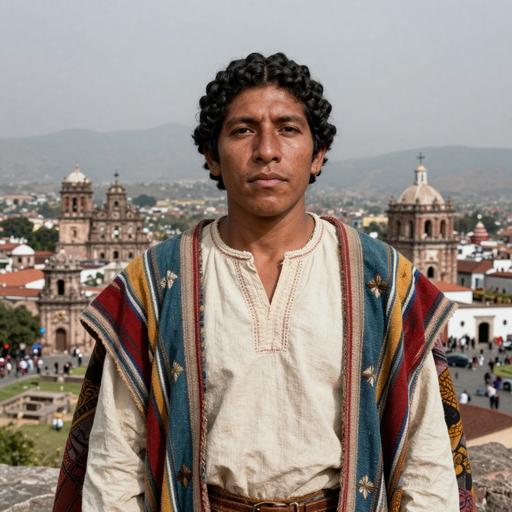
The Afro-Mexican community in colonial Mexico City represented a unique and multifaceted culture shaped by various forces during the era of Spanish colonial rule. This community emerged as a distinct cultural and social entity due to the transatlantic slave trade, colonial policies, and the interactions between diverse ethnic groups. Here is an extensive and detailed description of the Afro-Mexican community of colonial Mexico City:
Historical Context
Colonial Mexico City, known as Mexico-Tenochtitlan before the Spanish conquest, was a vibrant hub in the Viceroyalty of New Spain. After Hernán Cortés's conquest in 1521, the city rapidly grew as the political, religious, and economic center of colonial Mexico. With this growth came the influx of various ethnic groups, including Spaniards, Indigenous peoples, and Africans. Africans were brought to Mexico as slaves via the transatlantic slave trade, with the peak importation occurring during the 16th and 17th centuries.
Demographics and Social Structure
Population: By the late 16th and early 17th centuries, the Afro-Mexican population was substantial in Mexico City. They were part of a larger grouping known as \castas," a racial and social classification system. Within the city, the Afro-Mexican community included enslaved Africans and their descendants, as well as free blacks and mulattos (people of mixed African and European descent).
Slavery and Labor: Many Afro-Mexicans in colonial Mexico City were subjected to slavery and forced labor. They worked in various sectors including agriculture, mining, domestic service, and as skilled artisans. Enslaved Africans were often employed in haciendas, workshops, and urban households.
Social Mobility: Although restricted, social mobility was possible. Some Afro-Mexicans gained freedom through self-purchase, manumission, or as a reward for service. Free Afro-Mexicans could own property, engage in trade, and occasionally secure positions in colonial institutions.
Cultural Life
Language and Religion: The Afro-Mexican community exhibited a rich cultural tapestry, blending African, Indigenous, and Spanish influences. While Spanish was the lingua franca, African languages persisted among newly arrived slaves. The adoption of Christianity was widespread, but African spiritual practices and syncretic religions also flourished.
Music and Dance: Afro-Mexicans contributed significantly to the cultural milieu through music and dance, which served as expressions of identity and resistance. Instruments like the marimba and drums, along with dance forms infused with African rhythms, became integral to the cultural landscape.
Cuisine: The culinary culture of Afro-Mexicans melded African, Indigenous, and Spanish ingredients and techniques. Dishes characterized by the use of plantains, yams, and various beans, often spiced with ingredients reflective of African kitchens, became part of the broader Mexican cuisine.
Challenges and Resistance
Discrimination and Marginalization: Despite their cultural contributions, Afro-Mexicans faced systemic discrimination and were often marginalized within colonial society. Legal restrictions limited their rights and reinforced their social and economic disenfranchisement.
Resistance and Resilience: Acts of resistance, both subtle and overt, were common. These ranged from cultural retention and adaptation to physical revolt. The Afro-Mexican community established networks of solidarity and kinship, maintaining a strong communal identity despite oppressive conditions.
Integration and Influence
Intermixing with Other Groups: Intermarriage and social blending with Indigenous and mestizo (mixed European and Indigenous heritage) communities facilitated cultural exchanges and the creation of new identities and traditions within Mexico City.
Cultural Legacy: Over time, elements of Afro-Mexican culture permeated Mexican society more broadly. This included contributions to language, music, and culinary traditions that continue to influence modern Mexican culture.
Conclusion
The Afro-Mexican community of colonial Mexico City played a pivotal role in shaping the cultural and social landscape of the era. Despite the adversities imposed by colonial rule, Afro-Mexicans demonstrated resilience, adaptability, and creativity. Their legacy is a testament to their enduring influence and the diversity of Mexican cultural history. Through a complex blend of African, Indigenous, and European elements, the Afro-Mexican community created a unique culture that remains an integral part of Mexico's national identity today."