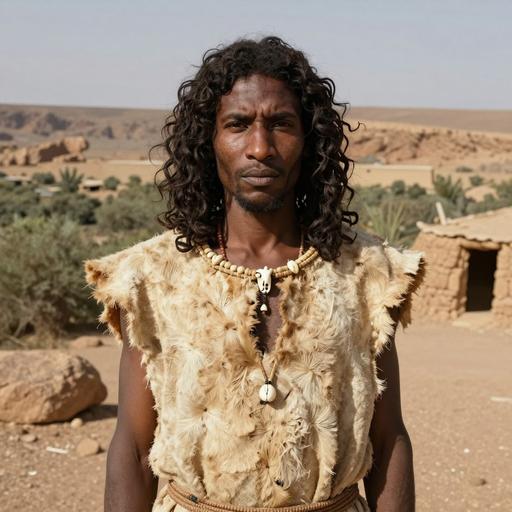
The Iberomaurusian culture, which existed during the Upper Paleolithic period, is recognized as one of the prominent prehistoric cultures in Northwest Africa, including modern-day Morocco. This culture is of considerable interest due to its role in the early human prehistory of this region and its contributions to the understanding of human development, adaptation, and migration.
Chronology and Geographical Reach
The Iberomaurusian culture is believed to have emerged around 25,000 years ago and persisted until approximately 10,000 years ago. This culture is primarily associated with the Epipaleolithic period in the Maghreb region, covering areas that now include parts of Morocco, Algeria, Tunisia, and Libya. The culture's name, \Iberomaurusian," is derived from "Ibero," referring to the Iberian Peninsula, and "Maurusia," an ancient term for North Africa, highlighting early connections between these regions.
Archaeological Sites
Numerous archaeological sites in Morocco provide evidence of the Iberomaurusian way of life. Some notable sites include Taforalt (or Grotte des Pigeons), a cave in Eastern Morocco, which is one of the most significant and well-studied sites. This site has yielded a wealth of artifacts, including tools, ornaments, and human remains, offering insight into the culture's technological and social practices.
Material Culture and Technology
The Iberomaurusian toolkits primarily comprise microlithic implements made from flint and other stones. These small stone tools suggest a highly developed understanding of lithic technology, utilized for hunting, processing animal hides, and other daily tasks. The presence of distinctive geometric microliths, such as backed bladelets and trapezoids, is a hallmark of their tool assemblages.
Moreover, evidence of personal ornaments, such as shell beads, indicates a level of social complexity and the appearance of symbolic behavior. Such ornaments suggest an investment in social identity and possibly trade networks for acquiring raw materials not locally available.
Subsistence and Lifestyle
The Iberomaurusian people were primarily hunter-gatherers, subsisting on a diet rich in land and possibly marine resources. Faunal remains from archaeological contexts include gazelle, red deer, wild boar, and various small mammals, reflecting a broad-based subsistence strategy. There is also evidence to suggest they gathered plant resources, although the specific types of plants exploited remain under study.
Human Remains and Anthropology
The discovery of human remains at Iberomaurusian sites such as those at Taforalt has provided critical information about the people themselves. These remains suggest they were anatomically modern humans with cranial characteristics distinct from both their European contemporaries and later North African populations. Studies of these remains have contributed to debates about human migration routes, particularly the spread of modern humans across Africa and into Europe via the Gibraltar Strait or other corridors.
Cultural and Genetic Legacy
The Iberomaurusian culture is considered foundational in the prehistoric sequence of North Africa. Genetic studies have shown that its people were among the ancestors of later North African Berbers. Mitochondrial DNA analyses suggest continuity in populations in this region from the Iberomaurusian period through to modern times, despite later migrations and influences from other parts of Africa and Europe.
Decline and Transition
The Iberomaurusian culture gradually gave way to the Capsian culture around 10,000 years ago, as climate changes led to alterations in the landscape and available resources. This transition marks a significant shift in prehistoric North Africa, with the Capsian culture exhibiting different subsistence strategies and technological advancements.
Conclusion
In conclusion, the Iberomaurusian culture represents a critical phase in the history of human occupation in Northwest Africa. Its study provides essential insights into the adaptation and evolution of early human populations in response to environmental and social changes. The archaeological findings from this era have significant implications for understanding North African prehistory and the broader migrations of Homo sapiens across Africa and into Europe."