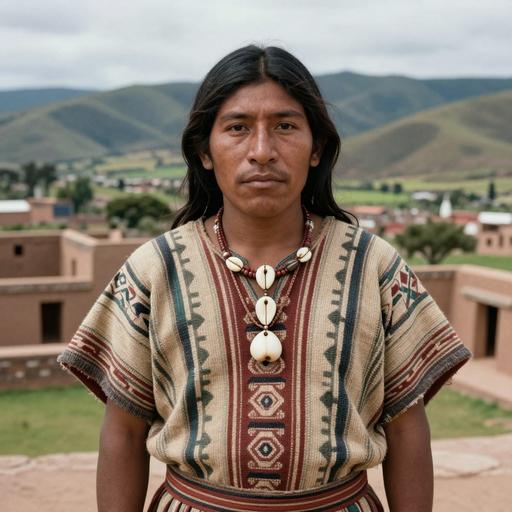
The Late Horizon period in Andean history, approximately from 1470 to 1534 CE, marks an era of significant cultural and political changes following the expansion of the Inca Empire. Within this context, the Chincha culture of the coastal region of Peru stands out as a prominent and influential group with its unique contributions to Andean civilization.
Geographic and Temporal Context
The Chincha culture thrived in the Chincha Valley, located along the southern coast of modern-day Peru. This region was characterized by a fertile desert landscape made arable by complex irrigation systems. The Late Horizon period itself was dominated by the influence of the Inca Empire, which had extended its control over much of the Andean region, including the Chincha Valley.
Political and Economic Systems
Before Inca conquest, the Chincha were an independent coastal kingdom with substantial influence due to their strategic location. They were renowned for their sophisticated trade networks that extended not only along the coast but also into the highlands and possibly as far as Ecuador and Chile. The Chincha people were masterful navigators and traders, utilizing large balsa wood rafts to transport goods across extensive distances. Some scholars suggest they engaged in long-distance maritime trade with regions as distant as Mesoamerica.
The political structure of the Chincha was likely organized along the lines of a confederation of chiefdoms, with a central leader known as the \Chincha Capac" or King of Chincha. This polity maintained a degree of autonomy even under Inca rule, primarily due to its economic importance.
Cultural and Social Organization
Culturally, the Chincha exhibited a fusion of local traditions with those of other coastal and highland cultures, likely due to their extensive trade connections. This is reflected in their art, which often featured distinct iconography and high craftsmanship, especially in ceramics and textiles. Chincha ceramics are characterized by their blackware pottery with incised designs, showing both utilitarian and ceremonial uses.
Socially, the Chincha were likely organized into ayllus, or kinship-based communities, a common structure across the Andean region. These ayllus were integral to the economic and agricultural practices, ensuring the maintenance of the irrigation systems that were essential for the Chincha people’s agricultural productivity.
Religion and Beliefs
The religious practices of the Chincha were deeply integrated with their ecological setting and economy. They worshipped a pantheon of deities, with an emphasis on those related to the sea and commerce, owing to their dependence on maritime trade. Coastal sites indicate the prevalence of religious centers and ceremonial structures, potentially used for rituals to ensure bountiful harvests and successful trade voyages.
Impact of the Inca Conquest
When the Incas expanded into the Chincha Valley, they incorporated the Chincha’s trade network into their empire. The Inca valued the Chincha’s maritime trade capabilities, and according to some chroniclers, allocated a special status to them within the imperial system. While the Chincha maintained some degree of political autonomy, they were integrated into the Inca administrative and mit’a labor systems, contributing to the vast network that sustained the empire.
Legacy
The Chincha culture remains an integral part of the pre-Columbian history of Peru, illustrating the complexity and interconnectedness of Andean civilizations prior to European contact. Their legacy is reflected in the archaeological remains found in the Chincha Valley, from residential structures and irrigation networks to ceremonial centers. These sites provide insight into their advanced understanding of agriculture, trade, and regional politics, which played a significant role in Andean history prior to the Spanish conquest.
In summary, the Late Horizon Chincha culture represents a dynamic and influential society whose economic prowess, strategic geographic positioning, and political structures underscored its significant role in pre-Inca and Inca Peru. Their contributions to trade, art, and culture highlight the interconnectedness of Andean civilizations and their adaptability amidst the sweeping changes brought by the expansion of the Inca Empire."