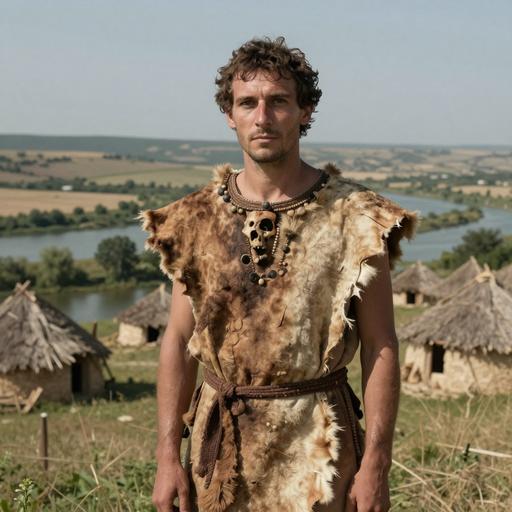
The Late Mesolithic period in Serbia, particularly at the site of Vlasac, offers a fascinating glimpse into the lives of European hunter-gatherers. Located on the banks of the Danube River, this site provides critical insights into the transitional phases between the Mesolithic and the Neolithic in Southeastern Europe. The Vlasac site is part of the broader Iron Gates region, which includes several other important Mesolithic and Neolithic sites, all of which contribute to our understanding of how prehistoric communities adapted to their environments and how they evolved over time.
Environmental Context
The Vlasac site, dating back to approximately 9500 to 6200 BCE, is situated in a unique environmental setting characterized by the Iron Gates gorge. This area features dramatic limestone cliffs and rich biodiversity, providing an abundance of resources. The Danube River, vital for transportation and sustenance, offered access to diverse aquatic life, while the surrounding forests and plains supported a variety of terrestrial flora and fauna.
Cultural and Technological Characteristics
Settlement Patterns
The inhabitants of Vlasac were primarily sedentary, with evidence suggesting they occupied the site year-round. The Mesolithic communities were largely constructed around semi-permanent settlements due to the richness of the environment, which allowed them to maintain stable populations without the need for extensive mobility. Archaeological evidence indicates the presence of structures that may have served as dwelling spaces and communal areas.
Subsistence Strategies
As hunter-gatherers, the Mesolithic people of Vlasac exploited a diverse array of food sources. The river was teeming with fish, sturgeon being one of the most significant, providing not only food but also raw materials for tools and other uses. Hunting and gathering practices also included the pursuit of terrestrial game such as deer and wild boar, as well as the collection of nuts, berries, and other plant resources. The abundance of resources in the Iron Gates region likely contributed to the stability and growth of the population.
Tool Technology
The Late Mesolithic Vlasac culture is noted for its sophisticated flint tool technology. Microliths—small, sharp stone tools—were particularly prevalent and were likely used as components in composite tools and weapons. Bone and antler tools are also frequently found at the site, suggesting a high level of skill in working with various materials. The variety and refinement of tools reflect an adaptation to both riverine and terrestrial environments.
Art and Symbolism
One of the most intriguing aspects of Vlasac is the evidence of symbolic and artistic expression among its inhabitants. Artifacts such as engraved bones, objects with geometric patterns, and personal ornaments hint at a complex symbolic culture. Red ochre, a pigment commonly associated with ritualistic activities, was found at the site, indicating it possibly held ceremonial or social significance.
Social Organization and Burials
The Vlasac site provides invaluable insight into the social structure of late Mesolithic communities through the study of burials. Graves were often placed within the settlement and showed considerable variation in their construction and the grave goods included with the deceased. Some burials contained elaborate arrays of personal ornaments made from shells and animal teeth, suggesting the presence of social differentiation or a form of ranking within the community.
The position and orientation of the bodies, along with the presence of ochre and grave goods, imply a well-developed belief system regarding life, death, and possibly an afterlife. These burial practices reflect a complex social fabric, with possible roles and statuses assigned to individuals in life being mirrored in death through funerary treatments.
Interaction and Transition
The Late Mesolithic period at Vlasac is crucial for understanding the broader regional dynamics, particularly the interactions between Mesolithic hunter-gatherers and incoming Neolithic farmers. This period marks a significant transitional phase as evidence from Vlasac and surrounding sites indicates exchanges of technology, goods, and possibly intermarriage between these two groups. This interchange ultimately facilitated the spread of agriculture and the adoption of new subsistence strategies, leading to the Neolithic revolution in Europe.
Conclusion
The Late Mesolithic culture at Vlasac represents a significant chapter in the prehistory of Europe, highlighting the adaptability, ingenuity, and complexity of hunter-gatherer societies. The convergence of environmental abundance, technological innovation, and social complexity makes Vlasac a key site for understanding the intricate dynamics of human cultural evolution during the Mesolithic to Neolithic transition in the region. The findings from Vlasac contribute substantially to our comprehension of how early human societies mastered their environments and laid the groundwork for future agricultural developments.