Zum Hauptinhalt springen
mtDNA · Mütterliche Linie

Y1A1

mtDNA Haplogroup Y1A1

Ein Referenzprofil für einen Abstammungszweig. Gemeinsame Haplogruppen begründen weder eine familiäre Beziehung noch eine kulturelle Identität.

Referenzprofil

Hintergrund des Zweigs

Historischer Kontext für den mtDNA-Abstammungszweig Y1A1

Origins and Evolution

mtDNA haplogroup Y1A1 is a downstream branch of Y1A, itself a rare lineage within macro-haplogroup Y that is concentrated in the northwestern Pacific Rim. Based on its phylogenetic position and the estimated time depth of its parent clade, Y1A1 most likely arose in Northeast Asia during the mid-Holocene (several thousand years after the Last Glacial Maximum). Its internal diversity is low, consistent with a relatively recent local diversification from Y1A and/or a population history marked by founder effects and restricted maternal population sizes in coastal and riverine groups.

Because Y1A and its subclades are uncommon and geographically restricted, Y1A1 is particularly useful as a marker for tracking postglacial coastal dispersals, island/coastal hunter-gatherer continuity, and interactions between populations around the Sea of Okhotsk and northern Japan.

Subclades

Y1A1 is a terminal or near-terminal branch within the Y1A structure in currently published phylogenies. Where multiple internal branches exist they show low sequence diversity, reflecting either a recent branching event or undersampling of small source populations. Future dense mitogenome sampling in northeastern Eurasia (Hokkaido, Sakhalin, Kamchatka and the Amur region) could reveal additional substructure within Y1A1 and clarify relationships to nearby Y1A subclades.

Geographical Distribution

The modern distribution of Y1A1 is strongly concentrated in Northeast Asian coastal and riverine groups. Highest relative frequencies are reported in small, geographically concentrated populations (for example, some Ainu and indigenous groups of the Russian Far East), with low to sporadic occurrences in mainland Japan, Korea and scattered low-frequency reports farther afield (Southeast Asia and rare trans‑Beringian detections in the Americas). The pattern—localized peaks plus scattered low-frequency occurrences—matches expectations for a lineage that expanded within a restricted coastal/ecological niche and occasionally moved with small-scale migrations or long-distance contacts.

Ancient DNA evidence for Y1A-lineages (including lineages close to Y1A1) has been recovered from a small number of archaeological contexts in northern Japan and the Russian Far East, consistent with continuity or recurrent presence of this maternal lineage among Jomon, Okhotsk, and later coastal cultures.

Historical and Cultural Significance

Because of its concentration among populations traditionally associated with the northern Japanese and Okhotsk cultural spheres, Y1A1 contributes to genetic signals interpreted as Jomon-related and Okhotsk-related ancestry in modern groups such as the Ainu and certain indigenous Siberian peoples (Nivkh, Ulchi-area groups). Its rarity and locality make it valuable for distinguishing local continuity from later, broad-scale migrations (for example, differentiating coastal hunter-gatherer contributions from agricultural expansions across East Asia).

Y1A1 is not a marker of large continent-spanning demographic events; instead it documents regional maternal continuity, founder effects, and coastal mobility in the northwestern Pacific during the Holocene.

Conclusion

Y1A1 is a geographically informative, low-frequency maternal lineage that likely arose in Northeast Asia in the mid-Holocene and is concentrated among coastal/riparian populations of Hokkaido, Sakhalin and the Russian Far East. Its limited diversity and patchy modern distribution reflect both recent origin and demographic processes (founder effects, small effective population sizes, and localized continuity). Continued mitogenome sequencing in northeastern Eurasia and expanded ancient DNA sampling will refine its internal topology and clarify its role in late Holocene population history of the northwestern Pacific.

Wichtige Punkte

  • Origins and Evolution
  • Subclades
  • Geographical Distribution
  • Historical and Cultural Significance
  • Conclusion
Referenzprofil

Baum und Verwandtschaft

Phylogenetischer Kontext und Subkladen

Entwicklungsweg

Folgen Sie den erfassten übergeordneten Zweigen bis Y1A1. Die Daten sind Schätzungen und können sich ändern, wenn Referenzdaten überarbeitet werden.

Schritte Haplogruppe Altersschätzung Archäologische Epoche Vergangene Zeit Unmittelbare Nachkommen Getestete moderne Nachkommen Antike Verknüpfungen
1 Y1A1 Aktuell ~4,000 years ago Bronze Age 4,000 Jahre 0 0 0
2 Y1A ~6,000 years ago Chalcolithic 6,000 Jahre 1 3 6
3 Y1 ~8,000 years ago Neolithic 8,000 Jahre 2 7 1
4 Y ~11,000 years ago Neolithic 11,000 Jahre 2 26 0
5 N9 ~25,000 years ago Paleolithic 25,000 Jahre 3 178 0
6 N ~60,000 years ago Paleolithic 60,000 Jahre 16 26,150 13
7 L3 ~70,000 years ago Paleolithic 70,000 Jahre 7 30,162 6
8 L3'4 - - - 2 30,212 0
9 L3'4'6 - - - 2 30,216 0
10 L2'3'4'6 - - - 2 31,333 0
11 L2'3'4'5'6'7 - - - 2 31,349 0
12 L1'2'3'4'5'6'7 - - - 2 31,852 0
13 L ~160,000 years ago Paleolithic 160,000 Jahre 2 32,236 5

Subkladen (0)

Endzweig ohne erfasste Subkladen

Referenzprofil

Verbreitung weltweit

Geografische Verbreitung und moderne Präsenz

Erfasster Ursprung

Northeast Asia / Far East Siberia

Moderne Verbreitung

The populations where mtDNA haplogroup Y1A1 is found include:

  1. Ainu and some northern Japanese populations (Hokkaido)
  2. Indigenous groups of the Russian Far East and Sakhalin (e.g., Nivkh, Ulchi-area groups)
  3. Siberian populations along the Amur, Kamchatka and adjacent regions (occasional reports among Even, Evenk and related groups)
  4. Mainland Japanese and Korean samples at low frequencies
  5. Scattered low-frequency occurrences in some Southeast Asian populations
  6. Very rare occurrences in North American samples consistent with trans‑Beringian connections
Historischer Kontext

Ein Zweig durch die Zeit

Geschätzte Entstehung in einer breiten historischen Zeitleiste. Zeitmarken liefern Kontext und implizieren keine Verbindung zu bestimmten Kulturen.

  1. ~10k Jahre zurück

    Neolithische Revolution

    Beginn der Landwirtschaft und feste Siedlungen

  2. ~5k Jahre zurück

    Bronzezeit

    Metallverarbeitung, Schrift und frühe Zivilisationen

  3. ~4k Jahre zurück

    Haplogruppe Y1A1

    Geschätzte Entstehung dieses mtDNA-Zweigs; Daten und Orte sind Referenzschätzungen.

    Dieser Zweig
  4. ~3k Jahre zurück

    Eisenzeit

    Eisenwerkzeuge und ausgedehnte Handelsnetze

  5. ~2.5k Jahre zurück

    Klassische Antike

    Blüte griechischer und römischer Kulturen

  6. Gegenwart

    Gegenwart

    Moderne Zeit

Referenzprofil

Archäologischer Kontext

Erfasste archäologische Zuordnungen für den mtDNA-Zweig Y1A1

Erfasste Zuordnungen

Diese Bezeichnungen beschreiben archäologische Kontexte erfasster Referenzproben mit Bezug zu Y1A1. Eine Zuordnung bedeutet nicht, dass alle Träger einer Kultur angehörten oder einer bestimmten Migrationsroute folgten.

Early Avar Gongguan Late Medieval Mongolian Mongol Tasmola
Kulturzuordnungen basieren auf dem archäologischen Kontext antiker DNA-Proben und können regionale Verknüpfungen in bestimmten Zeiträumen widerspiegeln.
Referenzprofil

Probencatalog

6 direkte Träger der Haplogruppe Y1A1

6 angezeigt · 6 passende Proben

Porträts sind KI-generierte Illustrationen. Probenbezeichnungen und Zugangs-IDs identifizieren die Referenzdatensätze.

Porträt Probe Land Epoche Datum Kultur mtDNA Übereinstimmung
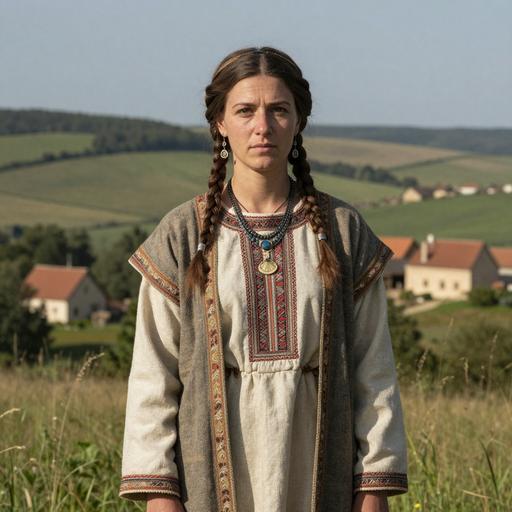
KI-generiertes illustratives Porträt von Early Avar-o High East Asia individual, Csongrád-Csanád County. Apátfalva-Nagyútdűlő, Hungary (630-660 CE)
Proben-ID: AN-376
Hungary Hungary EarlyAvar 600-700 CE Early Avar Y1a1 Direkt
KI-generiertes illustratives Porträt von Early Avar-o High East Asia individual, Danube-Tisza Interfluve. Kecskemét-Sallai út, Hungary (630-670 CE)
Proben-ID: A1823
Hungary Early Avar Period Danube-Tisza, Hungary 600-700 CE Early Avar Y1a1 Direkt
KI-generiertes illustratives Porträt von Early Avar individual, Csongrád-Csanád County. Szeged-FehértóA, Hungary (650-675 CE)
Proben-ID: SZF-371
Hungary Hungary EarlyAvar 650-700 CE Early Avar Y1a1 Direkt
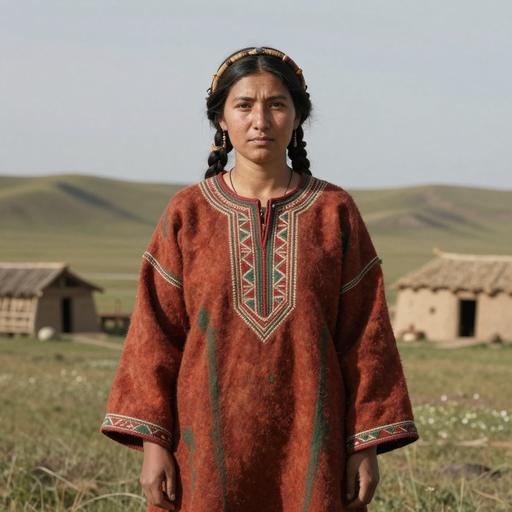
KI-generiertes illustratives Porträt von EIA Tasmola individual, Birlik (Almaty) (Almaty Region, Talgar District), Kazakhstan (776-481 BCE)
Proben-ID: BIR013
Kazakhstan Tasmola Culture 800-450 BCE Tasmola Y1a1 Direkt
KI-generiertes illustratives Porträt von Khentii Late Medieval individual, Tavan Khailaast, Mongolia (1,299-1,409 CE)
Proben-ID: TK5-8
Mongolia Mongol Empire 1299-1409 calCE (IAAA-130276) Mongol Y1a1 Direkt
KI-generiertes illustratives Porträt von Khentii Late Medieval individual, Tavan Khailaast, Mongolia (1,330-1,442 CE)
Proben-ID: TK5-2
Mongolia Mongol Empire 1330-1442 calCE (IAAA-150902) Mongol Y1a1 Direkt
MATERNAL LINEAGE · ANCIENT DNA

Ancient lineage evidence map

Follow parent clades toward this branch and explore where ancient carriers were found.

Loading ancient observations…

Markers are archaeological find locations. A dashed connector is an uncertain, proposed geographic transition between consecutive branches supported by multiple dated observations; it is not an exact travel route, birthplace or proof of direct descent. Parent-clade samples may belong to other descendant branches. Gaps remain where evidence is insufficient. Sample dates differ from haplogroup formation dates.

Referenzprofil

Trägerverteilungskarte

Geografische Verteilung von 6 antiken DNA-Proben (direkte und Subkladen-Träger von Y1A1)

Direkter Träger
Zeitraumfilter
Alle Zeiträume
Alle Proben werden angezeigt
Referenzprofil

Zeitliche Verteilung

Verteilung der Träger über archäologische Epochen

Referenzprofil

Geografische Verteilung

Anzahlen nach erfasstem Probenland. Sie spiegeln die verfügbare Referenzauswahl wider, nicht Bevölkerungshäufigkeiten.

Referenzprofil

Verteilung Land × Epoche

Vergleichen Sie erfasste Probenanzahlen nach Ländern und archäologischen Epochen. Wählen Sie eine belegte Zelle, um eine Probe anzusehen.

Daten

Daten und Herkunft

Quellenangaben und Datenqualität

Zuletzt aktualisiert 2026-02-16
Konfidenzwert 50/100
Abdeckung Low

Datenquelle

Klassifikation, geschätzte Daten und geografischer Kontext spiegeln die erfassten Referenzdaten wider und können sich bei überarbeiteten Belegen ändern. Die Probenabdeckung ist ungleichmäßig; erfasste Orte und archäologische Zuordnungen begründen weder persönliche Herkunft noch kulturelle Identität.