


Carthaginian DNA Reveals a Phoenician Culture Without Levantine Genes
A major ancient DNA study reshapes the story of Carthage, showing that Phoenician culture spread west with little Levantine ancestry in the Punic world.
Ler o artigoDNA Genics / Revista
Artículos y perspectivas de la revista de DNA Genics.
A revista
Mostrando 13-24 de 133
A major ancient DNA study reshapes the story of Carthage, showing that Phoenician culture spread west with little Levantine ancestry in the Punic world.
Ler o artigo
Ancient DNA from Dorset shows a rare matrilocal society, female line continuity, and male-biased migration across the Channel during the Iron Age.
Ler o artigo
Explore how Sami DNA, ancient DNA, and population genetics reveal a rare Siberian ancestry signal in Europe’s far north, plus what it means for DNA testing.
Ler o artigo
Explore how ancient DNA reveals Alsace and Lorraine as a Celto-Germanic transition zone, shaped by Iron Age Celts, Roman Gaul, and migration.
Ler o artigo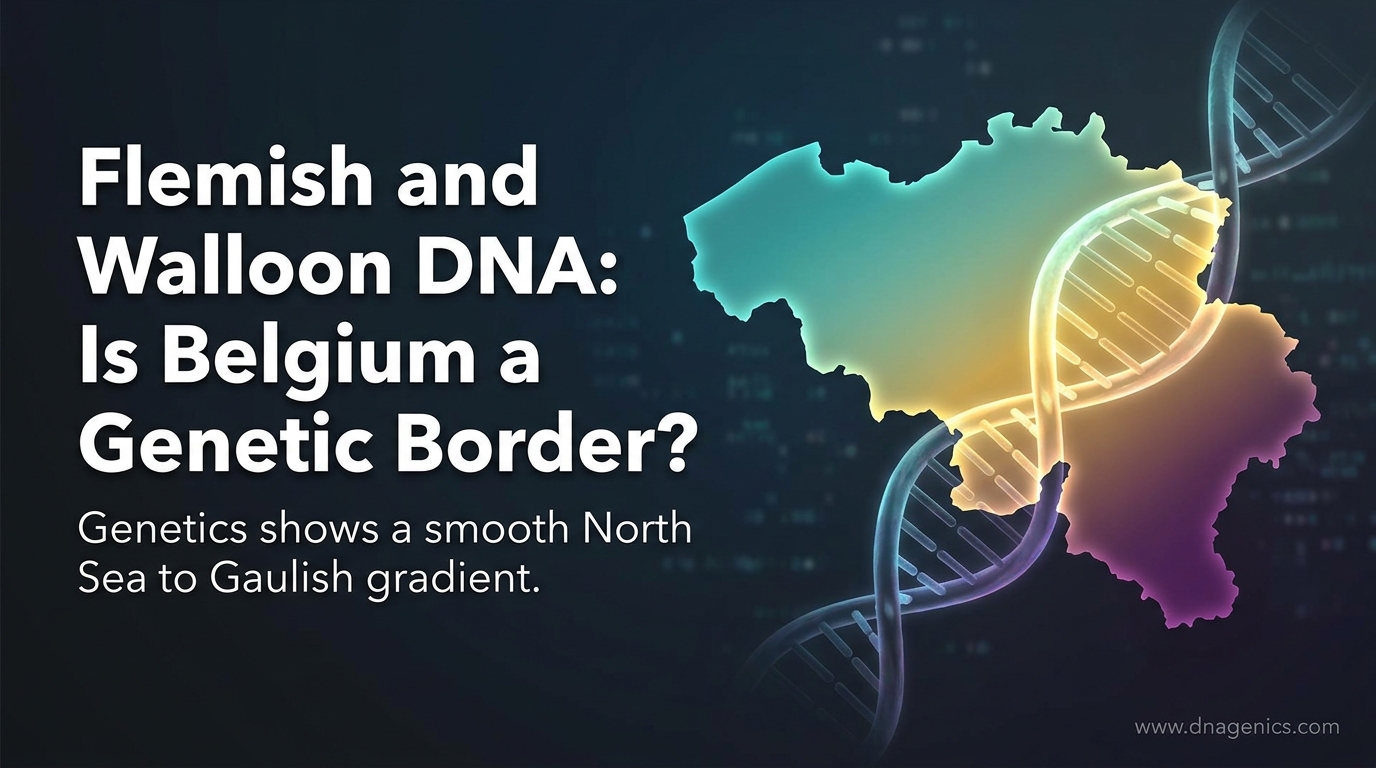
Does Belgium's language line reflect DNA? Ancient and modern genetics show a smooth North Sea to Gaulish gradient, not a hard Flemish-Walloon divide.
Ler o artigo
How the conquering Magyars shaped Hungary’s language, while centuries of mixing reduced their steppe ancestry to a faint genetic trace.
Ler o artigo
New DNA research shows the Kalash are a real local Hindu Kush population with steppe ancestry, not Greek descendants or frozen relics of Europe.
Ler o artigo
Maltese is Europe’s only Semitic language, but DNA tells a more local story. Explore ancestry, ancient DNA, and population genetics in Malta.
Ler o artigo
Explore how Sephardic Jewish DNA reflects Levantine roots, Mediterranean admixture, and a modest Iberian signature shaped by exile, migration, and identity.
Ler o artigo
Discover how Amish, Mennonite, and Hutterite DNA reflects founder effects, migration history, and population genetics that shape ancestry results today.
Ler o artigo
Ancient DNA shows remarkable continuity in the Armenian Highland, linking modern Armenians to Bronze Age and Chalcolithic ancestors, with only limited outside inputs.
Ler o artigo
New DNA evidence shows the Tarim Basin mummies were not steppe migrants, but a deeply local Ancient North Eurasian population with unique ancestry.
Ler o artigo