Menu
Store
Blog
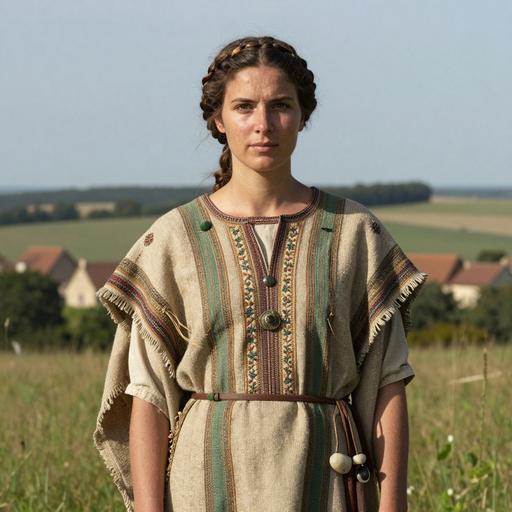
Portrait reconstruction of BFM265
Ancient Individual

A woman buried in France in the Late Iron Age era

BFM265
300 BCE - 150 BCE
Female
Iron Age II Hauts-de-France, France
France
Scroll to begin
Chapter I

Identity

The biological and cultural markers that define this ancient individual

Sample ID

BFM265

Date Range

300 BCE - 150 BCE

Biological Sex

Female

mtDNA Haplogroup

U2e1b2

Cultural Period

Iron Age II Hauts-de-France, France

Chapter II

Place

Where this individual was discovered

Country France
Locality Hauts-de-France (North). Bucy-le-Long. le fond du Marais
Coordinates 49.3901, 3.3924
Chapter III

Time

When this individual lived in the broader context of human history

BFM265 300 BCE - 150 BCE
Chapter IV

Story

The narrative of this ancient life

The Iron Age II in the Hauts-de-France region of France, particularly within the context of the Celtic culture, is a fascinating and richly complex era spanning roughly from 600 to 450 BCE. This period marks a significant phase in the development of Celtic societies in Western Europe and is characterized by substantial sociocultural, economic, and technological changes.

Geographic and Temporal Context

The Hauts-de-France region, located in northern France, is strategically positioned at the crossroads of several significant European trade routes. This made it a vibrant hub of cultural exchange, facilitating the spread of ideas and goods across the continent. During the Iron Age II, the region was predominantly inhabited by Celtic tribes, who were part of the larger La Tène culture known for its distinctive art, fortifications, and metallurgy.

Sociopolitical Structure

The Iron Age II saw the development of a more hierarchical societal structure among the Celtic tribes of the Hauts-de-France. Tribal chieftains wielded considerable power and were supported by a warrior aristocracy. These leaders were often elected based on merit, martial prowess, and lineage, reflecting a complex interplay of kinship and personal achievement.

Settlements were organized around powerful tribal communities or oppida — fortified towns that served as administrative and economic centers. These oppida were strategically placed on elevated grounds, indicative of the increasing need for defense against rival tribes and groups.

Economy and Trade

The economy of the Iron Age II Celts in Hauts-de-France was predominantly agrarian, yet characterized by increasing complexity and specialization. Agricultural practices advanced with the introduction of new plowing techniques and crop varieties, allowing tribes to produce surplus food that supported population growth and urbanization.

Trade, both local and long-distance, was a crucial aspect of the economy. The region's proximity to the coast facilitated maritime trade with other Celtic regions and Mediterranean civilizations, notably the Greeks and Etruscans. This trade network allowed the influx of luxury goods such as wine, olive oil, and ceramics, which were highly prized by the Celtic elite. In return, the Celts exported goods such as tin, iron, salt, and skilled metalwork.

Technological and Artistic Developments

Ironworking saw significant advancements during this period, with iron tools and weapons becoming more common and of higher quality. The Celts were renowned for their metalworking skills, producing intricately designed weapons and jewelry that demonstrated both technical proficiency and artistic flair. The use of iron in weaponry provided the Celts with a military advantage over their contemporaries.

Artistic expression flourished during the Iron Age II, influenced by both indigenous traditions and external interactions. The period is notable for the emergence of La Tène art, characterized by its curvilinear motifs, intricate patterns, and use of zoomorphic and anthropomorphic designs. This art style was not only decorative but also symbolic, often reflecting religious and cultural beliefs.

Religious and Spiritual Life

The religious life of the Iron Age II Celts in the Hauts-de-France was deeply rooted in nature and mythology. They practiced a polytheistic religion with a pantheon of gods and goddesses governing various aspects of the natural world and human experience. Rituals were conducted in sacred groves, water bodies, and other natural sites, which were believed to be imbued with spiritual significance.

The Celts also placed a strong emphasis on ancestor worship and the veneration of warrior heroes. Druids, who served as priests, scholars, and legal authorities, played a crucial role in maintaining religious traditions and cultural knowledge.

Conclusion

The Iron Age II period in Hauts-de-France represents a dynamic and transformative era in Celtic history. It was marked by the maturation of complex societal structures, economic innovation, and rich cultural expression. The interactions with neighboring cultures through trade and conflict further enriched the Celtic cultural tapestry, laying the groundwork for the future prominence of Celtic societies in Europe. Understanding this period is essential to appreciating the enduring legacy of the Celts in France and beyond.

Chapter V

Genetics

The genetic ancestry of this ancient individual

Ancient Genetic Admixture

This analysis compares the DNA profile of BFM265 with ancient reference populations, showing the genetic composition in terms of prehistoric ancestral groups.

European Hunter-Gatherers 38.5%
Western Steppe Pastoralists 31.1%
Neolithic Farmers 27.9%
Ancient Native Americans 2.5%

Modern Genetic Admixture

This analysis compares the DNA profile with present-day reference populations, showing what percentage of genetic makeup resembles modern populations from different regions.

Europe 95.8%
Northwestern European 55.0%
English 29.9%
Northwestern European 14.7%
Finnish 5.4%
Scandinavian 5.0%
Southern European 39.8%
Iberian 32.9%
Sardinian 3.5%
Balkan 2.3%
Italian 1.1%
Eastern European 1.1%
Asia 3.7%
Arab, Egyptian & Levantine 3.0%
Levantine 2.4%
Arabian 0.7%
Central Asian, Northern Indian & Pakistani 0.7%
Indian 0.7%

Closest Modern Populations

These are the modern populations showing the closest statistical alignment to A woman buried in France in the Late Iron Age era, ranked by genetic distance. Lower distance values indicate closer statistical similarity.

1
French Brittany
1.8518
2
Belgiana
1.9617
3
English Cornwall
2.0977
4
Welsh
2.1806
5
English
2.3432
6
Belgianc
2.4036
7
French Nord
2.4369
8
Belgianb
2.5262
9
Afrikaner
2.5298
10
French Paris
2.5808
Chapter VI

Context

Other ancient individuals connected to this sample

Sources

References

Scientific publications and genetic data

Scientific Publication

Ancient genomes from present-day France unveil 7,000 years of its demographic history

Authors Brunel S, Bennett EA, Cardin L
Abstract

Genomic studies conducted on ancient individuals across Europe have revealed how migrations have contributed to its present genetic landscape, but the territory of present-day France has yet to be connected to the broader European picture. We generated a large dataset comprising the complete mitochondrial genomes, Y-chromosome markers, and genotypes of a number of nuclear loci of interest of 243 individuals sampled across present-day France over a period spanning 7,000 y, complemented with a partially overlapping dataset of 58 low-coverage genomes. This panel provides a high-resolution transect of the dynamics of maternal and paternal lineages in France as well as of autosomal genotypes. Parental lineages and genomic data both revealed demographic patterns in France for the Neolithic and Bronze Age transitions consistent with neighboring regions, first with a migration wave of Anatolian farmers followed by varying degrees of admixture with autochthonous hunter-gatherers, and then substantial gene flow from individuals deriving part of their ancestry from the Pontic steppe at the onset of the Bronze Age. Our data have also highlighted the persistence of Magdalenian-associated ancestry in hunter-gatherer populations outside of Spain and thus provide arguments for an expansion of these populations at the end of the Paleolithic Period more northerly than what has been described so far. Finally, no major demographic changes were detected during the transition between the Bronze and Iron Ages.

G25 Coordinates

The G25 coordinates for sample BFM265 can be used for detailed admixture analysis in our G25 Studio tool.

BFM265,0.1247097,0.13789412,0.05682704,0.03450172,0.04151518,0.01615564,0.00249944,0.00490912,0.0164223,0.01349248,-0.00359478,0.007308,-0.01229924,-0.0095582,0.0220752,0.00385596,-0.01568698,0.00594738,-0.0002249,0.001977,0.00431198,0.00062658,0.00133012,0.00509808,0.00471248
Analyze in G25 Studio
Use code for 40% off Expires Feb 27