Menu
Store
Blog
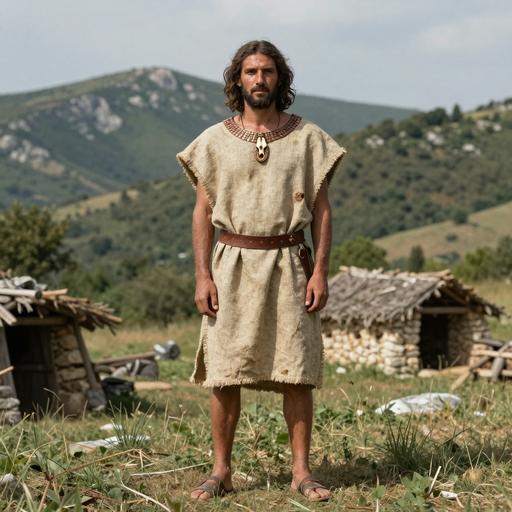
Portrait reconstruction of BRC001
Ancient Individual

A man buried in Italy in the Copper Age era

BRC001
3331 BCE - 2921 BCE
Male
Copper Age Broion, Italy
Italy
Scroll to begin
Chapter I

Identity

The biological and cultural markers that define this ancient individual

Sample ID

BRC001

Date Range

3331 BCE - 2921 BCE

Biological Sex

Male

mtDNA Haplogroup

J2a1a1

Y-DNA Haplogroup

G2a3

Cultural Period

Copper Age Broion, Italy

Chapter II

Place

Where this individual was discovered

Country Italy
Locality Vicenza. Berici Hills. Grottina dei Covoloni del Broion
Coordinates 45.4676, 11.5898
Chapter III

Time

When this individual lived in the broader context of human history

BRC001 3331 BCE - 2921 BCE
Chapter IV

Story

The narrative of this ancient life

The Copper Age, also known as the Chalcolithic period, marks a significant phase in prehistoric Europe, including the region of Broion in Italy. This era, roughly dated between 3500 and 2300 BCE, represents a transitional period between the Neolithic (New Stone Age) and the Bronze Age. The cultural development during the Copper Age is characterized by the introduction and utilization of copper alongside stone tools, fostering technological and societal advancements.

Geography and Environment

Broion, situated in the Veneto region of northeastern Italy, provides a fascinating setting for examining Copper Age developments. The area encompasses a mix of plains, hills, and river systems, which contributed to the fertility of the land and supported early agricultural communities. The moderate climate with regular seasons further facilitated the growth of crops and the establishment of stable settlements.

Settlements and Architecture

During the Copper Age, the emergence of permanent settlements became more pronounced. In the Broion area, communities were typically small, with homes made from wattle and daub or simple wood structures. These dwellings reflected a modest architectural style but were suited to house extended families or small community groups. Settlement patterns suggest a shift toward more sedentary lifestyles, influenced by evolving agricultural practices.

Economy and Subsistence

The economy of Copper Age Broion was primarily based on agriculture, livestock rearing, hunting, and foraging. The domestication of various animals, including cattle, sheep, and goats, played a significant role in daily life. Crops such as wheat, barley, and legumes were cultivated, with evidence of rotation farming helping maintain soil fertility. The growth of exchange networks also allowed for the trading of goods, including copper artifacts, indicating a degree of economic complexity.

Metallurgy and Craftsmanship

A hallmark of the Copper Age is the advent of metalworking technology. Broion, like other contemporary sites, was influenced by the spread of metallurgy. The initial exploitation of copper marked a technological leap, as artisans developed methods to extract and work this metal, making tools, ornaments, and weapons. Artifacts such as axes, knives, and decorative items highlight the craftsmanship of the period. This use of copper did not entirely replace stone tools but supplemented them, offering broader utility and prestige.

Social Structure and Organization

Social structures in Copper Age Broion were likely clan-based, with communities organized around kinship groups. Social hierarchies began to emerge, possibly linked to access to resources like metal ores or fertile lands. These hierarchies are partly evidenced by varied burial practices and grave goods, suggesting distinctions in status and wealth.

Cultural and Artistic Expression

The Copper Age witnessed an expansion in artistic expression, both in form and complexity. Pottery, often decorated with geometric patterns, reflects both aesthetic sensibilities and functional needs. Additionally, figurines, carvings, and jewelry made from copper, bone, and stone tell stories of cultural and ritual significance, hinting at spiritual or religious activities.

Burial Practices and Religion

Burial customs during this period became more elaborate, with evidence of both individual and communal graves. The inclusion of grave goods such as pottery, jewelry, and tools signifies an emerging belief system regarding the afterlife or spiritual continuity. These practices denote a changing perspective on death and the role ancestors played within the society.

Interregional Interactions

Broion was not isolated; it was part of a broader tapestry of interactions across Chalcolithic Europe. Trade routes facilitated the exchange of raw materials, ideas, and cultural practices. The circulation of goods such as obsidian, flint, and metal items underscores a network of connections that spanned considerable distances.

In conclusion, Copper Age Broion in Italy was a vibrant and evolving hub of early human culture, reflecting the dynamic shifts that characterized Chalcolithic Europe. This era set the stage for subsequent advancements, laying the groundwork for the innovations and complexities of the Bronze Age. The integration of new technologies, coupled with changes in social, economic, and cultural realms, underscores the transformative nature of this pivotal period.

Chapter V

Genetics

The genetic ancestry of this ancient individual

Ancient Genetic Admixture

This analysis compares the DNA profile of BRC001 with ancient reference populations, showing the genetic composition in terms of prehistoric ancestral groups.

Neolithic Farmers 63.9%
European Hunter-Gatherers 26.4%
Western Steppe Pastoralists 9.7%

Modern Genetic Admixture

This analysis compares the DNA profile with present-day reference populations, showing what percentage of genetic makeup resembles modern populations from different regions.

Europe 83.4%
Southern European 83.4%
Iberian 45.5%
Sardinian 25.8%
Italian 12.0%
Africa 16.6%
North African 16.6%
Egyptian 16.6%

Closest Modern Populations

These are the modern populations showing the closest statistical alignment to A man buried in Italy in the Copper Age era, ranked by genetic distance. Lower distance values indicate closer statistical similarity.

1
Sardinian
2.8681
2
French Corsica
6.0580
3
Belmonte Jew
6.8162
4
Italian Lazio
7.4302
5
Spanish Murcia
7.4345
6
Italian Lombardy
7.4463
7
Spanish Menorca
7.5000
8
Spanish Andalucia
7.5106
9
Spanish Castilla La Mancha
7.5296
10
Spanish La Rioja
7.5644
Chapter VI

Context

Other ancient individuals connected to this sample

Sources

References

Scientific publications and genetic data

Scientific Publication

Ancient genomes reveal structural shifts after the arrival of Steppe-related ancestry in the Italian Peninsula

Authors Saupe T, Montinaro F, Scaggion C
Abstract

Across Europe, the genetics of the Chalcolithic/Bronze Age transition is increasingly characterized in terms of an influx of Steppe-related ancestry. The effect of this major shift on the genetic structure of populations in the Italian Peninsula remains underexplored. Here, genome-wide shotgun data for 22 individuals from commingled cave and single burials in Northeastern and Central Italy dated between 3200 and 1500 BCE provide the first genomic characterization of Bronze Age individuals (n = 8; 0.001-1.2× coverage) from the central Italian Peninsula, filling a gap in the literature between 1950 and 1500 BCE. Our study confirms a diversity of ancestry components during the Chalcolithic and the arrival of Steppe-related ancestry in the central Italian Peninsula as early as 1600 BCE, with this ancestry component increasing through time. We detect close patrilineal kinship in the burial patterns of Chalcolithic commingled cave burials and a shift away from this in the Bronze Age (2200-900 BCE) along with lowered runs of homozygosity, which may reflect larger changes in population structure. Finally, we find no evidence that the arrival of Steppe-related ancestry in Central Italy directly led to changes in frequency of 115 phenotypes present in the dataset, rather that the post-Roman Imperial period had a stronger influence, particularly on the frequency of variants associated with protection against Hansen's disease (leprosy). Our study provides a closer look at local dynamics of demography and phenotypic shifts as they occurred as part of a broader phenomenon of widespread admixture during the Chalcolithic/Bronze Age transition.

G25 Coordinates

The G25 coordinates for sample BRC001 can be used for detailed admixture analysis in our G25 Studio tool.

BRC001,0.11354676,0.16021016,0.01816244,-0.04907288,0.05312548,-0.02424632,-0.00284096,0.0048936,0.04117892,0.06552628,-0.00268804,0.01196768,-0.02038996,-0.01296632,-0.01010276,0.00586412,0.00950556,0.00018612,0.00028296,-0.0022932,0.00150528,0.00577896,-0.01244636,-0.018365,0.00362287
Analyze in G25 Studio
Use code for 40% off Expires Feb 27