Menu
Store
Blog
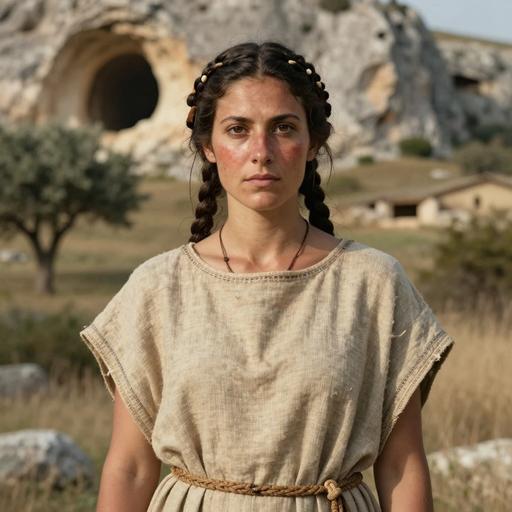
Portrait reconstruction of BRC007
Ancient Individual

A woman buried in Italy in the Bronze Age era

BRC007
1615 BCE - 1458 BCE
Female
Bronze Age Broion, Italy
Italy
Scroll to begin
Chapter I

Identity

The biological and cultural markers that define this ancient individual

Sample ID

BRC007

Date Range

1615 BCE - 1458 BCE

Biological Sex

Female

mtDNA Haplogroup

K1a1b1

Cultural Period

Bronze Age Broion, Italy

Chapter II

Place

Where this individual was discovered

Country Italy
Locality Vicenza. Berici Hills. Grottina dei Covoloni del Broion
Coordinates 45.4676, 11.5898
Chapter III

Time

When this individual lived in the broader context of human history

BRC007 1615 BCE - 1458 BCE
Chapter IV

Story

The narrative of this ancient life

The Broion site, situated in northern Italy, is an important archaeological location that provides insight into the European Bronze Age, specifically the regional developments within the Italian peninsula. The Bronze Age in Italy, which lasted roughly from 2300 to 900 BCE, is marked by significant cultural, technological, and social transformations as communities transitioned from the Copper Age (Chalcolithic) into a fully-fledged Bronze society.

Geography and Environment

Broion is located in a region characterized by diverse landscapes, including fertile plains, rolling hills, and proximity to the Alps. This geography would have played a significant role in shaping the subsistence strategies of its inhabitants, offering resources for agriculture, pastoralism, and opportunities for trade with distant cultures. The rivers and nearby coastline provided both routes for trade and an abundance of resources, including fish and marine materials.

Cultural and Technological Characteristics

Metalworking

The Broion culture is distinguished by its advancements in metallurgy. Bronze, an alloy of copper and tin, became the material of choice for tools, weapons, and ornaments. The ability to smelt and forge bronze facilitated advances in agriculture through more efficient tools, improved warfare technology via durable weaponry, and greater artistic expression in jewelry and ceremonial objects.

Pottery and Art

Bronze Age communities in the Broion region are known for their distinctive pottery styles. These artifacts often exhibit geometric patterns and are sometimes decorated with incised or stamped designs. Pottery served both practical purposes for storage and cooking and ceremonial functions. Art from this era often reflects a deep connection with nature and spirituality, possibly indicating religious or ritualistic practices.

Settlements and Architecture

The settlements during this period were typically situated on elevated ground to provide defense and control over the surrounding landscape. Broion itself might have had fortified elements, including timber palisades or earthen ramparts. Dwellings were mostly constructed using materials such as wood, thatch, and clay, organized into clusters for communal living.

Social Structure

The social organization of Broion communities was likely hierarchical. Evidence suggests the presence of elite classes, possibly chieftains or warrior nobles, who controlled the production and distribution of bronze, maintained trade relations, and managed agricultural outputs. Burial sites from this era often include grave goods that indicate social stratification, such as weapons, tools, and precious ornaments that differ in quality and quantity.

Economy and Trade

Trade played a crucial role in Bronze Age Broion, as the region was part of a broader network that connected various European cultures. The exchange of raw materials like tin and copper, along with finished goods, facilitated not just economic but also cultural exchanges. This trade network allowed for the movement of ideas, technologies, and even religious beliefs, leading to a dynamic and interconnected society.

Agriculture and Subsistence

The economy was primarily based on agriculture, with communities cultivating cereals such as wheat and barley, alongside legumes and possibly viticulture. Livestock, including cattle, sheep, goats, and pigs, complemented the sedentary agricultural lifestyle, providing meat, wool, and dairy products.

Religion and Rituals

Broion's Bronze Age communities probably practiced a polytheistic religion imbued with animistic and shamanistic elements. Rituals likely played a significant role in community life, centered around fertility, harvest, and solar or lunar cycles. Archaeological evidence such as figurines, ceremonial pottery, or ritual pits suggests complex belief systems with potential deities or spirits associated with natural elements and life processes.

Conclusion

The Bronze Age Broion culture of Italy represents a fascinating period of human development characterized by significant technological innovation, complex social structures, and rich cultural expressions. This era laid the foundations for later civilizations in the region, with enduring influences on language, art, and cultural practices. Understanding Broion gives insight into the broader narratives of European prehistory and the intricate web of human interaction during the Bronze Age.

Chapter V

Genetics

The genetic ancestry of this ancient individual

Ancient Genetic Admixture

This analysis compares the DNA profile of BRC007 with ancient reference populations, showing the genetic composition in terms of prehistoric ancestral groups.

Neolithic Farmers 43.7%
European Hunter-Gatherers 36.4%
Western Steppe Pastoralists 19.9%

Modern Genetic Admixture

This analysis compares the DNA profile with present-day reference populations, showing what percentage of genetic makeup resembles modern populations from different regions.

Europe 90.1%
Southern European 71.1%
Italian 44.3%
Iberian 15.3%
Sardinian 11.5%
Northwestern European 19.0%
Northwestern European 12.5%
English 6.3%
Asia 8.6%
Northern West Asian 8.6%
Anatolian 8.6%
Africa 1.3%
North African 1.3%
Egyptian 1.3%

Closest Modern Populations

These are the modern populations showing the closest statistical alignment to A woman buried in Italy in the Bronze Age era, ranked by genetic distance. Lower distance values indicate closer statistical similarity.

1
Spanish Murcia
2.7722
2
Spanish La Rioja
2.7739
3
Spanish Castello
2.8333
4
Spanish Castilla La Mancha
2.8966
5
Spanish Cantabria
2.9759
6
Spanish Pirineu
2.9940
7
Spanish Menorca
3.0033
8
Spanish Valencia
3.0209
9
Spanish Andalucia
3.0609
10
Spanish Alacant
3.0959
Chapter VI

Context

Other ancient individuals connected to this sample

Sources

References

Scientific publications and genetic data

Scientific Publication

Ancient genomes reveal structural shifts after the arrival of Steppe-related ancestry in the Italian Peninsula

Authors Saupe T, Montinaro F, Scaggion C
Abstract

Across Europe, the genetics of the Chalcolithic/Bronze Age transition is increasingly characterized in terms of an influx of Steppe-related ancestry. The effect of this major shift on the genetic structure of populations in the Italian Peninsula remains underexplored. Here, genome-wide shotgun data for 22 individuals from commingled cave and single burials in Northeastern and Central Italy dated between 3200 and 1500 BCE provide the first genomic characterization of Bronze Age individuals (n = 8; 0.001-1.2× coverage) from the central Italian Peninsula, filling a gap in the literature between 1950 and 1500 BCE. Our study confirms a diversity of ancestry components during the Chalcolithic and the arrival of Steppe-related ancestry in the central Italian Peninsula as early as 1600 BCE, with this ancestry component increasing through time. We detect close patrilineal kinship in the burial patterns of Chalcolithic commingled cave burials and a shift away from this in the Bronze Age (2200-900 BCE) along with lowered runs of homozygosity, which may reflect larger changes in population structure. Finally, we find no evidence that the arrival of Steppe-related ancestry in Central Italy directly led to changes in frequency of 115 phenotypes present in the dataset, rather that the post-Roman Imperial period had a stronger influence, particularly on the frequency of variants associated with protection against Hansen's disease (leprosy). Our study provides a closer look at local dynamics of demography and phenotypic shifts as they occurred as part of a broader phenomenon of widespread admixture during the Chalcolithic/Bronze Age transition.

G25 Coordinates

The G25 coordinates for sample BRC007 can be used for detailed admixture analysis in our G25 Studio tool.

BRC007,0.11605386,0.1491978,0.03570538,-0.01715486,0.04847206,-0.00729732,-0.00349152,0.00325474,0.02918542,0.04563966,-0.00313864,0.00874126,-0.0188528,-0.01490646,-0.00053174,0.00158508,0.00777448,-0.00038224,-0.00035974,-0.00178094,0.00196188,0.00066988,-0.00710468,-0.0084038,0.00135129
Analyze in G25 Studio
Use code for 40% off Expires Feb 27