Menu
Store
Blog
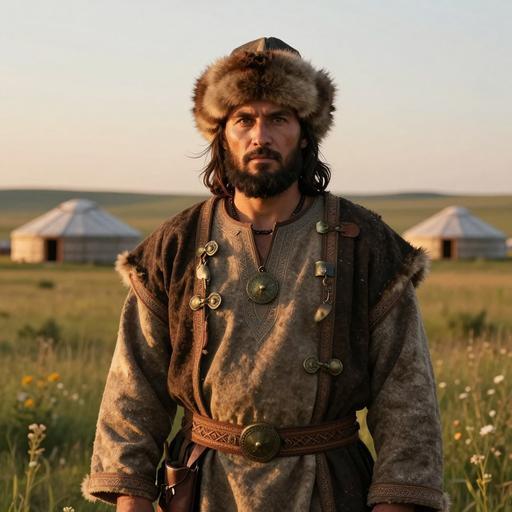
Portrait reconstruction of DA142
Ancient Individual

A man buried in Russia in the Middle Ages era

DA142
600 CE - 1300 CE
Male
Medieval Nomad, Russia
Russia
Scroll to begin
Chapter I

Identity

The biological and cultural markers that define this ancient individual

Sample ID

DA142

Date Range

600 CE - 1300 CE

Biological Sex

Male

mtDNA Haplogroup

J1c5a1

Y-DNA Haplogroup

R-Y52

Cultural Period

Medieval Nomad, Russia

Chapter II

Place

Where this individual was discovered

Country Russia
Locality Caspian steppe
Coordinates 47.2824, 39.5410
Chapter III

Time

When this individual lived in the broader context of human history

DA142 600 CE - 1300 CE
Chapter IV

Story

The narrative of this ancient life

The era and culture of the Medieval Nomads in Russia, particularly focusing on the Eurasian and Steppe Nomadic societies from 500 to 1500 CE, represent a fascinating and dynamic period marked by mobility, adaptability, and interaction with neighboring civilizations. This era encompasses a wide geographical expanse, covering the vast steppes of Eurasia, and includes various nomadic groups, each with distinct cultural and social characteristics. Here, we'll delve into the key aspects of their lifestyle, social structure, economy, warfare, religion, and interactions with sedentary societies.

Lifestyle and Social Structure

Mobility and Settlement: The defining feature of these nomadic societies was their mobility. They lived in portable dwellings known as yurts or gers, which were ideal for life on the move. Their migrations were typically seasonal, allowing them to exploit different ecological zones for grazing their herds. Despite being primarily nomadic, they did establish temporary settlements near rivers or trade routes, which sometimes grew into significant centers of trade and cultural exchange.

Clan and Tribal Organization: Socially, these nomads were organized into clans and tribes, often led by a chieftain or khan. Leadership was usually hereditary but could also depend on personal prowess and charisma. The hierarchical structure was flexible, allowing alliances and confederations to form and dissolve quickly, often in response to external threats or opportunities.

Economy and Subsistence

Pastoralism: The economy of the Eurasian Steppe Nomads was largely based on pastoralism. They herded animals like horses, sheep, goats, cattle, and camels, which provided them with meat, milk, hides, and wool. Horses were particularly central to their lifestyle, serving as transportation and a symbol of wealth and status. The nomads relied on the sustainable management of pasturelands, moving with the seasons to ensure their herds had ample feeding grounds.

Trade and Interaction: Though pastoralism was their primary economic activity, these nomads were also active traders. They engaged in long-distance trade networks, exchanging livestock, furs, and other goods for manufactured items and luxury goods from neighboring settled societies, such as Byzantium, Persia, and China. The Silk Road was a critical conduit for such exchanges, with nomads playing an essential role in facilitating trade across Eurasia.

Warfare and Conflicts

Military Prowess: The nomads of the Eurasian Steppe were renowned for their military capabilities. Their expertise in horseback riding and archery made them formidable warriors. Nomadic armies were highly mobile, able to execute swift raids, retreats, and strategic maneuvers that proved challenging for their sedentary adversaries to counter.

Conquests and Empires: This era witnessed the rise of significant nomadic empires, such as the Huns, Mongols, and the Golden Horde, which exerted considerable influence over vast territories. Under leaders like Genghis Khan, these empires demonstrated sophisticated military strategies and statecraft, integrating conquered peoples into their domain and fostering cultural and economic interactions across regions.

Religion and Beliefs

Shamanism and Tengrism: The Steppe Nomads practiced animistic and shamanistic religions, with a deep reverence for nature and natural phenomena. Tengrism, which involved the worship of Tengri, the sky god, was prominent among many of these communities. Shamans played an essential role as spiritual leaders, mediating between the physical and spiritual worlds.

Religious Syncretism: As nomads came into contact with other cultures, religious syncretism occurred. The spread of Buddhism, Christianity, and later Islam into the steppe regions influenced their traditional beliefs. Over time, many nomadic groups adopted these religions, establishing monasteries and places of worship, though often retaining elements of their original spiritual practices.

Interactions with Sedentary Societies

Influence and Adaptation: The Eurasian Nomads were not isolated; they interacted extensively with neighboring empires like Byzantium, Khwarazm, and the Chinese dynasties. These interactions led to the exchange of technologies, military tactics, and cultural practices. Nomads adapted various aspects of sedentary societies, including metallurgy, writing systems, and administrative practices, which were subsequently incorporated into their own cultures.

Impact on History: The nomads had a significant impact on the course of Eurasian history. Their movements and incursions often resulted in profound political and cultural shifts, such as the fall of the Roman Empire's western territories and the establishment of the Mongol Empire, which facilitated unprecedented connectivity across Eurasia.

In summary, the Medieval Nomads of Russia and the Eurasian Steppe from 500 to 1500 CE were characterized by their adaptability and transformative influence on the regions they traversed. Their legacy includes not only the empires they forged but also the cultural exchanges they facilitated, which shaped the development of Eurasian history.

Chapter V

Genetics

The genetic ancestry of this ancient individual

Ancient Genetic Admixture

This analysis compares the DNA profile of DA142 with ancient reference populations, showing the genetic composition in terms of prehistoric ancestral groups.

Ancient Asians 39.1%
European Hunter-Gatherers 22.6%
Western Steppe Pastoralists 18.5%
Neolithic Farmers 16.0%
Ancient Native Americans 3.8%

Modern Genetic Admixture

This analysis compares the DNA profile with present-day reference populations, showing what percentage of genetic makeup resembles modern populations from different regions.

Asia 54.8%
Northern Asian 26.4%
Siberian 22.1%
Mongolian 4.3%
Central Asian, Northern Indian & Pakistani 15.1%
Central Asian 12.4%
Indian 2.7%
Northern West Asian 10.1%
Caucasian 6.2%
Anatolian 2.2%
Mesopotamian 1.7%
Chinese & Southeast Asian 1.8%
Chinese 1.5%
Japanese & Korean 1.5%
Japanese 1.5%
Europe 42.9%
Eastern European 30.1%
Northwestern European 9.2%
English 6.3%
Northwestern European 2.9%
Southern European 3.6%
Balkan 3.6%
Africa 1.2%
West African 1.2%
Ghanaian, Liberian, Sierra Leonean 1.2%
America 1.0%
America 1.0%
Native American 1.0%

Closest Modern Populations

These are the modern populations showing the closest statistical alignment to A man buried in Russia in the Middle Ages era, ranked by genetic distance. Lower distance values indicate closer statistical similarity.

1
Bashkir
3.8922
2
Tatar Crimean Steppe
5.8827
3
Tatar Siberian
6.6573
4
Uzbek
6.6648
5
Tatar Lipka
7.4789
6
Turkmen Uzbekistan
7.7272
7
Turkmen
8.0904
8
Hazara O
8.9812
9
Khanty O1
8.9882
10
Udmurt
9.6757
Chapter VI

Context

Other ancient individuals connected to this sample

Sources

References

Scientific publications and genetic data

Scientific Publication

137 ancient human genomes from across the Eurasian steppes

Authors Damgaard PB, Marchi N, Rasmussen S
Abstract

For thousands of years the Eurasian steppes have been a centre of human migrations and cultural change. Here we sequence the genomes of 137 ancient humans (about 1× average coverage), covering a period of 4,000 years, to understand the population history of the Eurasian steppes after the Bronze Age migrations. We find that the genetics of the Scythian groups that dominated the Eurasian steppes throughout the Iron Age were highly structured, with diverse origins comprising Late Bronze Age herders, European farmers and southern Siberian hunter-gatherers. Later, Scythians admixed with the eastern steppe nomads who formed the Xiongnu confederations, and moved westward in about the second or third century BC, forming the Hun traditions in the fourth-fifth century AD, and carrying with them plague that was basal to the Justinian plague. These nomads were further admixed with East Asian groups during several short-term khanates in the Medieval period. These historical events transformed the Eurasian steppes from being inhabited by Indo-European speakers of largely West Eurasian ancestry to the mostly Turkic-speaking groups of the present day, who are primarily of East Asian ancestry.

G25 Coordinates

The G25 coordinates for sample DA142 can be used for detailed admixture analysis in our G25 Studio tool.

DA142,0.08908768,-0.0818438,0.04977018,0.0316435,-0.04106584,0.0006106,0.00915294,0.01270898,-0.00832528,-0.01569738,0.00096164,-0.00037568,0.00072904,0.00297368,0.00660396,0.00447498,-0.0005432,-0.00394364,-0.00106958,0.00308108,-0.0087201,0.00174774,-0.00033864,0.00187052,-0.00126329
Analyze in G25 Studio
Use code for 40% off Expires Feb 27