Menu
Store
Blog
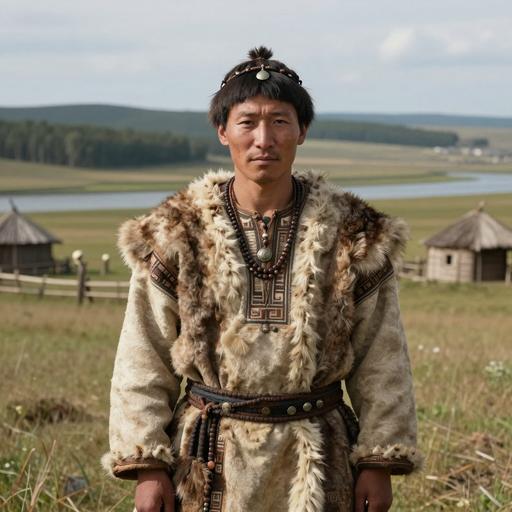
Portrait reconstruction of DA2
Ancient Individual

A man buried in Russia in the Iron Age era

DA2
925 BCE - 810 BCE
Male
Tagar Culture, Russia
Russia
Scroll to begin
Chapter I

Identity

The biological and cultural markers that define this ancient individual

Sample ID

DA2

Date Range

925 BCE - 810 BCE

Biological Sex

Male

mtDNA Haplogroup

N1a1a1a1

Y-DNA Haplogroup

R-Z2124

Cultural Period

Tagar Culture, Russia

Chapter II

Place

Where this individual was discovered

Country Russia
Locality Siberia. Tungus & Eastern Steppe
Coordinates 54.6758, 90.8536
Chapter III

Time

When this individual lived in the broader context of human history

DA2 925 BCE - 810 BCE
Chapter IV

Story

The narrative of this ancient life

The Tagar culture emerged during the Iron Age around 800 BCE and lasted until approximately 200 CE in the Minusinsk Basin, which is part of the broader region of Southern Siberia, Russia. This culture is one of the most significant Bronze to Iron Age cultures in this region, known for its unique artifacts and impressive burial practices. The Tagar people were part of the larger Scythian-like nomadic cultures that roamed the Eurasian Steppe.

Geographic and Environmental Context

The Minusinsk Basin is characterized by its varied landscape, including steppes, forest-steppes, and taiga, conducive for both pastoral and agricultural activities. This geographic diversity allowed the Tagar culture to exploit a wide range of resources, supporting their diverse economy.

Socio-Economic Structure

Tagar society, like many steppe cultures, was semi-nomadic. They engaged in both herding and farming, which allowed them to effectively adapt to the seasonal changes of the region. Their economy was primarily based on a combination of livestock management, particularly horses, cattle, and sheep, with some evidence of crop cultivation.

Craftsmanship was also a significant aspect of their economy, with highly skilled artisans producing intricate metalwork. The Tagar were adept in bronze casting, creating a variety of tools, weapons, and ornamental objects, indicating a complex societal structure with divisions of labor and trade networks.

Burial Practices and Artifacts

Tagar burial mounds, or kurgans, offer great insights into their culture and social organization. These burial sites range from modest graves to elaborate structures, suggesting a stratified society with emerging social hierarchies. The most richly adorned tombs likely belonged to high-status individuals, possibly tribal chiefs or warrior elites.

Artifacts found within these kurgans include elaborately worked bronze items, such as mirrors, weapons, and adornments, often featuring intricate designs with animal motifs, reflecting shamanistic and possibly animistic beliefs. The 'Scythian Animal Style' is prominent, with depictions of stags, felines, and fantastic creatures, symbolizing power, protection, and religious beliefs.

Art and Symbolism

The Tagar culture's art is a significant aspect of its identity. They were part of the \Animal Style" art prevalent among Eurasian nomads, characterized by dynamic depictions of animals and mythological creatures. This art style is found in their metalworks, including belt buckles, earrings, and other jewelry items. These designs were not merely decorative but carried symbolic meanings, possibly related to spiritual beliefs or clan symbols.

Cultural Transmission and Influence

The Tagar culture was part of the larger continuum of Eurasian steppe civilizations and likely influenced and was influenced by neighboring cultures. The mobility of the Tagar people facilitated the exchange of goods and ideas across vast distances, contributing to the cultural tapestry of the ancient Eurasian nomads.

Their interactions with other groups likely included trade, evidenced by the discovery of non-local goods in Tagar burial sites, such as silk, which suggests far-reaching trade connections, potentially extending to as far as China.

Decline and Legacy

By the 3rd century CE, the Tagar culture began to decline, likely due to climatic changes, resource depletion, or pressures from neighboring populations. Their legacy, however, persisted through succeeding cultures in the region and continued to influence the archaeological and cultural landscape of Southern Siberia.

In summary, the Tagar culture exemplified the dynamic and interconnected world of ancient Eurasian nomadic societies. Their adaptability, artistic achievements, and complex social structure provide a window into the life and times of the early inhabitants of Southern Siberia. Their contributions to metallurgy, art, and inter-cultural exchanges underscore the importance of steppe cultures in the broader context of Eurasian history."

Chapter V

Genetics

The genetic ancestry of this ancient individual

Ancient Genetic Admixture

This analysis compares the DNA profile of DA2 with ancient reference populations, showing the genetic composition in terms of prehistoric ancestral groups.

Western Steppe Pastoralists 32.8%
European Hunter-Gatherers 27.0%
Ancient Asians 17.9%
Neolithic Farmers 17.1%
Ancient Native Americans 5.2%

Modern Genetic Admixture

This analysis compares the DNA profile with present-day reference populations, showing what percentage of genetic makeup resembles modern populations from different regions.

Europe 61.7%
Eastern European 35.4%
Northwestern European 26.3%
Finnish 7.7%
Northwestern European 7.4%
Scandinavian 6.4%
English 4.8%
Asia 32.9%
Central Asian, Northern Indian & Pakistani 17.8%
Central Asian 10.1%
Pakistan 7.7%
Northern West Asian 9.6%
Caucasian 9.6%
Northern Asian 5.5%
Siberian 5.5%
America 4.8%
America 4.8%
Native American 4.8%
Oceania 0.6%
Melanesian 0.6%
Papuan 0.6%

Closest Modern Populations

These are the modern populations showing the closest statistical alignment to A man buried in Russia in the Iron Age era, ranked by genetic distance. Lower distance values indicate closer statistical similarity.

1
Tatar Kazan
3.4653
2
Tatar Mishar
4.2421
3
Besermyan
5.1998
4
Komi A
5.2006
5
Russian Leshukonsky
6.6755
6
Udmurt
7.0024
7
Chuvash
7.3837
8
Saami Kola
7.4868
9
Tatar Lipka
7.4885
10
Russian Pinezhsky
8.1237
Chapter VI

Context

Other ancient individuals connected to this sample

Sources

References

Scientific publications and genetic data

Scientific Publication

137 ancient human genomes from across the Eurasian steppes

Authors Damgaard PB, Marchi N, Rasmussen S
Abstract

For thousands of years the Eurasian steppes have been a centre of human migrations and cultural change. Here we sequence the genomes of 137 ancient humans (about 1× average coverage), covering a period of 4,000 years, to understand the population history of the Eurasian steppes after the Bronze Age migrations. We find that the genetics of the Scythian groups that dominated the Eurasian steppes throughout the Iron Age were highly structured, with diverse origins comprising Late Bronze Age herders, European farmers and southern Siberian hunter-gatherers. Later, Scythians admixed with the eastern steppe nomads who formed the Xiongnu confederations, and moved westward in about the second or third century BC, forming the Hun traditions in the fourth-fifth century AD, and carrying with them plague that was basal to the Justinian plague. These nomads were further admixed with East Asian groups during several short-term khanates in the Medieval period. These historical events transformed the Eurasian steppes from being inhabited by Indo-European speakers of largely West Eurasian ancestry to the mostly Turkic-speaking groups of the present day, who are primarily of East Asian ancestry.

G25 Coordinates

The G25 coordinates for sample DA2 can be used for detailed admixture analysis in our G25 Studio tool.

DA2,0.1132818,0.02711056,0.05352558,0.05275804,-0.0090023,0.01284282,-0.00250992,-0.0047368,-0.01265346,-0.02674224,0.00539294,-0.00359958,0.01112922,-0.01115184,-0.00445122,-0.00838486,-0.0095378,-0.00170394,-0.01070612,-0.01019452,0.00332298,0.00442178,-0.0113434,0.00693268,-0.00243657
Analyze in G25 Studio
Use code for 40% off Expires Feb 27