Menu
Store
Blog
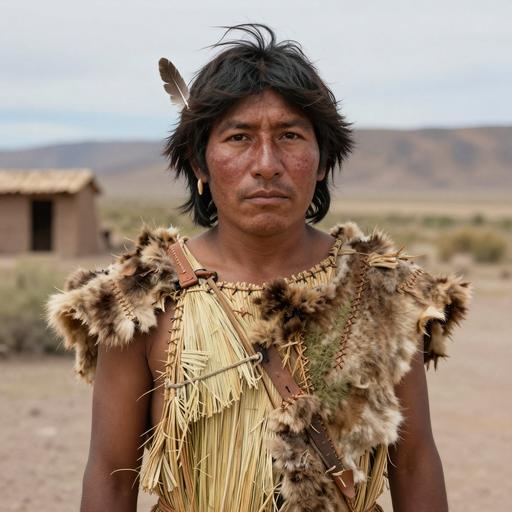
Portrait reconstruction of I11974
Ancient Individual

A man buried in Chile in the Ancient South America era

I11974
10420 BCE - 9450 BCE
Male
Los Rieles Site, Chile 12,000 Years Ago
Chile
Scroll to begin
Chapter I

Identity

The biological and cultural markers that define this ancient individual

Sample ID

I11974

Date Range

10420 BCE - 9450 BCE

Biological Sex

Male

mtDNA Haplogroup

C1b45

Y-DNA Haplogroup

Q-M902

Cultural Period

Los Rieles Site, Chile 12,000 Years Ago

Chapter II

Place

Where this individual was discovered

Country Chile
Locality Coquimbo. Los Vilos. Los Rieles
Chapter III

Time

When this individual lived in the broader context of human history

I11974 10420 BCE - 9450 BCE
Chapter IV

Story

The narrative of this ancient life

The Los Rieles site in Chile, dating back approximately 12,000 years BP (Before Present), offers a fascinating glimpse into the Paleo-Indian period of South America. This era marks a critical moment in human history, as early hunter-gatherer societies navigated the challenges of the last Ice Age and the transition into the Holocene epoch.

Geography and Environment

Located in the northern part of Chile, Los Rieles is situated in an area that would have been ecologically distinct from today’s arid conditions. Approximately 12,000 years ago, the climate was cooler and possibly wetter, shaped by the retreating glaciers of the Pleistocene epoch. This would have supported a diverse array of flora and fauna, providing ample resources for human habitation. The region may have featured grasslands, shrublands, and more substantial water sources, such as rivers or lakes, sustaining both wildlife and human populations.

Archaeological Finds

The Los Rieles site is an archaeological treasure trove that has unearthed a variety of artifacts critical to understanding the lifestyle of its ancient inhabitants. These include stone tools, such as projectile points, scrapers, and bifacial implements, indicative of a people skilled in hunting and processing animal hides. The lithic technology often reflects a high degree of sophistication, hinting at a nuanced understanding of local materials and tool-making techniques.

Subsistence and Economy

The Paleo-Indian inhabitants of Los Rieles were primarily hunter-gatherers. Their diet would have been rich in protein, sourced from a variety of megafauna that roamed the region, such as guanacos, vicuñas, and possibly larger now-extinct species like the gomphothere. Archaeological evidence suggests the practice of communal hunting strategies and the use of specialized tools for butchering and processing meat.

Gathering was also likely a significant part of their subsistence strategy. Plant materials, nuts, seeds, fruits, and tubers would have been collected seasonally. This diverse diet implies a broad ecological knowledge, allowing these ancient peoples to adapt to changing environmental conditions.

Social Organization and Culture

While direct evidence of social structures is scarce, the organization of sites like Los Rieles can offer clues. The presence of communal hunting tools could imply some form of social collaboration or organization. The Paleo-Indian societies were likely organized into family or kin-based groups, working cooperatively to secure resources.

Artistic expression, although less documented, could have existed through personal adornments, body paint, or simple carvings. Such expressions would have played a role in cultural or spiritual identity, transmitting cultural knowledge and traditions.

Migration and Technological Exchange

Los Rieles is part of a broader narrative of human migration across the Americas. The movement of peoples into South America and the adaptation to diverse environments showcases a remarkable period of human innovation and adaptability. The technological traits observed in Los Rieles may share similarities with other contemporaneous sites, suggesting interactions or shared knowledge across vast distances.

Challenges and Adaptations

Life for the Los Rieles inhabitants was challenging. They had to contend with climatic changes at the end of the Ice Age, requiring adaptive strategies to cope with changing flora and fauna resources. As glaciers retreated and sea levels rose, these communities would have experienced shifts in their landscapes, requiring flexible subsistence strategies and perhaps encouraging innovation in tool-making and social cooperation.

In conclusion, the Los Rieles site aligns with the broader Paleo-Indian period's themes of adaptation, resourcefulness, and migration. It offers a window into the lives of early South American settlers, reflecting a blend of survival strategies and cultural developments that set the stage for subsequent indigenous civilizations in the region. The study of Los Rieles continues to contribute significantly to our understanding of human history in the Americas.

Chapter V

Genetics

The genetic ancestry of this ancient individual

Ancient Genetic Admixture

This analysis compares the DNA profile of I11974 with ancient reference populations, showing the genetic composition in terms of prehistoric ancestral groups.

Ancient Native Americans 75.6%
Ancient Asians 18.8%
Western Steppe Pastoralists 5.6%

Modern Genetic Admixture

This analysis compares the DNA profile with present-day reference populations, showing what percentage of genetic makeup resembles modern populations from different regions.

America 88.7%
America 88.7%
Native American 88.7%
Asia 10.9%
Northern Asian 5.7%
Siberian 5.7%
Japanese & Korean 3.5%
Japanese 3.5%
Chinese & Southeast Asian 1.3%
Indonesian Khmer Thai Myanma 1.2%

Closest Modern Populations

These are the modern populations showing the closest statistical alignment to A man buried in Chile in the Ancient South America era, ranked by genetic distance. Lower distance values indicate closer statistical similarity.

1
Bolivian Lapaz
2.3606
2
Cachi
2.5657
3
Colla
2.5838
4
Aymara
2.5869
5
Piapoco
3.2166
6
Mixe
3.2312
7
Yukpa
3.2348
8
Mayan
3.2702
9
Wichi
3.6612
10
Huichol
3.8562
Chapter VI

Context

Other ancient individuals connected to this sample

Sources

References

Scientific publications and genetic data

Scientific Publication

Reconstructing the Deep Population History of Central and South America

Authors Posth C, Nakatsuka N, Lazaridis I
Abstract

We report genome-wide ancient DNA from 49 individuals forming four parallel time transects in Belize, Brazil, the Central Andes, and the Southern Cone, each dating to at least ∼9,000 years ago. The common ancestral population radiated rapidly from just one of the two early branches that contributed to Native Americans today. We document two previously unappreciated streams of gene flow between North and South America. One affected the Central Andes by ∼4,200 years ago, while the other explains an affinity between the oldest North American genome associated with the Clovis culture and the oldest Central and South Americans from Chile, Brazil, and Belize. However, this was not the primary source for later South Americans, as the other ancient individuals derive from lineages without specific affinity to the Clovis-associated genome, suggesting a population replacement that began at least 9,000 years ago and was followed by substantial population continuity in multiple regions.

G25 Coordinates

The G25 coordinates for sample I11974 can be used for detailed admixture analysis in our G25 Studio tool.

I11974,0.05825652,-0.30696438,0.1112102,0.09942744,-0.11199314,-0.01017742,-0.29360764,-0.34552792,-0.01470888,-0.01753934,0.00207274,-0.00092852,-0.00020772,0.02288438,-0.00625844,0.00012104,0.0055935,0.00350554,0.0005389,-0.00216972,-0.00199288,0.00864694,-0.00253986,-0.0048054,-0.005502
Analyze in G25 Studio
Use code for 40% off Expires Feb 27