Menu
Store
Blog
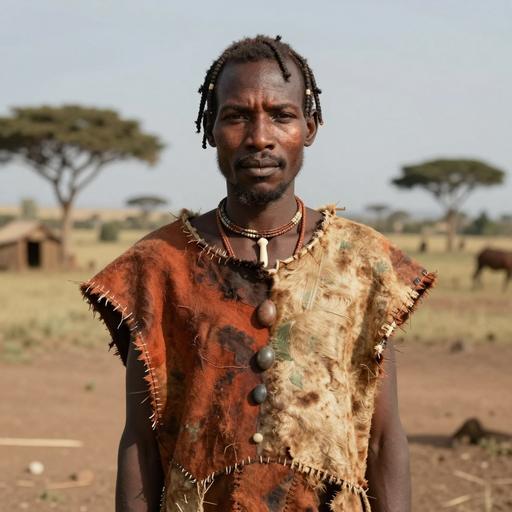
Portrait reconstruction of I12533
Ancient Individual

A man buried in Kenya in the Africa East Pastoralist era

I12533
2138 BCE - 1973 BCE
Male
Early Pastoral Neolithic in Kenya
Kenya
Scroll to begin
Chapter I

Identity

The biological and cultural markers that define this ancient individual

Sample ID

I12533

Date Range

2138 BCE - 1973 BCE

Biological Sex

Male

mtDNA Haplogroup

K1-a

Y-DNA Haplogroup

E-M75

Cultural Period

Early Pastoral Neolithic in Kenya

Chapter II

Place

Where this individual was discovered

Country Kenya
Locality Prette John's Gully
Coordinates -0.5450, 36.1060
Chapter III

Time

When this individual lived in the broader context of human history

I12533 2138 BCE - 1973 BCE
Chapter IV

Story

The narrative of this ancient life

The Early Pastoral Neolithic (EPN) in Kenya marks a significant period in East African prehistory, often characterized by the transition from hunter-gatherer societies to more sedentary, pastoralist communities. This era is notable for the introduction and development of livestock herding as a primary subsistence strategy in the region. While the exact dates of this period can vary, it generally spans from around 3000 to 1000 BCE.

Background and Context

The Early Pastoral Neolithic period developed against the backdrop of climatic and environmental changes during the Holocene. As the climate became drier and regions such as the Sahara faced desertification, human populations were prompted to move and adapt. This led to the dispersal of herding practices into East Africa, where the EPN in Kenya particularly flourished.

Culture and Society

Livelihood and Economy

  1. Pastoralism: The primary characteristic of the EPN is the emergence of pastoralism. Communities relied heavily on cattle, sheep, and goats, which were integral to their way of life. These animals provided milk, meat, and skins, and were crucial for trade.

  2. Supplementary Activities: While herding was central, these communities continued to engage in hunting, gathering, and fishing to supplement their diet. The diverse ecological zones of Kenya permitted a varied subsistence strategy.

Settlement Patterns

EPN groups were generally semi-nomadic, moving their herds seasonally in search of water and grazing lands. Over time, however, more permanent settlements began to emerge, characterized by stone and earthen architecture. These settlements were often located near reliable water sources and in regions with suitable grazing land.

Technological and Material Culture

  1. Ceramics: The EPN is marked by the introduction and development of pottery. These ceramics were often simple but functional and served as a technological improvement for storage and cooking.

  2. Lithic Technology: Stone tools remained important, with widespread use of microlithic technologies adapted for hunting and processing animal products.

  3. Artifacts and Ornamentation: There are also findings of personal ornaments made of bone, shell, and stone, indicating a cultural emphasis on adornment and possibly social status.

Artistic and Symbolic Expressions

Art and symbolic behavior are evident in rock art and the decoration of pottery and personal ornaments. These artistic expressions provide insight into the spiritual and cultural life of EPN communities.

Interaction and Social Structure

EPN societies in Kenya were likely organized in clan or kin-based groups. Social structures were complex and could have included hierarchical elements, as inferred from burial practices and settlement organization. The movement of people and livestock facilitated interactions between different groups, fostering trade and cultural exchange. Such interactions might have influenced languages and cultural practices, potentially contributing to the spread of Nilotic languages and identity.

Archaeological Evidence

Archaeological sites from the EPN, such as those found in the Turkana Basin and the Central Rift Valley, have provided valuable data through excavated artifacts, settlement remains, and animal bones. These findings, alongside modern technologies like radiocarbon dating and genetic analysis, contribute to our understanding of the EPN's temporal and spatial dynamics.

Influence and Legacy

The Early Pastoral Neolithic period set the stage for later pastoral developments in East Africa. It was fundamental in establishing patterns of movement, economy, and cultural practices that would profoundly shape the social and environmental landscape of the region. The adaptation to pastoralism and subsequent innovations laid the groundwork for the later Pastoral Neolithic and Iron Age communities, influencing the cultural and historical trajectory of Kenya and surrounding regions.

In conclusion, the Early Pastoral Neolithic period in Kenya reflects a dynamic era of adaptation and innovation. This period showcases the resilience and ingenuity of early humans in adapting to climate change and environmental shifts, which continue to shape the cultural and historical narratives of East Africa.

Chapter V

Genetics

The genetic ancestry of this ancient individual

Ancient Genetic Admixture

This analysis compares the DNA profile of I12533 with ancient reference populations, showing the genetic composition in terms of prehistoric ancestral groups.

Neolithic Farmers 57.1%
Ancient Africans 42.9%

Modern Genetic Admixture

This analysis compares the DNA profile with present-day reference populations, showing what percentage of genetic makeup resembles modern populations from different regions.

Africa 78.4%
Northern East African 55.5%
Ethiopian 45.8%
Eastern African 9.8%
North African 11.3%
Egyptian 6.0%
North African 5.4%
African Hunter-Gatherer 6.1%
Congolese & Southern East African 5.4%
South East African 5.4%
Asia 21.6%
Arab, Egyptian & Levantine 18.8%
Arabian 13.1%
Levantine 5.7%
Northern West Asian 2.8%
Cypriot 2.8%

Closest Modern Populations

These are the modern populations showing the closest statistical alignment to A man buried in Kenya in the Africa East Pastoralist era, ranked by genetic distance. Lower distance values indicate closer statistical similarity.

1
Ethiopian Oromo
2.6220
2
Ethiopian Jew
3.0260
3
Ethiopian Amhara
3.6396
4
Ethiopian Agaw
3.6572
5
Ethiopian Afar
4.1246
6
Ethiopian Tigray
4.7134
7
Sudan Arab Kababish
5.3275
8
Somali
5.4956
9
Saho Eritrean
5.5453
10
Eritrean
5.8185
Chapter VI

Context

Other ancient individuals connected to this sample

Sources

References

Scientific publications and genetic data

Scientific Publication

Ancient DNA reveals a multistep spread of the first herders into sub-Saharan Africa

Authors Prendergast ME, Lipson M, Sawchuk EA
Abstract

How food production first entered eastern Africa ~5000 years ago and the extent to which people moved with livestock is unclear. We present genome-wide data from 41 individuals associated with Later Stone Age, Pastoral Neolithic (PN), and Iron Age contexts in what are now Kenya and Tanzania to examine the genetic impacts of the spreads of herding and farming. Our results support a multiphase model in which admixture between northeastern African-related peoples and eastern African foragers formed multiple pastoralist groups, including a genetically homogeneous PN cluster. Additional admixture with northeastern and western African-related groups occurred by the Iron Age. These findings support several movements of food producers while rejecting models of minimal admixture with foragers and of genetic differentiation between makers of distinct PN artifacts.

G25 Coordinates

The G25 coordinates for sample I12533 can be used for detailed admixture analysis in our G25 Studio tool.

I12533,-0.25453,0.09995,-0.0298,-0.07391,0.00168,-0.03886,-0.00222,-0.00615,0.10396,-0.06641,-0.00675,-0.01224,0.0145,0.00093,0.02337,-0.01428,0.01379,0.00726,0.00682,-0.00029,0.006,0.01054,-0.00565,0.00306,-0.00807
Analyze in G25 Studio
Use code for 40% off Expires Feb 27