Menu
Store
Blog
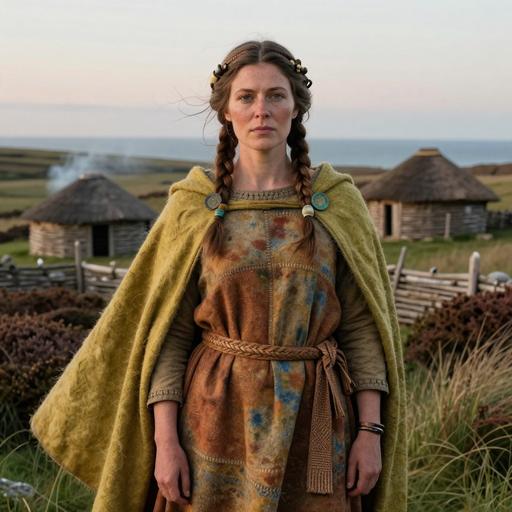
Portrait reconstruction of I16430
Ancient Individual

A woman buried in United Kingdom in the Iron Age era

I16430
337 BCE - 52 BCE
Female
Iron Age Channel Islands
United Kingdom
Scroll to begin
Chapter I

Identity

The biological and cultural markers that define this ancient individual

Sample ID

I16430

Date Range

337 BCE - 52 BCE

Biological Sex

Female

mtDNA Haplogroup

H61

Cultural Period

Iron Age Channel Islands

Chapter II

Place

Where this individual was discovered

Country United Kingdom
Locality Channel Islands. Alderney. Longis Common
Coordinates 49.7217, -2.1775
Chapter III

Time

When this individual lived in the broader context of human history

I16430 337 BCE - 52 BCE
Chapter IV

Story

The narrative of this ancient life

The Iron Age in the Channel Islands, situated in the English Channel near the French coast of Normandy and Brittany, was a fascinating era marked by the convergence of indigenous development and external influences, particularly from Celtic cultures. Spanning from around 800 BCE to the Roman conquest in the first century CE, this period saw the emergence of complex societies marked by advancements in metallurgy, agriculture, and trade.

Geography and Environment

The Channel Islands, including Jersey, Guernsey, Alderney, Sark, and several smaller islands, provided a distinct geographical environment characterized by rocky coastlines, fertile land, and a mild maritime climate. This environment supported agriculture and cattle farming, which became central to the subsistence and economy of the local communities.

Cultural Influences

The Iron Age culture of the Channel Islands was heavily influenced by the Celts, who were prominent in nearby mainland Europe. Celtic languages and customs likely permeated the islands, as indicated by archaeological finds, which suggest that these islands were not isolated but rather engaged in active trade and cultural exchanges with regions such as Brittany, Normandy, and beyond.

Social Structure

The society during this time can be inferred to have been tribal and hierarchical, likely led by chieftains or local rulers. Evidence from burial sites and oppida (fortified settlements) suggests social stratification, with elites buried with valuable goods and weapons. These structures also imply a degree of cooperation and organization in community defense and resource management.

Economy and Trade

Agriculture formed the backbone of the Iron Age economy in the Channel Islands. The fertile land supported crops such as wheat and barley, while animal husbandry provided cattle, sheep, and pigs. Trade was also significant, facilitated by the islands’ strategic position in the English Channel. Archaeological findings of imported goods like pottery and metal objects indicate robust trade networks with nearby continental cultures and possibly distant regions across the English Channel.

Technological Advancements

During the Iron Age, the Channel Islands saw significant advancements in metallurgy. Iron, more abundant and versatile than bronze, became the primary material for tools and weapons. Local smiths developed skills to produce items such as agricultural tools, which enhanced farming productivity, and weaponry, which played a crucial role in defending against potential invaders or raiders.

Settlement Patterns and Architecture

Iron Age settlements in the Channel Islands were diverse. Hill forts, located on elevated positions, served as refuges and defensive strongholds during conflicts. These forts, as seen in other Celtic regions, were likely centers of political power and trade. Roundhouses, constructed from timber with thatched roofs, were typical dwellings, offering insights into the daily life and domestic architecture of the time.

Religious Beliefs and Practices

The Iron Age inhabitants of the Channel Islands are believed to have shared the Celtic pantheon and spiritual practices. This included a reverence for nature and animistic beliefs. Sacred sites, possibly including stone monuments or certain natural features like groves or springs, would have been central to their religious life. Druids, acting as priests, likely held significant influence, acting as intermediaries between the divine and the people.

Art and Craftsmanship

Artistic expression during the Iron Age often manifested through metalwork, pottery, and textiles. The La Tène style, characterized by intricate patterns and stylized animal motifs, was prevalent and reflects broader Celtic artistic traditions. Artifacts such as jewelry and weaponry were often decorated with detailed designs, showcasing the high level of craftsmanship and aesthetic value placed on everyday objects.

Conclusion

The Iron Age Channel Islands were vibrant and dynamic, with societies that adeptly balanced isolation and connectivity. The convergence of Celtic influences with local traditions created a distinctive cultural tapestry. As a result, the Channel Islands of this era offer rich archaeological insights into the broader Celtic world, marked by innovation, trade, and artistic achievement, all embedded within the unique insular landscape of these intriguing islands.

Chapter V

Genetics

The genetic ancestry of this ancient individual

Ancient Genetic Admixture

This analysis compares the DNA profile of I16430 with ancient reference populations, showing the genetic composition in terms of prehistoric ancestral groups.

Neolithic Farmers 35.1%
European Hunter-Gatherers 32.5%
Western Steppe Pastoralists 30.0%
Ancient Africans 2.4%

Modern Genetic Admixture

This analysis compares the DNA profile with present-day reference populations, showing what percentage of genetic makeup resembles modern populations from different regions.

Europe 100.0%
Northwestern European 54.8%
English 29.2%
Northwestern European 11.8%
Scandinavian 9.2%
Finnish 4.6%
Southern European 45.2%
Italian 19.1%
Iberian 16.5%
Balkan 5.0%
Sardinian 4.7%

Closest Modern Populations

These are the modern populations showing the closest statistical alignment to A woman buried in United Kingdom in the Iron Age era, ranked by genetic distance. Lower distance values indicate closer statistical similarity.

1
Belgianc
1.7904
2
French Paris
1.8929
3
French Nord
1.9689
4
Belgianb
2.0695
5
French Brittany
2.0710
6
Belgiana
2.0882
7
French Pas De Calais
2.1105
8
French Alsace
2.3200
9
French Occitanie
2.3924
10
Swiss German
2.5102
Chapter VI

Context

Other ancient individuals connected to this sample

Sources

References

Scientific publications and genetic data

Scientific Publication

Large-scale migration into Britain during the Middle to Late Bronze Age

Authors Patterson N, Isakov M, Booth T
Abstract

Present-day people from England and Wales have more ancestry derived from early European farmers (EEF) than did people of the Early Bronze Age1. To understand this, here we generated genome-wide data from 793 individuals, increasing data from the Middle to the Late Bronze Age and Iron Age in Britain by 12-fold, and western and central Europe by 3.5-fold. Between 1000 and 875 BC, EEF ancestry increased in southern Britain (England and Wales) but not northern Britain (Scotland) due to incorporation of migrants who arrived at this time and over previous centuries, and who were genetically most similar to ancient individuals from France. These migrants contributed about half the ancestry of people of England and Wales from the Iron Age, thereby creating a plausible vector for the spread of early Celtic languages into Britain. These patterns are part of a broader trend of EEF ancestry becoming more similar across central and western Europe in the Middle to the Late Bronze Age, coincident with archaeological evidence of intensified cultural exchange2-6. There was comparatively less gene flow from continental Europe during the Iron Age, and the independent genetic trajectory in Britain is also reflected in the rise of the allele conferring lactase persistence to approximately 50% by this time compared to approximately 7% in central Europe where it rose rapidly in frequency only a millennium later. This suggests that dairy products were used in qualitatively different ways in Britain and in central Europe over this period.

G25 Coordinates

The G25 coordinates for sample I16430 can be used for detailed admixture analysis in our G25 Studio tool.

I16430,0.12437728,0.13750128,0.05473134,0.02777478,0.04217112,0.01518296,0.00184246,0.00416936,0.01689884,0.016881,-0.00247168,0.00696876,-0.01324914,-0.01163852,0.01971232,0.00433608,-0.00864,0.00443324,-0.00088004,0.00018652,0.00344378,-0.00148964,0.00295402,0.00499072,0.00289831
Analyze in G25 Studio
Use code for 40% off Expires Feb 26