Menu
Store
Blog
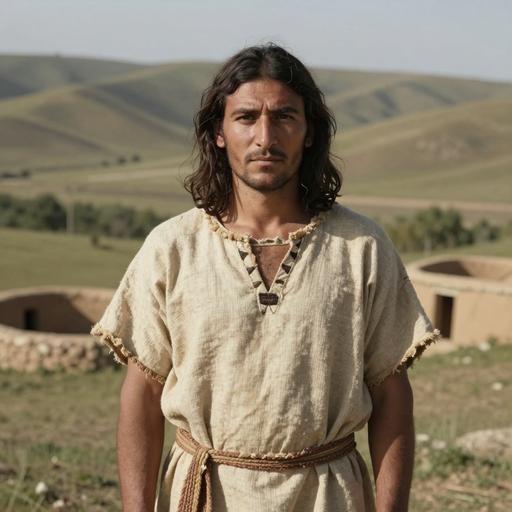
Portrait reconstruction of I3931
Ancient Individual

A man buried in Armenia in the Neolithic era

I3931
5985 BCE - 5836 BCE
Male
Neolithic Armenia
Armenia
Scroll to begin
Chapter I

Identity

The biological and cultural markers that define this ancient individual

Sample ID

I3931

Date Range

5985 BCE - 5836 BCE

Biological Sex

Male

mtDNA Haplogroup

I1

Y-DNA Haplogroup

Not available

Cultural Period

Neolithic Armenia

Chapter II

Place

Where this individual was discovered

Country Armenia
Locality Aknashen
Coordinates 40.1009, 44.2905
Chapter III

Time

When this individual lived in the broader context of human history

I3931 5985 BCE - 5836 BCE
Chapter IV

Story

The narrative of this ancient life

The Neolithic period in Armenia, particularly exemplified by sites such as Aknashen, is a fascinating chapter in the tapestry of Ancient Near Eastern civilizations. It marks one of the periods where humanity transitioned from nomadic hunter-gatherer lifestyles to more settled agricultural societies, leading to the rise of complex cultures. This era, dating from approximately 6000 to 4500 BCE, is critical in understanding the development of early human societies in the region.

Geographical Context

Armenia is situated at a strategic crossroads between Eastern Anatolia, the South Caucasus, and Northwestern Iran. This positioning makes it a vital area for studying cultural exchanges and technological advancements during the Neolithic. The fertile plains and the presence of major river systems such as the Araxes provided conducive environments for early agricultural practices.

Archaeological Discoveries

The site of Aknashen, along with others like Aratashen, provides rich archaeological insights into early Neolithic life. Excavations have unearthed a variety of artifacts, including pottery, tools, and structural remains that shed light on the lifestyle, economy, and social structure of the time.

  1. Architecture: Evidence suggests that the inhabitants lived in semi-subterranean structures made from mudbrick, indicating a settled lifestyle. These oval-shaped houses often contained several rooms and were used for both domestic living and storage.

  2. Pottery and Artifacts: The presence of pottery is a hallmark of the Neolithic period. In Armenia, pottery was often simple but increasingly showed more complexity in design over time. The tools found, mostly made from obsidian, attest to sophisticated craftsmanship and trade since obsidian is not locally available in all parts of Armenia, indicating long-distance exchange networks.

  3. Subsistence and Agriculture: The agricultural practices in Neolithic Armenia were based on the cultivation of wheat, barley, and legumes, and the domestication of animals such as cattle, sheep, and goats. This transition to agriculture allowed for more stable food supplies and population growth, which subsequently led to more complex societal structures.

Cultural and Social Aspects

The Neolithic era in Armenia was characterized by increasing social complexity, as evidenced by the variety and richness of artifacts found. There seemed to be an emerging social stratification, indicated by the diversity in house sizes and burial practices. Tools and personal ornaments found at various sites suggest a society that valued craftsmanship and had a nuanced understanding of aesthetics.

Technological Advancements

The period saw significant technological advancements, most notably in stone tool technology, particularly in the usage of obsidian to create sharp and durable implements. The development and refinement of pottery techniques also marked an important technological evolution, not just for practical uses but also for ceremonial purposes.

Trade and Interaction

Armenia's location meant that it was well-placed for interactions with neighboring regions. There is evidence to suggest that there was regular exchange not just of goods, but also of ideas. This can be seen in the similarities in pottery styles and tool technologies with those found in regions like Anatolia and the broader Near East.

Religious and Ritualistic Practices

Although less is understood about the specific religious or ritualistic beliefs of Neolithic Armenians, burial practices provide some insight. Burials often accompanied by grave goods suggest a belief in an afterlife or the significance of the deceased's status within the community. Communal activities likely played a significant role in reinforcing group identity and cohesion.

Legacy

The Neolithic culture of Armenia laid down the foundations for subsequent cultural and societal developments. The technological and social advancements of this era contributed to the rise of more complex societies in the Chalcolithic and Bronze Age periods. Moreover, it highlights Armenia's role in the broader context of the Ancient Near East as a hub of cultural and technological innovation.

In conclusion, Neolithic Armenia, as reflected in sites like Aknashen, represents a vital phase in humanity's progression towards civilization. Its exploration helps illuminate the pathways by which early human societies evolved from simple agrarian communities to complex cultural entities, marking a pivotal chapter in the story of human history in the ancient world.

Chapter V

Genetics

The genetic ancestry of this ancient individual

Ancient Genetic Admixture

This analysis compares the DNA profile of I3931 with ancient reference populations, showing the genetic composition in terms of prehistoric ancestral groups.

Neolithic Farmers 74.0%
European Hunter-Gatherers 16.2%
Ancient Asians 5.4%
Western Steppe Pastoralists 4.5%

Modern Genetic Admixture

This analysis compares the DNA profile with present-day reference populations, showing what percentage of genetic makeup resembles modern populations from different regions.

Asia 99.2%
Northern West Asian 83.8%
Mesopotamian 40.0%
Caucasian 36.7%
Anatolian 7.1%
Arab, Egyptian & Levantine 15.4%
Levantine 14.0%
Arabian 1.4%
Europe 0.8%
Southern European 0.8%

Closest Modern Populations

These are the modern populations showing the closest statistical alignment to A man buried in Armenia in the Neolithic era, ranked by genetic distance. Lower distance values indicate closer statistical similarity.

1
Ahiska
1.9679
2
Georgian Kart
2.0270
3
Georgian Kakh
2.0301
4
Turkish Erzurum
2.0440
5
Andian A
2.2577
6
Georgian Samtckhe
2.5438
7
Udi
2.7174
8
Georgian Laz
2.7208
9
Armenian Hemsheni
2.7945
10
Georgian Javakheti
2.9604
Chapter VI

Context

Other ancient individuals connected to this sample

Sources

References

Scientific publications and genetic data

Scientific Publication

The genetic history of the Southern Arc: A bridge between West Asia and Europe | Science

Authors Lazaridis I, Alpaslan-Roodenberg S, Acar A
Abstract

The period from the Copper Age to the Bronze Age marked major social and economic transformations in West Eurasia. To better understand these changes and their genetic impacts, we generated genome-wide data from 727 individuals who lived between 5000 and 1000 BCE in southeastern Europe and southwestern Asia.

G25 Coordinates

The G25 coordinates for sample I3931 can be used for detailed admixture analysis in our G25 Studio tool.

I3931,0.10259684,0.12204298,-0.05462216,-0.05008826,-0.03826052,-0.0122515,0.00712594,-0.00472558,-0.04276422,-0.0169374,0.00017204,0.00505342,-0.0088974,0.00444104,0.00049284,-0.01203712,0.00521716,-0.00337628,-0.00416124,0.0069081,0.00777984,0.0014799,0.0039802,-0.0070221,-0.00277693
Analyze in G25 Studio
Use code for 40% off Expires Feb 26