Menu
Store
Blog
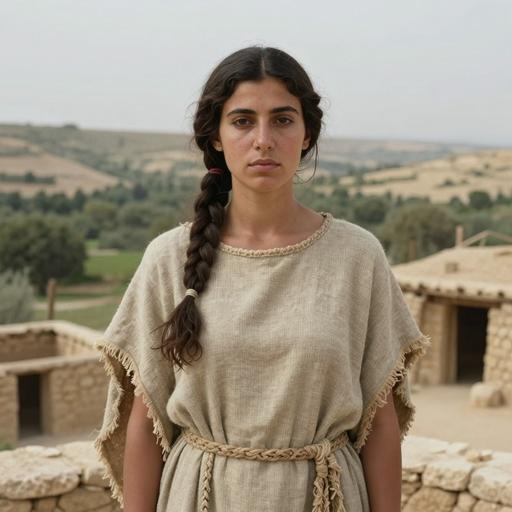
Portrait reconstruction of KFH2
Ancient Individual

A woman buried in Israel in the Neolithic era

KFH2
7728 BCE - 7588 BCE
Female
Pre-Pottery Neolithic B Israel
Israel
Scroll to begin
Chapter I

Identity

The biological and cultural markers that define this ancient individual

Sample ID

KFH2

Date Range

7728 BCE - 7588 BCE

Biological Sex

Female

mtDNA Haplogroup

N1a1b

Cultural Period

Pre-Pottery Neolithic B Israel

Chapter II

Place

Where this individual was discovered

Country Israel
Locality Kfar HaHoresh
Coordinates 32.7037, 36.4683
Chapter III

Time

When this individual lived in the broader context of human history

KFH2 7728 BCE - 7588 BCE
Chapter IV

Story

The narrative of this ancient life

The Pre-Pottery Neolithic B (PPNB) period, particularly within the context of Israel and the broader Levantine region, represents a significant era in prehistoric development, spanning roughly from 8,800 to 6,500 BCE. This era follows the earlier Pre-Pottery Neolithic A (PPNA) phase and is marked by considerable advancements in technology, social organization, and cultural practices, setting the stage for the subsequent emergence of more complex societal structures.

Geographic and Environmental Context

The PPNB in the Levant, including modern-day Israel, is characterized by a diverse range of ecological niches. This region, encompassing areas from the Mediterranean coastal plains to the mountainous inland regions and the Jordan Valley, provided a variety of resources and climates. The Mediterranean climate, with its wet winters and dry summers, supported diverse flora and fauna, contributing to a more sedentary lifestyle compared to earlier periods. This period saw improvements in climatic conditions following the last Ice Age, which likely facilitated the expansion of human settlements.

Settlement Patterns

One of the most significant features of the PPNB is the rise of larger, more permanent settlements. Unlike the earlier PPNA villages, PPNB communities were more complex, often with rectangular, multi-roomed structures, reflecting a shift towards more organized urban planning. Some notable archaeological sites from this period in Israel include Jericho, Ain Ghazal, and Beidha.

These settlements often comprised dozens of structures built with mud-bricks, stone foundations, and sometimes plaster-coated walls. The presence of communal structures, possible shrines or meeting places, indicates the beginnings of more structured social hierarchies and the importance of communal activities.

Subsistence and Economy

During the PPNB, there was a pronounced shift in subsistence strategies, primarily characterized by the intensification of agriculture. The cultivation of domesticated plants such as wheat, barley, lentils, and peas became more prevalent, along with the domestication of animals like sheep, goats, and cattle. This period marks a transition to a food-producing economy that allowed for greater food security and population growth.

Hunting and gathering still played a role in PPNB diets, but agriculture and animal husbandry reduced reliance on wild resources, leading to more stable and sustainable communities. The development of new tools, such as sickle blades and grinding stones, facilitated these agricultural practices.

Technological and Cultural Developments

The PPNB period is distinguished by significant technological innovations. The use of plaster for both architectural and artistic purposes expanded during this time, evidenced by plastered skulls and figurines found at various sites. These artifacts suggest a complex spiritual and ritualistic life, possibly involving ancestor worship or early funerary practices.

The introduction of new lithic technologies, particularly the naviform core-and-blade technique, enabled the production of standardized tools and weapons, which likely contributed to advances in agriculture and hunting efficiency.

Social and Cultural Change

The PPNB era witnessed complex social transformations. The increase in settlement size and permanence suggests a higher degree of social stratification and community organization. This period saw the emergence of specialized crafts and trade, with evidence of long-distance exchange networks that distributed obsidian, seashells, and other valuable materials throughout the region.

The elaboration of symbolic artifacts, such as figurines, decorated tools, and architectural elements, reflects evolving belief systems and possibly emerging leadership structures. The presence of communal buildings, as well as indications of ritualistic practices, points to the development of shared cultural or religious identities.

Conclusion

The Pre-Pottery Neolithic B period in the Levant, particularly in areas like modern-day Israel, represents a transformative stage in human prehistory. It laid critical foundations for societal complexities, with advancements in agriculture, architecture, and social organization paving the way for the eventual rise of cities and civilizations in the Near East. The archaeological legacy of the PPNB provides crucial insights into the evolutionary path of human societies transitioning from nomadic to settled ways of life, marking one of the significant turning points in the history of human civilization.

Chapter V

Genetics

The genetic ancestry of this ancient individual

Ancient Genetic Admixture

This analysis compares the DNA profile of KFH2 with ancient reference populations, showing the genetic composition in terms of prehistoric ancestral groups.

Neolithic Farmers 78.6%
European Hunter-Gatherers 11.1%
Ancient Africans 6.3%
Western Steppe Pastoralists 4.0%

Modern Genetic Admixture

This analysis compares the DNA profile with present-day reference populations, showing what percentage of genetic makeup resembles modern populations from different regions.

Europe 38.7%
Southern European 38.6%
Sardinian 24.2%
Iberian 14.4%
Asia 38.5%
Arab, Egyptian & Levantine 32.7%
Arabian 31.4%
Levantine 1.3%
Northern West Asian 5.7%
Cypriot 5.7%
Africa 22.8%
North African 22.8%
North African 16.4%
Egyptian 6.4%

Closest Modern Populations

These are the modern populations showing the closest statistical alignment to A woman buried in Israel in the Neolithic era, ranked by genetic distance. Lower distance values indicate closer statistical similarity.

1
Yemenite Amran
6.6123
2
Saudia
6.6260
3
Egyptian Copt
6.6546
4
Samaritan
6.8267
5
Libyan Jew
6.8856
6
Tunisian Jew
6.8980
7
Yemenite Ma'rib
6.8992
8
Yemenite Jew
6.9609
9
Yemenite Dhamar
7.0148
10
Yemenite Al Bayda
7.1054
Chapter VI

Context

Other ancient individuals connected to this sample

Sources

References

Scientific publications and genetic data

Scientific Publication

Late Pleistocene human genome suggests a local origin for the first farmers of central Anatolia

Authors Feldman M, Fernández-Domínguez E, Reynolds L
Abstract

Anatolia was home to some of the earliest farming communities. It has been long debated whether a migration of farming groups introduced agriculture to central Anatolia. Here, we report the first genome-wide data from a 15,000-year-old Anatolian hunter-gatherer and from seven Anatolian and Levantine early farmers. We find high genetic continuity (~80-90%) between the hunter-gatherers and early farmers of Anatolia and detect two distinct incoming ancestries: an early Iranian/Caucasus related one and a later one linked to the ancient Levant. Finally, we observe a genetic link between southern Europe and the Near East predating 15,000 years ago. Our results suggest a limited role of human migration in the emergence of agriculture in central Anatolia.

G25 Coordinates

The G25 coordinates for sample KFH2 can be used for detailed admixture analysis in our G25 Studio tool.

KFH2,0.06900272,0.1494713,-0.03047994,-0.0952567,0.01375638,-0.04536814,-0.00662072,-0.0014511,0.05345684,0.02129704,0.0084068,-0.01117192,0.0274647,-0.00210146,-0.00480592,0.01430648,-0.01718858,0.00347288,0.007034,0.01143614,0.01556028,0.01621632,-0.01277156,-0.0087777,-0.00326583
Analyze in G25 Studio
Use code for 40% off Expires Feb 27