Menu
Store
Blog
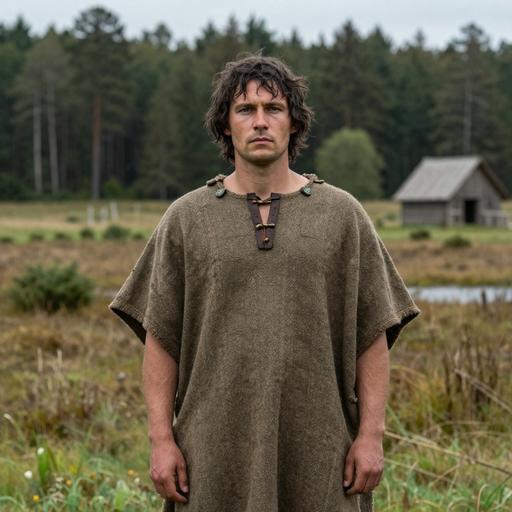
Portrait reconstruction of NEO23
Ancient Individual

A man buried in Denmark in the Iron Age era

NEO23
3646 BCE - 3528 BCE
Male
Danish Zealand Culture
Denmark
Scroll to begin
Chapter I

Identity

The biological and cultural markers that define this ancient individual

Sample ID

NEO23

Date Range

3646 BCE - 3528 BCE

Biological Sex

Male

mtDNA Haplogroup

U5b1b2

Y-DNA Haplogroup

I-Y3749

Cultural Period

Danish Zealand Culture

Chapter II

Place

Where this individual was discovered

Country Denmark
Locality Jorløse Mose (Zealand region)
Coordinates 55.6010, 11.3120
Chapter III

Time

When this individual lived in the broader context of human history

NEO23 3646 BCE - 3528 BCE
Chapter IV

Story

The narrative of this ancient life

The Danish Zealand culture, primarily centered around the island of Zealand (Sjælland in Danish), represents a rich tapestry of historical, societal, and cultural influences that have shaped both Denmark and the broader Scandinavian region. As the largest and most populated island in Denmark, Zealand holds significant importance in the country's history and cultural development. Here is an extensive and detailed description of this unique cultural landscape:

Historical Background

Zealand has been a major cultural and political center since the Viking Age. Key historical sites, such as the Roskilde Cathedral, exemplify the island's significance in Denmark's monarchy and its religious transformations over the centuries. This cathedral is a UNESCO World Heritage site and the traditional burial place for Danish royalty, illustrating the importance of Zealand in the historical narrative of Denmark.

Geography and Demography

Zealand’s geography, with its fertile lands and strategic coastal location, has made it a hub for agriculture, trade, and settlement. The island is surrounded by the Kattegat and Baltic Sea, offering a unique maritime influence. Its capital, Copenhagen, is one of Europe's key cities, reflecting a vibrant mix of ancient and modern cultural elements.

Language and Literature

The Danish language, enriched by Zealand's linguistic nuances, is the predominant language on the island. The oral and written traditions here have been influenced by both Old Norse and Middle Low German, contributing to a rich literary heritage including works by internationally recognized Danish authors like Hans Christian Andersen. His fairy tales, while universal, are imbued with a distinctly Danish perspective, often reflecting the ethos and landscapes reminiscent of Zealand.

Art and Architecture

Architecture throughout Zealand ranges from Viking fortresses to Renaissance castles and modern minimalist designs. The island is known for its historic buildings, such as Kronborg Castle in Helsingør, which famously inspired Shakespeare’s \Hamlet." Moreover, Zealand has a dynamic modern architectural scene, demonstrated by projects like the Copenhagen Opera House, which blends innovation with traditional Scandinavian aesthetics.

Music and Performing Arts

Zealand has a vibrant music scene deeply rooted in both classical forms and contemporary expressions. Home to the renowned Royal Danish Theatre and Copenhagen Opera House, the island embraces both opera and symphonic music. Meanwhile, contemporary scenes flourish with the Roskilde Festival, one of Europe's largest music festivals, bringing global music trends to the heart of Zealand.

Cuisine

Danish cuisine has seen a renaissance, much of which is centered in Zealand, particularly Copenhagen. The New Nordic Cuisine movement, spearheaded by renowned chefs like René Redzepi of Noma, emphasizes locally sourced, sustainable ingredients that showcase the flavors of Zealand and the surrounding area. Traditional dishes such as open-faced sandwiches (smørrebrød) and seafood reflect the island’s agricultural and maritime heritage.

Economy and Industry

Historically reliant on agriculture and trade due to its fertile soil and coastal access, modern Zealand’s economy has diversified significantly. It now serves as Denmark’s economic powerhouse with strengths in pharmaceuticals, shipping, and technology, particularly biotechnology initiatives led by institutions such as the University of Copenhagen.

Social Structures and Values

The social fabric of Zealand is characterized by egalitarian values, a hallmark of Danish society at large. There is a strong emphasis on community welfare and social security. Inclusivity and progressive attitudes towards gender equality and human rights are deeply embedded in the societal norms of Zealanders.

Festivals and Traditions

Zealanders celebrate various traditional and modern festivals, such as Fastelavn (similar to Halloween) and Sankt Hans Aften (Midsummer's Eve), a night of bonfires and communal festivities. These events reflect a deep-seated connection to the past, alongside a celebration of light and community.

Conclusion

The culture of Danish Zealand is a unique blend of historical richness and modern innovation, deeply rooted in its geographical location and historical importance. It reflects a dynamic interplay of preservation and progress, making it a significant and fascinating part of both Danish and Scandinavian cultural heritage. Whether through its history, arts, or modern societal frameworks, Zealand continues to influence and embody the essence of Danish culture."

Chapter V

Context

Other ancient individuals connected to this sample

Sources

References

Scientific publications and genetic data

Scientific Publication

Population genomics of post-glacial western Eurasia

Authors Allentoft ME, Sikora M, Refoyo-Martínez A
Abstract

Western Eurasia witnessed several large-scale human migrations during the Holocene1-5. Here, to investigate the cross-continental effects of these migrations, we shotgun-sequenced 317 genomes-mainly from the Mesolithic and Neolithic periods-from across northern and western Eurasia. These were imputed alongside published data to obtain diploid genotypes from more than 1,600 ancient humans. Our analyses revealed a 'great divide' genomic boundary extending from the Black Sea to the Baltic. Mesolithic hunter-gatherers were highly genetically differentiated east and west of this zone, and the effect of the neolithization was equally disparate. Large-scale ancestry shifts occurred in the west as farming was introduced, including near-total replacement of hunter-gatherers in many areas, whereas no substantial ancestry shifts happened east of the zone during the same period. Similarly, relatedness decreased in the west from the Neolithic transition onwards, whereas, east of the Urals, relatedness remained high until around 4,000 BP, consistent with the persistence of localized groups of hunter-gatherers. The boundary dissolved when Yamnaya-related ancestry spread across western Eurasia around 5,000 BP, resulting in a second major turnover that reached most parts of Europe within a 1,000-year span. The genetic origin and fate of the Yamnaya have remained elusive, but we show that hunter-gatherers from the Middle Don region contributed ancestry to them. Yamnaya groups later admixed with individuals associated with the Globular Amphora culture before expanding into Europe. Similar turnovers occurred in western Siberia, where we report new genomic data from a 'Neolithic steppe' cline spanning the Siberian forest steppe to Lake Baikal. These prehistoric migrations had profound and lasting effects on the genetic diversity of Eurasian populations.

Use code for 40% off Expires Feb 27