Menu
Store
Blog
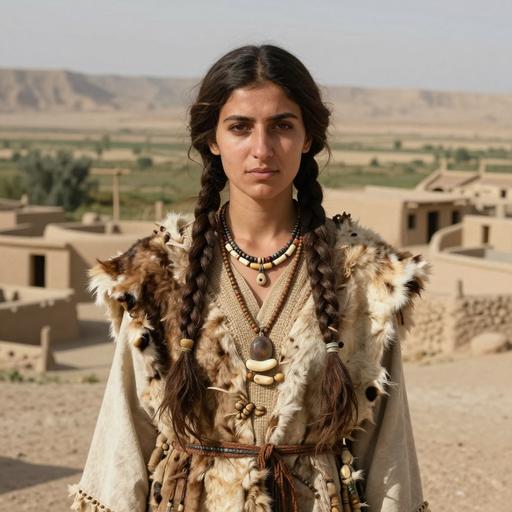
Portrait reconstruction of NEO817
Ancient Individual

An individual buried in Iran in the Early Neolithic era

NEO817
7532 BCE - 7351 BCE
Not known
Iranian Early Neolithic Pre-Pottery Neolithic
Iran
Scroll to begin
Chapter I

Identity

The biological and cultural markers that define this ancient individual

Sample ID

NEO817

Date Range

7532 BCE - 7351 BCE

Biological Sex

Not known

mtDNA Haplogroup

Not available

Cultural Period

Iranian Early Neolithic Pre-Pottery Neolithic

Chapter II

Place

Where this individual was discovered

Country Iran
Locality Tepe Guran (Ilam, Chardavol)
Coordinates 33.7560, 47.0970
Chapter III

Time

When this individual lived in the broader context of human history

NEO817 7532 BCE - 7351 BCE
Chapter IV

Story

The narrative of this ancient life

The Iranian Early Neolithic, specifically the Pre-Pottery Neolithic era, represents a fascinating period in the development of human societies on the Iranian Plateau and surrounding regions. This era, generally dated to around 8,000 to 6,500 BCE, marks a transitional phase where humans began to congregate in larger settlements and shift from a predominantly hunter-gatherer lifestyle to one more focused on agriculture and the domestication of animals. The culture of this time is characterized by several key elements that reflect innovations in subsistence, social organization, and technology.

Geography and Environment

The Iranian Plateau during this era was a diverse region with considerable ecological variety, from lush valleys to arid highlands. This diversity allowed for different subsistence strategies and facilitated the spread of new agricultural practices. The Zagros Mountains, in particular, played a crucial role in the early development of Neolithic communities due to their rich biodiversity and favorable climate, encouraging early domestication efforts and the establishment of settled communities.

Subsistence Strategies

In the Pre-Pottery Neolithic period, the transition to agriculture began to take shape, although it was not yet fully established. Communities in early Iranian Neolithic sites were experimenting with the cultivation of crops such as wheat and barley, while the domestication of animals such as goats and sheep became increasingly important. These subsistence strategies reduced the reliance on wild resources and allowed for more stable food sources, which in turn supported larger, more permanent settlements.

Settlements and Architecture

Settlements during this period were often small, comprising clusters of circular or oval-shaped dwellings made from mudbrick and other locally available materials. The architecture of these settlements reflects an intimate understanding of the environment, with buildings designed to regulate temperature and provide protection from the elements. As communities grew, so did the complexity of their settlements, hinting at the beginnings of more organized social structures.

Tools and Technology

The Pre-Pottery Neolithic era saw significant advancements in tool technology. The creation and use of tools made from flint, obsidian, and bone increased in sophistication. This included the crafting of sickles, grinding stones, and other implements crucial for agricultural and domestic activities. Additionally, while pottery had not yet become prevalent, there was a notable increase in the use of storage pits and baskets for storing surplus produce, indicating an advanced understanding of resource management.

Social Organization and Culture

The shift toward more permanent settlements likely influenced social organization, with growing communities necessitating more structured societal roles and relationships. These changes are evidenced by the presence of communal structures and shared spaces within settlements, suggesting collective activities and decision-making processes. Some early signs of trade and economic exchange are also evident, with materials such as obsidian being sourced from considerable distances, indicating the beginnings of a network of exchange across regions.

Rituals and Belief Systems

Although concrete evidence of belief systems from this period is sparse, the burial practices and occasional artistic depictions found at various sites hint at emerging spiritual or ritualistic behaviors. Human burials during this time often involved specific body placements and inclusion of grave goods, which may reflect beliefs about the afterlife or social status.

Conclusion

The Iranian Early Neolithic Pre-Pottery Neolithic period is a cornerstone in human history, representing a time of immense change and adaptation. This era set the stage for the eventual rise of more complex societies and civilizations in the region. Through the archeological remains and advancements of this period, we gain invaluable insights into the ingenuity and resilience of early human communities as they adapted to their environments and pioneered the foundations of agricultural life.

Chapter V

Context

Other ancient individuals connected to this sample

Sources

References

Scientific publications and genetic data

Scientific Publication

Population genomics of post-glacial western Eurasia

Authors Allentoft ME, Sikora M, Refoyo-Martínez A
Abstract

Western Eurasia witnessed several large-scale human migrations during the Holocene1-5. Here, to investigate the cross-continental effects of these migrations, we shotgun-sequenced 317 genomes-mainly from the Mesolithic and Neolithic periods-from across northern and western Eurasia. These were imputed alongside published data to obtain diploid genotypes from more than 1,600 ancient humans. Our analyses revealed a 'great divide' genomic boundary extending from the Black Sea to the Baltic. Mesolithic hunter-gatherers were highly genetically differentiated east and west of this zone, and the effect of the neolithization was equally disparate. Large-scale ancestry shifts occurred in the west as farming was introduced, including near-total replacement of hunter-gatherers in many areas, whereas no substantial ancestry shifts happened east of the zone during the same period. Similarly, relatedness decreased in the west from the Neolithic transition onwards, whereas, east of the Urals, relatedness remained high until around 4,000 BP, consistent with the persistence of localized groups of hunter-gatherers. The boundary dissolved when Yamnaya-related ancestry spread across western Eurasia around 5,000 BP, resulting in a second major turnover that reached most parts of Europe within a 1,000-year span. The genetic origin and fate of the Yamnaya have remained elusive, but we show that hunter-gatherers from the Middle Don region contributed ancestry to them. Yamnaya groups later admixed with individuals associated with the Globular Amphora culture before expanding into Europe. Similar turnovers occurred in western Siberia, where we report new genomic data from a 'Neolithic steppe' cline spanning the Siberian forest steppe to Lake Baikal. These prehistoric migrations had profound and lasting effects on the genetic diversity of Eurasian populations.

Use code for 40% off Expires Feb 26