Menu
Store
Blog
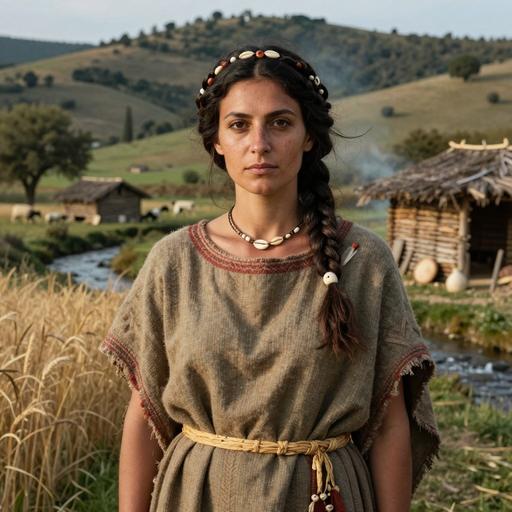
Portrait reconstruction of NEO830
Ancient Individual

A woman buried in Italy in the Chalcolithic era

NEO830
3516 BCE - 3369 BCE
Female
Rinaldone Culture
Italy
Scroll to begin
Chapter I

Identity

The biological and cultural markers that define this ancient individual

Sample ID

NEO830

Date Range

3516 BCE - 3369 BCE

Biological Sex

Female

mtDNA Haplogroup

I1c1a

Cultural Period

Rinaldone Culture

Chapter II

Place

Where this individual was discovered

Country Italy
Locality Fontenoce (Marche, Macerata, Recanati)
Coordinates 43.3830, 13.5500
Chapter III

Time

When this individual lived in the broader context of human history

NEO830 3516 BCE - 3369 BCE
Chapter IV

Story

The narrative of this ancient life

The Rinaldone culture, which inhabited parts of Italy during the Late Neolithic period, primarily in the third millennium BCE (around 3500–2300 BCE), represents a significant but not extensively understood chapter in prehistoric European anthropology. This culture is notable for its distinct funerary practices, material culture, and its role as a precursor to the development of early Italic societies.

Geographical Context

The Rinaldone culture is predominantly situated in the central regions of Italy, including modern-day Tuscany, Lazio, and parts of Umbria. This area's fertile plains and rolling hills provided an ideal setting for the development of early agricultural communities. The Valle del Fiora, a river valley in southern Tuscany, is particularly associated with this culture due to significant archaeological finds.

Archaeological Discoveries

The culture is largely known from its burial sites, which provide the bulk of available archaeological evidence. These burial sites often feature pit graves, inhumations, and collective burials, showcasing complex social structures and ritualistic practices. Notable sites include the cemeteries or necropolises in Rinaldone, Ponte San Pietro, and Gaudo.

Material Culture

The Rinaldone culture is characterized by its distinctive pottery, stone tools, and metalwork:

  • Pottery: Pottery from this period typically includes undecorated or simply decorated wares. The ceramics are primarily utilitarian, with plain globular shapes and a preference for simple geometric incisions.

  • Stone Tools: The people of this culture crafted polished stone tools such as axes, which were used for both practical and ceremonial purposes. The use of flint and chipped stone technologies were prevalent for crafting weapons and everyday items.

  • Metalwork: One of the standout features of the Rinaldone culture is its early use of copper, marking a transition from the Neolithic to the Eneolithic (Copper Age). This includes tools and personal ornaments, indicating a degree of metallurgical knowledge and skill.

Funerary Practices

The Rinaldone culture is particularly noted for its elaborate burial practices, which suggest the existence of a socially stratified society. Burials often contained grave goods, such as stone tools, pottery, and copper items, reflective of the deceased's status and occupation. The presence of ochre in graves also points to ritualistic practices associated with death.

Collective tombs suggest that kinship or clan groupings were important within the community, possibly indicating a form of ancestor worship or reverence. The orientation and positioning of bodies in graves, along with associated offerings, provide insights into their spiritual beliefs and cosmology.

Society and Economy

The economy of the Rinaldone culture was primarily based on agriculture and animal husbandry, with evidence of cereal cultivation and the domestication of cattle, sheep, and goats. This subsistence strategy facilitated a sedentary lifestyle, leading to the establishment of permanent settlements.

Given their burial practices and the goods found within, it can be inferred that the Rinaldone people had some form of social hierarchy. The presence of prestige items in some graves suggests individuals of higher status within the society, potentially leaders or influential figures in religious and social life.

Cultural Interactions

The geographical positioning of the Rinaldone culture likely facilitated interactions and exchanges with neighboring cultures. This is evident in the transmission of metallurgical techniques and certain stylistic elements in pottery, suggesting that while the Rinaldone culture had unique characteristics, it was not isolated.

Significance and Legacy

Although the Rinaldone culture was relatively short-lived, it played a significant role in the transition from the Neolithic to the Bronze Age in Italy. The advancements in metallurgy, coupled with distinctive cultural practices, influenced subsequent Italic cultures. These developments laid the groundwork for future complex societies, eventually leading to the formation of the Etruscan civilization and subsequently, Roman society.

In summary, the Rinaldone culture serves as a crucial link in understanding the prehistoric development of Italy. Its innovations in metallurgy, its distinctive burial practices, and its social structure provide valuable insights into the evolution of human societies in pre-Roman Italy. The archaeological legacy of the Rinaldone culture continues to be a topic of study, further unraveling the complexities of early European history.

Chapter V

Context

Other ancient individuals connected to this sample

Sources

References

Scientific publications and genetic data

Scientific Publication

Population genomics of post-glacial western Eurasia

Authors Allentoft ME, Sikora M, Refoyo-Martínez A
Abstract

Western Eurasia witnessed several large-scale human migrations during the Holocene1-5. Here, to investigate the cross-continental effects of these migrations, we shotgun-sequenced 317 genomes-mainly from the Mesolithic and Neolithic periods-from across northern and western Eurasia. These were imputed alongside published data to obtain diploid genotypes from more than 1,600 ancient humans. Our analyses revealed a 'great divide' genomic boundary extending from the Black Sea to the Baltic. Mesolithic hunter-gatherers were highly genetically differentiated east and west of this zone, and the effect of the neolithization was equally disparate. Large-scale ancestry shifts occurred in the west as farming was introduced, including near-total replacement of hunter-gatherers in many areas, whereas no substantial ancestry shifts happened east of the zone during the same period. Similarly, relatedness decreased in the west from the Neolithic transition onwards, whereas, east of the Urals, relatedness remained high until around 4,000 BP, consistent with the persistence of localized groups of hunter-gatherers. The boundary dissolved when Yamnaya-related ancestry spread across western Eurasia around 5,000 BP, resulting in a second major turnover that reached most parts of Europe within a 1,000-year span. The genetic origin and fate of the Yamnaya have remained elusive, but we show that hunter-gatherers from the Middle Don region contributed ancestry to them. Yamnaya groups later admixed with individuals associated with the Globular Amphora culture before expanding into Europe. Similar turnovers occurred in western Siberia, where we report new genomic data from a 'Neolithic steppe' cline spanning the Siberian forest steppe to Lake Baikal. These prehistoric migrations had profound and lasting effects on the genetic diversity of Eurasian populations.

Use code for 40% off Expires Feb 26