Menu
Store
Blog
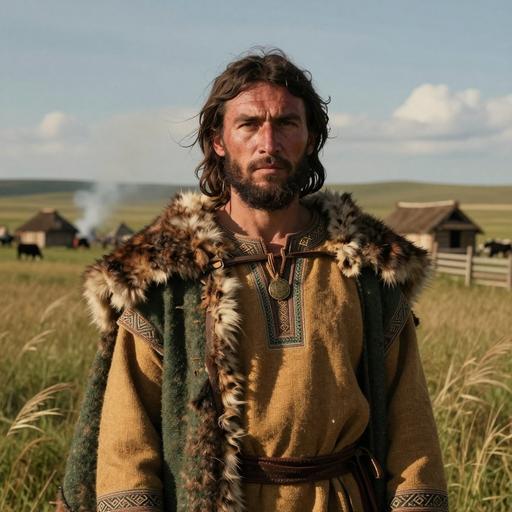
Portrait reconstruction of NV3001
Ancient Individual

A man buried in Russia in the Middle Bronze Age era

NV3001
2127 BCE - 1924 BCE
Male
Lola Culture, Russian Steppe
Russia
Scroll to begin
Chapter I

Identity

The biological and cultural markers that define this ancient individual

Sample ID

NV3001

Date Range

2127 BCE - 1924 BCE

Biological Sex

Male

mtDNA Haplogroup

R1b

Y-DNA Haplogroup

Q-BY72936

Cultural Period

Lola Culture, Russian Steppe

Chapter II

Place

Where this individual was discovered

Country Russia
Locality North Caucasus steppe. Nevinnommiskij 3
Coordinates 44.7349, 41.9387
Chapter III

Time

When this individual lived in the broader context of human history

NV3001 2127 BCE - 1924 BCE
Chapter IV

Story

The narrative of this ancient life

The Lola Culture, a fascinating yet under-explored cultural period, is one of the many intriguing phases that populated the vast expanse of the Russian steppe. Steppes, known for their sweeping grasslands, have been cultural crossroads for millennia, hosting a diverse array of nomadic peoples. The Lola Culture, emerging in the heart of this region, represents a specific time frame and lifestyle that is both emblematic of nomadic traditions and distinct in its attributes.

Geographical Context

The Russian steppe, characterized by its expansive plains and semi-arid climate, stretches across Eastern Europe and Central Asia. It serves as a natural corridor connecting various cultural and trade hubs. During the era of the Lola Culture, the region was a vibrant mosaic of interacting tribes and cultures, shaped by both its environment and its position as a conduit for migration and exchange.

Historical Period

The exact timeline of the Lola Culture is somewhat nebulous, as is often the case with prehistoric and protohistoric cultures in the steppe. Yet, it likely flourished during the late Bronze Age to early Iron Age, a period marked by significant transitions. This era saw technological advancements like metallurgy, shifts in social structures, and intensified cultural exchanges, significantly influencing the development of societies across Eurasia.

Cultural Characteristics

  1. Social Organization: The Lola Culture was predominantly nomadic, reflecting the economic and social adaptations necessary for life on the steppe. Its social organization was likely kin-based, with extended families and clans assuming primary roles. Leadership might have been fluid, with chiefs or elders leading through consensus or charisma rather than rigid hierarchies.

  2. Economy and Subsistence: Survival on the steppes demanded a flexible economy. The Lola people likely engaged in pastoralism, herding sheep, horses, and cattle that could thrive in the grasslands. Hunting and gathering complemented this lifestyle, with reliance on game, berries, and roots significant during times when migration or environmental conditions required it.

  3. Material Culture: Archaeological evidence, though sparse, suggests that the Lola Culture exhibited a blend of indigenous and borrowed technological advancements. Metalworking, especially in bronze and later iron, was crucial, with the crafting of tools, weapons, and ornaments indicating both practical and cultural importance. Pottery from this culture, while often utilitarian, also showed increasing complexity and decoration over time, hinting at aesthetic development.

  4. Spiritual and Artistic Expression: As with many nomadic cultures, spiritual beliefs in the Lola Culture likely centered around natural elements and ancestor worship. Shamanistic practices might have been prevalent, with rituals designed to appease or harness natural forces. Artistic expressions, perhaps in the form of carvings or textiles, would reflect these beliefs, although physical evidence is limited due to the deterioration of organic materials over time.

  5. Interactions and Mobility: The nomadic lifestyle fostered high mobility, with the people of the Lola Culture adept at long-distance travel. This allowed them to engage in trade, mingle with other cultures, and spread their technological innovations and artistic motifs across vast distances. Contact with neighboring cultures likely facilitated cultural exchanges, influencing regional histories significantly.

Challenges and Decline

The decline or transformation of the Lola Culture, akin to many nomadic societies, can be attributed to a confluence of factors including climatic shifts, overuse of resources, and increasing pressure from more sedentary societies. These elements often precipitated migrations, assimilations, or the evolution into more complex socio-political structures.

Legacy and Influence

The legacy of the Lola Culture, like many steppe cultures, is not easily delineated due to its transient nature and lack of written records. However, its influence is implicit in the way subsequent cultures adapted and thrived on the steppes. Echoes of their lifestyle and technologies might be seen in the enduring traditions of steppe nomadism and in the cultural practices of later steppe empires.

In conclusion, the Lola Culture represents a vivid chapter in the tapestry of steppe history, embodying the resilience and adaptability required to navigate one of Earth's most challenging environments. Understanding this culture aids in piecing together the broader narrative of human development across the vast Eurasian landscape.

Chapter V

Genetics

The genetic ancestry of this ancient individual

Ancient Genetic Admixture

This analysis compares the DNA profile of NV3001 with ancient reference populations, showing the genetic composition in terms of prehistoric ancestral groups.

Western Steppe Pastoralists 49.6%
Neolithic Farmers 17.7%
European Hunter-Gatherers 15.1%
Ancient Asians 13.2%
Ancient Native Americans 4.5%

Modern Genetic Admixture

This analysis compares the DNA profile with present-day reference populations, showing what percentage of genetic makeup resembles modern populations from different regions.

Europe 66.9%
Northwestern European 34.0%
English 20.0%
Finnish 14.0%
Eastern European 32.9%
Asia 26.3%
Central Asian, Northern Indian & Pakistani 21.8%
Pakistan 21.8%
Northern West Asian 4.5%
Caucasian 4.5%
America 6.7%
America 6.7%
Native American 6.7%

Closest Modern Populations

These are the modern populations showing the closest statistical alignment to A man buried in Russia in the Middle Bronze Age era, ranked by genetic distance. Lower distance values indicate closer statistical similarity.

1
Tatar Kazan
5.8676
2
Besermyan
6.4337
3
Tatar Mishar
7.2309
4
Udmurt
7.7663
5
Komi A
7.9484
6
Tatar Lipka
8.1815
7
Pamiri Rushan
8.1997
8
Pamiri Shugnan
8.2766
9
Tajik Tajikistan Hisor
8.3917
10
Pamiri Badakhshan
8.6227
Chapter VI

Context

Other ancient individuals connected to this sample

Sources

References

Scientific publications and genetic data

Scientific Publication

Ancient human genome-wide data from a 3000-year interval in the Caucasus corresponds with eco-geographic regions

Authors Wang CC, Reinhold S, Kalmykov A
Abstract

Archaeogenetic studies have described the formation of Eurasian 'steppe ancestry' as a mixture of Eastern and Caucasus hunter-gatherers. However, it remains unclear when and where this ancestry arose and whether it was related to a horizon of cultural innovations in the 4th millennium BCE that subsequently facilitated the advance of pastoral societies in Eurasia. Here we generated genome-wide SNP data from 45 prehistoric individuals along a 3000-year temporal transect in the North Caucasus. We observe a genetic separation between the groups of the Caucasus and those of the adjacent steppe. The northern Caucasus groups are genetically similar to contemporaneous populations south of it, suggesting human movement across the mountain range during the Bronze Age. The steppe groups from Yamnaya and subsequent pastoralist cultures show evidence for previously undetected farmer-related ancestry from different contact zones, while Steppe Maykop individuals harbour additional Upper Palaeolithic Siberian and Native American related ancestry.

G25 Coordinates

The G25 coordinates for sample NV3001 can be used for detailed admixture analysis in our G25 Studio tool.

NV3001,0.1030123,0.01694074,0.02844286,0.06471242,-0.02970382,0.01966764,-0.00780182,-0.01009032,-0.01511704,-0.03081674,0.00504858,-0.00595898,0.00861614,-0.00625956,-0.00401174,-0.00653804,-0.01008626,-0.00322608,-0.0082727,-0.01196346,-0.00346876,0.00289552,-0.01179966,0.00316572,-0.00492258
Analyze in G25 Studio
Use code for 40% off Expires Feb 27