Menu
Store
Blog
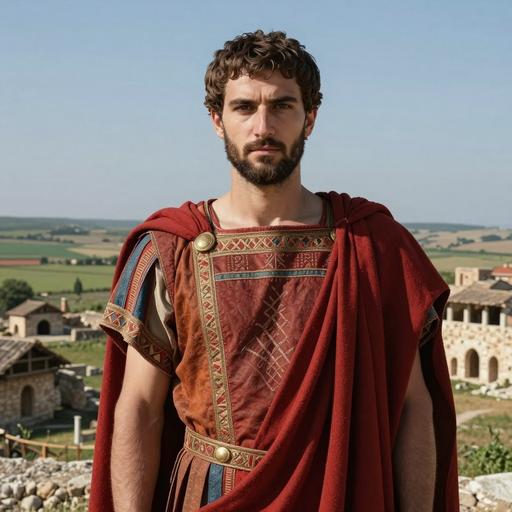
Portrait reconstruction of R3918
Ancient Individual

A man buried in Serbia in the Middle Ages era

R3918
993 CE - 1149 CE
Male
Late Roman Sirmium, Serbia
Serbia
Scroll to begin
Chapter I

Identity

The biological and cultural markers that define this ancient individual

Sample ID

R3918

Date Range

993 CE - 1149 CE

Biological Sex

Male

mtDNA Haplogroup

Not available

Y-DNA Haplogroup

Not available

Cultural Period

Late Roman Sirmium, Serbia

Chapter II

Place

Where this individual was discovered

Country Serbia
Locality Sirmium
Coordinates 44.9668, 19.6099
Chapter III

Time

When this individual lived in the broader context of human history

R3918 993 CE - 1149 CE
Chapter IV

Story

The narrative of this ancient life

Late Roman Sirmium, located in modern-day Serbia, was a significant city in the Roman Empire and later the Byzantine Empire. Sirmium's strategic location at the crossroads of major trade routes and its proximity to the Danube River made it a crucial military and economic hub during antiquity. This comprehensive description delves into the historical context, cultural developments, economic significance, architectural heritage, and religious transformations of Late Roman Sirmium.

Historical Context

Sirmium's significance rose during the Roman Empire, especially after Diocletian's administrative reforms in the late 3rd century, which divided the empire into dioceses for more efficient governance. Sirmium became one of the four capitals of the Tetrarchic system, serving as a major administrative center. Its prominence continued in the Late Roman period (3rd to 6th centuries), even as the empire began to face increasing pressures from both internal instabilities and external threats, such as the Gothic invasions.

Political and Military Importance

As a strategic military outpost near the Danubian limes, Sirmium played a crucial role in the defense against invasions from northern tribes. The city housed significant military forces and acted as a staging ground for operations both defensive against Barbarian incursions and offensive into enemy territories. During the Byzantine period, Sirmium continued to serve as a military bulwark against the encroaching Avars, Slavs, and other groups that sought to penetrate the Balkan Peninsula.

Economic Significance

Sirmium's location made it a pivotal node in the network of trade routes that spanned the Roman Empire. The city was a melting pot of cultures, languages, and goods, facilitating trade in agricultural products, textiles, and crafts. It had access to local resources, including the fertile plains of the region, which supported a robust agricultural economy, further contributing to its prosperity.

Cultural Developments

Culturally, Sirmium was a vibrant city that reflected the diverse influences of the Roman Empire. The influx of merchants, soldiers, and officials from various parts of the empire contributed to a rich tapestry of cultural and social dynamics. Sirmium was renowned for its schools, public baths, and entertainment venues, which included theaters and circuses that hosted chariot races and gladiatorial games.

Architectural Heritage

The architectural landscape of Sirmium during the Late Roman period was marked by grandiose structures that embodied Roman engineering prowess. Key examples included massive fortifications built to defend against Barbarian threats, luxurious villas adorned with intricate mosaics, public buildings, and temples reflecting both conventional Roman and emerging Christian religious practices. Archaeological excavations have unearthed remains of a sophisticated urban layout with well-planned streets and an advanced water management system.

Religious Transformations

During the Late Roman period, Christianity was gaining ground, transforming the religious fabric of the empire. Initially, Christian communities in Sirmium coexisted alongside traditional Roman polytheistic practices. Over time, as Christianity became more widely accepted and eventually the state religion under Emperor Constantine the Great, Sirmium saw the construction of churches and the emergence of a strong Christian community. The city even became an episcopal seat and played a role in early church councils.

Decline and Transition

The decline of Sirmium began with the increasingly severe Barbarian invasions in the 5th and 6th centuries. The city faced devastation during the Hunnic invasions and later the Gothic Wars, leading to a decline in its economic and political importance. The Byzantine Empire retained nominal control over the region, but the shifting geopolitical landscape saw Sirmium's prominence wane as attention turned to Constantinople and other emerging centers.

In summary, Late Roman Sirmium was a city of remarkable historical significance during a transformative era marked by military, economic, and cultural vitality. Its strategic importance, economic prosperity, and role in the religious transformation of the empire make it a captivating subject for historical study, offering insights into the complexities and transitions of the Late Roman and early Byzantine periods.

Chapter V

Genetics

The genetic ancestry of this ancient individual

Ancient Genetic Admixture

This analysis compares the DNA profile of R3918 with ancient reference populations, showing the genetic composition in terms of prehistoric ancestral groups.

European Hunter-Gatherers 45.7%
Western Steppe Pastoralists 31.3%
Neolithic Farmers 22.9%

Modern Genetic Admixture

This analysis compares the DNA profile with present-day reference populations, showing what percentage of genetic makeup resembles modern populations from different regions.

Europe 97.6%
Northwestern European 58.5%
English 30.9%
Northwestern European 17.4%
Scandinavian 5.4%
Finnish 4.9%
Southern European 31.6%
Italian 13.7%
Balkan 11.7%
Sardinian 6.3%
Eastern European 7.4%
Asia 2.2%
Northern West Asian 2.2%
Cypriot 2.2%

Closest Modern Populations

These are the modern populations showing the closest statistical alignment to A man buried in Serbia in the Middle Ages era, ranked by genetic distance. Lower distance values indicate closer statistical similarity.

1
Austrian
1.8944
2
German Erlangen
1.9972
3
German
2.1176
4
French Alsace
2.4101
5
French Nord
2.5635
6
Hungarian
2.6076
7
Belgiana
2.7202
8
Belgianb
2.7866
9
French Pas De Calais
2.8020
10
Belgianc
2.8368
Chapter VI

Context

Other ancient individuals connected to this sample

Sources

References

Scientific publications and genetic data

G25 Coordinates

The G25 coordinates for sample R3918 can be used for detailed admixture analysis in our G25 Studio tool.

R3918,0.12537956,0.1348047,0.05891074,0.02992262,0.04402742,0.01199764,0.00373154,0.00875518,0.01397188,0.005126,-0.0035288,0.00050764,0.00127824,-0.00065936,0.00282116,0.0026644,-0.00105438,-0.0004092,0.00159432,0.00095844,0.00326882,-0.0005171,-0.0015975,-0.0011852,6.041E-05
Analyze in G25 Studio
Use code for 40% off Expires Feb 26