Menu
Store
Blog
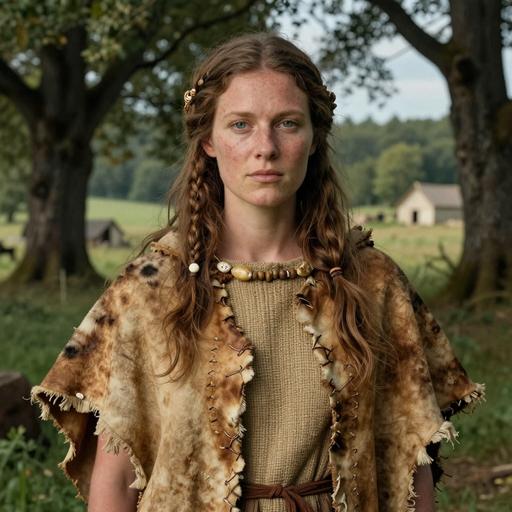
Portrait reconstruction of Rigney1
Ancient Individual

A woman buried in France in the Pleistocene era

Rigney1
13696 BCE - 13321 BCE
Female
Rigney 1 Site, France
France
Scroll to begin
Chapter I

Identity

The biological and cultural markers that define this ancient individual

Sample ID

Rigney1

Date Range

13696 BCE - 13321 BCE

Biological Sex

Female

mtDNA Haplogroup

U2'3'4'7'8'9

Cultural Period

Rigney 1 Site, France

Chapter II

Place

Where this individual was discovered

Country France
Locality Rigney
Coordinates 47.2300, 6.1000
Chapter III

Time

When this individual lived in the broader context of human history

Rigney1 13696 BCE - 13321 BCE
Chapter IV

Story

The narrative of this ancient life

The Rigney 1 Site is an important archaeological location that provides valuable insights into the Paleolithic era in what is now modern-day France. This period, also known as the Old Stone Age, spans a significant portion of early human prehistory, roughly from around 2.6 million years ago to around 12,000 years ago. The site reflects a broad spectrum of human development, particularly the evolution of early human technology, society, and interaction with the environment.

Geography and Environment

The Rigney 1 Site is situated in a region characterized by its diverse landscape, which during the Paleolithic era, would have featured lush valleys, wooded areas, and proximity to water sources. These environmental conditions provided a rich supply of resources, including game animals for hunting, plants for foraging, and raw materials for tool-making. The climatic conditions would have varied throughout the Paleolithic, with periods of glaciation and interglacial warmth affecting the local flora and fauna.

Human Inhabitants

The site is associated with early Homo species, including Neanderthals and later anatomically modern humans (Homo sapiens). The inhabitants of this region were hunter-gatherers, relying on their keen knowledge of the environment to sustain their communities. Evidence from the site suggests that these early humans had developed complex social structures and communication methods. This is inferred from the organization of living spaces and the presence of potential communal areas for activities and gatherings.

Tools and Technology

One of the defining aspects of the Paleolithic era was the development and refinement of stone tools. At the Rigney 1 Site, archaeologists have found a variety of lithic artifacts, representing different stages of tool-making technology. This includes simple flake tools, such as scrapers and choppers, which would have been used for processing animal hides and butchering meat. Over time, more advanced tools like bifacial hand axes and projectile points appeared, suggesting improvements in craftsmanship and technique. The site also provides evidence of the use of fire, a critical technological milestone that offered warmth, protection, and a method for cooking food.

Art and Symbolism

Though not as prominent as some later Paleolithic sites renowned for cave art, cultural artifacts from the Rigney 1 Site hint at the early expressions of symbolic thought. Items such as carved bones or decorated stones may represent the beginnings of artistic expression or ritualistic behavior, reflecting the cognitive development of its inhabitants.

Interactions and Trade

The presence of non-local materials at the Rigney 1 Site implies that its inhabitants engaged in trade or had contact with distant groups. This suggests that there were networks of communication and exchange between different Paleolithic communities, which would have facilitated the dissemination of ideas, techniques, and cultural practices.

Conclusion

The Rigney 1 Site offers a fascinating snapshot of life during the Paleolithic era in France. It highlights the adaptability and ingenuity of early humans in a changing environment, showcasing their technological advancements, social structures, and early cultural expressions. As ongoing research continues to unravel the mysteries of this period, the site will undoubtedly remain a focal point for understanding the complex tapestry of human prehistory.

Chapter V

Genetics

The genetic ancestry of this ancient individual

Ancient Genetic Admixture

This analysis compares the DNA profile of Rigney1 with ancient reference populations, showing the genetic composition in terms of prehistoric ancestral groups.

Western Steppe Pastoralists 42.9%
Ancient Asians 25.7%
Neolithic Farmers 24.6%
Ancient Africans 4.6%
Ancient Oceanians 2.3%

Modern Genetic Admixture

This analysis compares the DNA profile with present-day reference populations, showing what percentage of genetic makeup resembles modern populations from different regions.

Europe 80.7%
Northwestern European 62.5%
English 28.5%
Northwestern European 27.3%
Scandinavian 5.7%
Finnish 0.9%
Eastern European 13.0%
Southern European 5.3%
Iberian 5.3%
Asia 9.0%
Central Asian, Northern Indian & Pakistani 6.6%
Indian 6.6%
Chinese & Southeast Asian 2.4%
Tibetan 2.1%
Africa 4.6%
West African 3.7%
Senegambian & Guinean 3.7%
African Hunter-Gatherer 0.9%
Oceania 3.6%
Melanesian 3.6%
Papuan 3.6%
America 2.1%
America 2.1%
Native American 2.1%

Closest Modern Populations

These are the modern populations showing the closest statistical alignment to A woman buried in France in the Pleistocene era, ranked by genetic distance. Lower distance values indicate closer statistical similarity.

1
Tatar Mishar
6.1983
2
Moksha
7.5663
3
Mordovian
7.6435
4
Turkish Deliorman
7.6446
5
Erzya
7.6945
6
Roma Barcelona
7.7376
7
Afrikaner
7.9545
8
Russian Krasnoborsky
7.9989
9
Tatar Kazan
8.0276
10
Hungarian
8.1574
Chapter VI

Context

Other ancient individuals connected to this sample

Sources

References

Scientific publications and genetic data

Scientific Publication

The genetic history of Ice Age Europe

Authors Fu Q, Posth C, Hajdinjak M
Abstract

Modern humans arrived in Europe ~45,000 years ago, but little is known about their genetic composition before the start of farming ~8,500 years ago. Here we analyse genome-wide data from 51 Eurasians from ~45,000-7,000 years ago. Over this time, the proportion of Neanderthal DNA decreased from 3-6% to around 2%, consistent with natural selection against Neanderthal variants in modern humans. Whereas there is no evidence of the earliest modern humans in Europe contributing to the genetic composition of present-day Europeans, all individuals between ~37,000 and ~14,000 years ago descended from a single founder population which forms part of the ancestry of present-day Europeans. An ~35,000-year-old individual from northwest Europe represents an early branch of this founder population which was then displaced across a broad region, before reappearing in southwest Europe at the height of the last Ice Age ~19,000 years ago. During the major warming period after ~14,000 years ago, a genetic component related to present-day Near Easterners became widespread in Europe. These results document how population turnover and migration have been recurring themes of European prehistory.

G25 Coordinates

The G25 coordinates for sample Rigney1 can be used for detailed admixture analysis in our G25 Studio tool.

Rigney1,0.10036432,0.06552262,0.04011192,0.04712396,0.0270081,-0.00063948,0.00514788,0.01085764,0.01631494,0.00443904,0.00031142,0.00069326,0.00235628,-0.00414534,-0.00518208,-0.00640094,-0.00869584,-0.00294124,-0.0088186,-0.00767672,0.00640628,0.00404926,-0.01197032,-0.00434766,-0.00088108
Analyze in G25 Studio
Use code for 40% off Expires Feb 27