Menu
Store
Blog
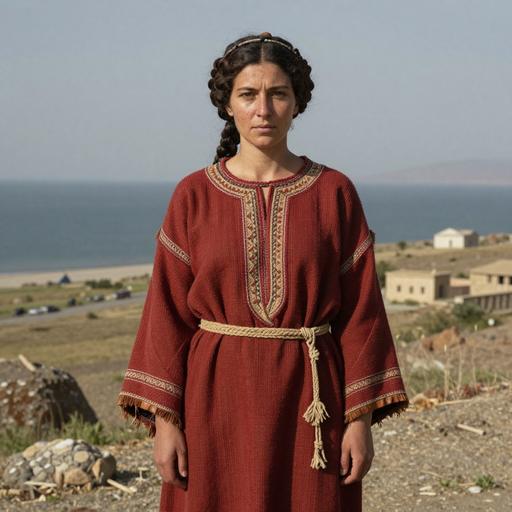
Portrait reconstruction of VEK006
Ancient Individual

A woman buried in Russia in the Copper Age era

VEK006
3000 BCE - 2800 BCE
Female
Kura-Araxes Culture, Caucasus, Russia
Russia
Scroll to begin
Chapter I

Identity

The biological and cultural markers that define this ancient individual

Sample ID

VEK006

Date Range

3000 BCE - 2800 BCE

Biological Sex

Female

mtDNA Haplogroup

U4a2

Cultural Period

Kura-Araxes Culture, Caucasus, Russia

Chapter II

Place

Where this individual was discovered

Country Russia
Locality Caspian sea shore. Velikent
Coordinates 42.1798, 48.0661
Chapter III

Time

When this individual lived in the broader context of human history

VEK006 3000 BCE - 2800 BCE
Chapter IV

Story

The narrative of this ancient life

The Kura-Araxes culture, also known as the Early Transcaucasian Culture, is a significant prehistoric culture that flourished from the late 4th millennium BCE to the early 2nd millennium BCE. It covered a vast geographical area that included the South Caucasus, particularly modern-day Armenia, Azerbaijan, and Georgia, extending into Northwestern Iran and Eastern Turkey. The culture derives its name from the Kura and Araxes river valleys, which were central to the region's settlement patterns and cultural development.

Origins and Development

The origins of the Kura-Araxes culture can be traced back to innovations during the Chalcolithic period in the South Caucasus. Over time, the culture spread and integrated with various local traditions, creating a distinctive and wide-ranging cultural manifestation that encompassed diverse communities. The expansive reach of the culture is indicative of significant interactions and exchanges across different regions, likely facilitated by trade routes and shared technological advancements.

Settlement Patterns

The Kura-Araxes communities are characterized by their settlements, which ranged from small hamlets to larger fortified sites. These settlements were often strategically located on elevated sites, providing defensive advantages and access to trade routes. The architecture of Kura-Araxes sites typically included circular or oval-shaped houses made from mud-brick or stone foundations, often featuring a central hearth that suggests communal and ritualistic functions.

Material Culture

The Kura-Araxes culture is particularly noted for its distinctive pottery, which includes highly burnished, black, and red wares known for their geometric designs and animal motifs. The sophistication of their pottery indicates a high degree of craftsmanship and aesthetic development. Apart from pottery, the Kura-Araxes people were adept in metallurgy, particularly in copper and bronze, producing tools, weapons, and ornamental objects that demonstrate an understanding of complex metallurgical techniques.

Economy and Subsistence

The economy of the Kura-Araxes people was predominantly agrarian, with agriculture and animal husbandry forming the base of their subsistence. Evidence suggests the cultivation of crops such as wheat and barley, alongside the domestication of animals like sheep, goats, and cattle. This subsistence model supported relatively stable communities, although the presence of nomadic pastoral elements is also suggested by archaeological findings.

Social and Cultural Aspects

The social organization of the Kura-Araxes culture is less clearly understood due to limited textual evidence. However, the distribution and size of settlements suggest a society that balanced egalitarian village life with emerging complexities of social hierarchy. Artefacts and burial practices indicate beliefs in an afterlife and suggest that social status might have played a role in ritual and ceremonial life.

Decline and Legacy

By the early 2nd millennium BCE, the Kura-Araxes culture had begun to decline, possibly due to environmental changes, economic factors, or internal social transformations. Despite its decline, the legacy of the Kura-Araxes culture continued to influence subsequent cultures in the region, notably through its technological contributions in metallurgy and pottery. The cultural interactions initiated by the Kura-Araxes people laid the groundwork for the complex social and economic networks that would characterize later civilizations in the Near East.

In summary, the Kura-Araxes culture represents a significant chapter in the prehistoric development of the Ancient Near East, distinguished by its unique material culture, strategic settlement patterns, and wide-reaching cultural influence across a complex and diverse landscape.

Chapter V

Genetics

The genetic ancestry of this ancient individual

Ancient Genetic Admixture

This analysis compares the DNA profile of VEK006 with ancient reference populations, showing the genetic composition in terms of prehistoric ancestral groups.

Neolithic Farmers 57.5%
European Hunter-Gatherers 22.7%
Western Steppe Pastoralists 13.1%
Ancient Asians 6.7%

Modern Genetic Admixture

This analysis compares the DNA profile with present-day reference populations, showing what percentage of genetic makeup resembles modern populations from different regions.

Asia 87.5%
Northern West Asian 78.7%
Mesopotamian 63.3%
Cypriot 9.6%
Caucasian 5.8%
Central Asian, Northern Indian & Pakistani 8.8%
Indian 8.8%
Europe 12.5%
Northwestern European 12.5%
Finnish 12.5%

Closest Modern Populations

These are the modern populations showing the closest statistical alignment to A woman buried in Russia in the Copper Age era, ranked by genetic distance. Lower distance values indicate closer statistical similarity.

1
Abkhasian
2.7013
2
Georgian Svaneti
2.8809
3
Ossetian
3.0169
4
Abkhasian Gudauta
3.2304
5
Georgian Khevs
3.4940
6
Adygei
3.5118
7
Georgian Lechkhumi
3.6282
8
Georgian Tush
3.6592
9
North Ossetian
3.8150
10
Georgian Megr
3.9115
Chapter VI

Context

Other ancient individuals connected to this sample

Sources

References

Scientific publications and genetic data

Scientific Publication

Ancient human genome-wide data from a 3000-year interval in the Caucasus corresponds with eco-geographic regions

Authors Wang CC, Reinhold S, Kalmykov A
Abstract

Archaeogenetic studies have described the formation of Eurasian 'steppe ancestry' as a mixture of Eastern and Caucasus hunter-gatherers. However, it remains unclear when and where this ancestry arose and whether it was related to a horizon of cultural innovations in the 4th millennium BCE that subsequently facilitated the advance of pastoral societies in Eurasia. Here we generated genome-wide SNP data from 45 prehistoric individuals along a 3000-year temporal transect in the North Caucasus. We observe a genetic separation between the groups of the Caucasus and those of the adjacent steppe. The northern Caucasus groups are genetically similar to contemporaneous populations south of it, suggesting human movement across the mountain range during the Bronze Age. The steppe groups from Yamnaya and subsequent pastoralist cultures show evidence for previously undetected farmer-related ancestry from different contact zones, while Steppe Maykop individuals harbour additional Upper Palaeolithic Siberian and Native American related ancestry.

G25 Coordinates

The G25 coordinates for sample VEK006 can be used for detailed admixture analysis in our G25 Studio tool.

VEK006,0.10470014,0.10541954,-0.0512727,-0.031175,-0.04870628,-0.00610226,0.0112907,-0.0053875,-0.06032982,-0.0287339,-0.00390968,0.00662244,-0.01807502,0.0045251,0.00984956,-0.01566632,0.01741448,-0.00658876,-0.00895408,0.01396886,0.01110738,-0.00069078,0.00752324,-0.00838286,-0.00557468
Analyze in G25 Studio
Use code for 40% off Expires Feb 27