A460 - A man buried in Chile in the Ancient South America era

Download PDF creates a visual, rasterized copy. Use Print for selectable text and better assistive-technology support.

Menu
Currency
Main
Store
Blog

Loading Report

Preparing your ancestry journey

Connecting to ancient matches...

Preparing your report

Skip to main content
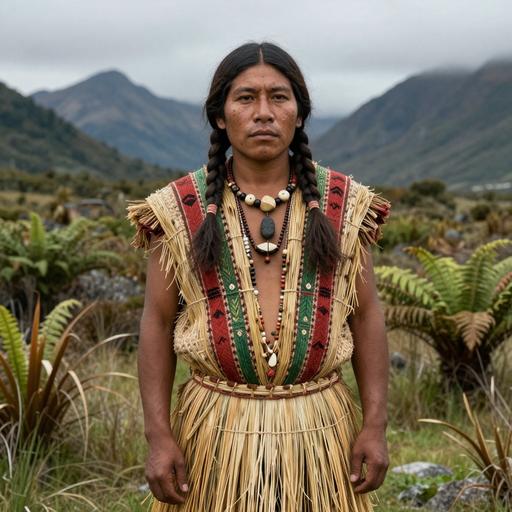
Portrait reconstruction of A man buried in Chile in the Ancient South America era
Ancient Individual

A man buried in Chile in the Ancient South America era

A man buried in Chile during the Western Archipelago Ayayema Culture, Chile 5,100 Years Ago

A fragment of the ancient world, preserved across millennia in strands of DNA.

A460
3364 BCE - 2933 BCE
Male
Chile
Scroll to begin
Chapter I

Identity

The biological and cultural markers that define this ancient individual

Sample ID

A460

Date Range

3364 BCE - 2933 BCE

Cultural Period

Western Archipelago Ayayema Culture, Chile 5,100 Years Ago

Biological Sex

Male

mtDNA Haplogroup

Not available

Y-DNA Haplogroup

Q-M902

Social Role

Gatherer (AI estimate, era-typical)

Chapter II

Place

Where this individual was discovered

Country Chile
Locality Ayayema Cave. Patagonia
Chapter III

Time

When this individual lived in the broader context of human history

A460 3364 BCE - 2933 BCE
Chapter IV

Story

The narrative of this ancient life

Region & Environment

The western archipelago of southern Chile consists of islands, channels, and sheltered shorelines influenced by cold ocean currents. Coastal ecosystems provided fish and shellfish, while weather and sea conditions structured how and when people could travel and exploit particular zones.

Historical Context

In the late 4th to early 3rd millennium BCE, southern South America hosted diverse maritime and coastal adaptations. While detailed political history is not recoverable for the Ayayema, the archaeological record indicates long-term, place-based subsistence strategies rather than the establishment of fully sedentary agricultural societies.

Populations & Lifeways

Ayayema-associated lifeways were shaped by the predictability of certain coastal resources and by the need to move between productive locations. Seasonal rounds likely involved repeated visits to shore sites for harvesting, processing, and retooling supplies. Such patterns imply household-level mobility and knowledge of local marine ecologies.

Archaeology & Material Culture

Archaeological visibility for this period commonly includes coastal sites with artifact scatters and features where sediments allow preservation. Assemblages can include stone tools appropriate for cutting, scraping, and processing animal materials, along with marine-shell remains that document subsistence. Portable technologies and site re-use are often key indicators of maritime seasonal activity.

Culture & Society

Cultural identity is inferred indirectly from patterned choices in technology, raw material procurement, and the organization of tasks at repeated locations. Similarities between sites within the western archipelago can suggest shared traditions or interaction among groups who faced comparable coastal environments.

Legacy & Transition

Over subsequent millennia, maritime coastal strategies continued in the wider region, though with changes in toolkits, site use, and interaction networks. The Ayayema horizon contributes to understanding how long-term coastal occupation preceded later cultural developments in southern Chile’s archipelagos.

Chapter V

Genetics

These comparisons show genetic similarity, not identity or origin. The populations listed are those whose genomes show statistical alignment to this ancient individual.

Similarity reflects shared history, not shared identity. These are analytical comparisons, not claims about who this person was.

Modern Genetic Admixture

This analysis compares the DNA profile with present-day reference populations, showing statistical similarity to modern reference populations from different regions. The excavation site records where this individual was found, not a fixed modern genetic identity.

America 90.9%
America 90.9%
Native American 90.9%
Asia 8.3%
Northern Asian 8.0%
Siberian 4.8%
Mongolian 3.1%
Africa 0.8%

Closest Modern Populations

These are the modern populations showing the closest statistical alignment to A man buried in Chile in the Ancient South America era, ranked by genetic distance. Lower distance values indicate closer statistical similarity. Cross-region similarity can reflect shared ancestry, population movement, continuity, or later admixture.

1
Aymara
2.0962
2
Bolivian Lapaz
2.4370
3
Piapoco
2.5335
4
Yukpa
2.7207
5
Wichi
2.8970
6
Colla
2.9349
7
Cachi
3.1617
8
Mixe
3.4312
9
Mayan
4.0535
10
Pima
4.2415
Context

Related Samples

This individual exists within a broader network of ancient samples. No ancient genome stands alone.

Sample ID Culture/Period Date Location Action
Lovelock3 Lovelock Cave, Nevada, USA 600 Years Ago 1270 CE Lovelock Cave. Nevada. US, USA View
AHUR_2064 Spirit Cave, Nevada, USA 11,000 Years Ago 9229 BCE Nevada. Spirit Cave, USA View
Lovelock2 Lovelock Cave, Nevada, USA 1,850 Years Ago 26 CE Lovelock Cave. Nevada. US, USA View
Lovelock1 Lovelock Cave, Nevada, USA 1,850 Years Ago 49 BCE Lovelock Cave. Nevada. US, USA View
Lovelock4 Lovelock Cave, Nevada, USA 1,850 Years Ago 126 CE Lovelock Cave. Nevada. US, USA View
TrailCreek Trail Creek, Alaska, USA 9,000 Years Ago 7181 BCE Alaska. Trail Creek, USA View
AHUR770c Spirit Cave, Nevada, USA 11,000 Years Ago 9252 BCE Nevada. Spirit Cave, USA View
Andaman Great Andaman People 100BP 1800 CE Great Andaman Island, India View
A460 Western Archipelago Ayayema Culture, Chile 5,100 Years Ago 3364 BCE Ayayema Cave. Patagonia, Chile View
SA5832 Punta Santa Ana Site, Chile 7,300 Years Ago 5634 BCE Punta Santa Ana. Patagonia. Chile, Chile View
19651 Big Bar Site, Canada 5,700 Years Ago 3796 BCE Northwest, Canada View
Sumidouro5 Sumidouro Site, Brazil 10,100 Years Ago 8612 BCE Caverna do Sumidouro. Lagoa Santa. Brazil, Brazil View
Sumidouro6 Sumidouro Site, Brazil 10,100 Years Ago 8293 BCE Caverna do Sumidouro. Lagoa Santa. Brazil, Brazil View
Sumidouro4 Sumidouro Site, Brazil 10,100 Years Ago 8300 BCE Caverna do Sumidouro. Lagoa Santa. Brazil, Brazil View
Sumidouro7 Sumidouro Site, Brazil 10,100 Years Ago 8422 BCE Caverna do Sumidouro. Lagoa Santa. Brazil, Brazil View
Sumidouro8 Sumidouro Site, Brazil 10,100 Years Ago 8172 BCE Caverna do Sumidouro. Lagoa Santa. Brazil, Brazil View
Aconcagua Aconcagua Inca Culture 500 Years Ago 1400 CE Cerro Aconcagua. Mendoza Province, Argentina View
19651 3796 BCE Northwest, Canada View
SA5832 5634 BCE Punta Santa Ana. Patagonia. Chile, Chile View
A460 3364 BCE Ayayema Cave. Patagonia, Chile View
Aconcagua 1400 CE Cerro Aconcagua. Mendoza Province, Argentina View
AHUR_2064 9229 BCE Nevada. Spirit Cave, USA View
AHUR770c 9252 BCE Nevada. Spirit Cave, USA View
Andaman 1800 CE Great Andaman Island, India View
Lovelock1 49 BCE Lovelock Cave. Nevada. US, USA View
Lovelock2 26 CE Lovelock Cave. Nevada. US, USA View
Lovelock3 1270 CE Lovelock Cave. Nevada. US, USA View
Lovelock4 126 CE Lovelock Cave. Nevada. US, USA View
Sumidouro4 8300 BCE Caverna do Sumidouro. Lagoa Santa. Brazil, Brazil View
Sumidouro5 8612 BCE Caverna do Sumidouro. Lagoa Santa. Brazil, Brazil View
Sumidouro6 8293 BCE Caverna do Sumidouro. Lagoa Santa. Brazil, Brazil View
Sumidouro7 8422 BCE Caverna do Sumidouro. Lagoa Santa. Brazil, Brazil View
Sumidouro8 8172 BCE Caverna do Sumidouro. Lagoa Santa. Brazil, Brazil View
TrailCreek 7181 BCE Alaska. Trail Creek, USA View
Sample ID Culture/Period Date Location Action
A460 Western Archipelago Ayayema Culture, Chile 5,100 Years Ago 3364 BCE Ayayema Cave. Patagonia, Chile View
Sources

References

Scientific publications and genetic data that inform this profile.

Scientific Publication

Early human dispersals within the Americas

Authors Moreno-Mayar JV, Vinner L, de Barros Damgaard P, de la Fuente C, Chan J et al.
Abstract

Studies of the peopling of the Americas have focused on the timing and number of initial migrations. Less attention has been paid to the subsequent spread of people within the Americas. We sequenced 15 ancient human genomes spanning from Alaska to Patagonia; six are ≥10,000 years old (up to ~18× coverage). All are most closely related to Native Americans, including those from an Ancient Beringian individual and two morphologically distinct "Paleoamericans." We found evidence of rapid dispersal and early diversification that included previously unknown groups as people moved south. This resulted in multiple independent, geographically uneven migrations, including one that provides clues of a Late Pleistocene Australasian genetic signal, as well as a later Mesoamerican-related expansion. These led to complex and dynamic population histories from North to South America.

G25 Coordinates

These coordinates represent a position in genetic space, a tool for comparison, not a conclusion. You can use these to perform custom admixture analysis in G25 Studio.

A460,0.05470978,-0.31426418,0.11120868,0.09751258,-0.11618082,-0.01243242,-0.29738248,-0.34962026,-0.01355704,-0.0161711,0.0023037,-0.00070848,-0.00075778,0.02491684,-0.00602932,-3.674E-05,0.00585342,0.00384716,0.00156778,-0.0012455,-0.00016392,0.00679946,-0.00286852,-0.00418254,-0.0047672
Continue in G25 Studio
Use code for 30% off Expires Aug 07