Overview
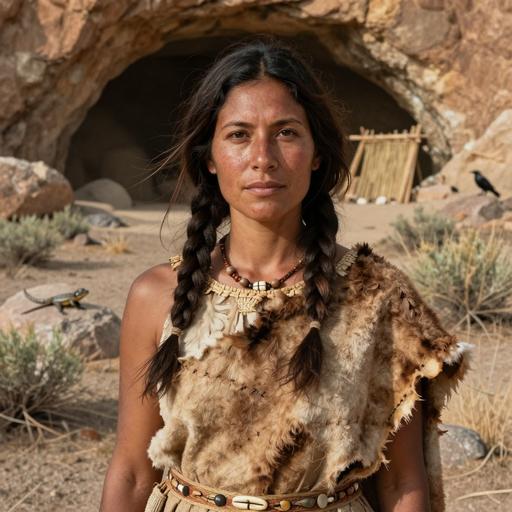
Lovelock Cave in western Nevada is a major archaeological sequence for understanding long-term Great Basin lifeways. Dated here to around 1,850 years ago (about 100 CE), this snapshot reflects how people used shelter in arid landscapes while continuing Great Basin adaptations.
Region & Environment
Western Nevada’s Great Basin environment includes dry basins, mountain ranges, and seasonal water availability. Caves and rock shelters would have offered more stable microclimates than open landscapes and acted as focal points for repeated visits. Resource procurement across the wider region would have been shaped by drought cycles and seasonal plant growth.
Historical Context
Great Basin histories are commonly described in terms of long-term continuity of hunter-gatherer subsistence and regional mobility, rather than intensive agriculture or urban centers. Around 100 CE, communities were part of this broader desert-adapted pattern, with local traditions expressed through regional toolkits and the repeated use of caves.
Populations & Lifeways
People likely practiced flexible foraging, moving between hunting and gathering areas as resources became available. Shelter use implies that visits could be seasonal or longer-term depending on conditions. Such lifeways would have required detailed knowledge of plant cycles, animal behavior, and water sources.
Archaeology & Material Culture
Lovelock Cave deposits commonly include organic remains that can illuminate diet and the timing of visits, alongside stone tools associated with processing activities. Because preservation conditions in caves can be favorable for perishable materials, assemblages may show patterns in how people prepared, stored, or discarded food and working materials.
Culture & Society
Archaeological patterns in the Great Basin often point to social organization centered on local bands and shared regional practices. Differences between activity areas in a shelter and between layers in a sequence can reflect changes in task focus, time of year, or the intensity of occupation.
Legacy & Transition
Later centuries in the Great Basin saw shifting settlement patterns and material practices, but the core desert adaptation endured. The record from Lovelock Cave helps anchor how Indigenous lifeways in the Great Basin were sustained and adapted across millennia, forming a foundation for understanding subsequent cultural change.