Menu
Currency
Main
Store
Blog

Loading Report

Preparing your ancestry journey

Connecting to ancient matches...

Preparing your report

Skip to main content
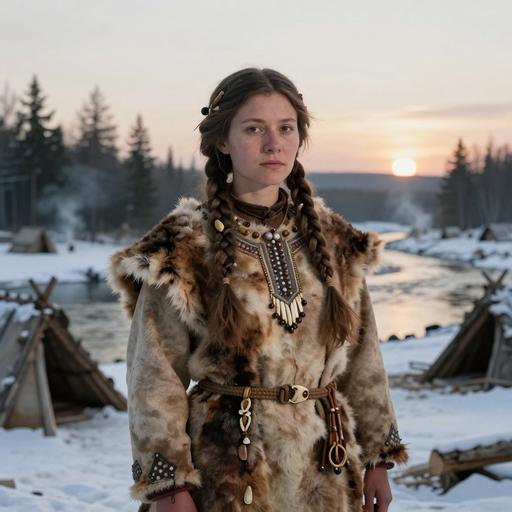
Portrait reconstruction of A woman buried in Russia in the Late Upper Paleolithic era
Ancient Individual

A woman buried in Russia in the Late Upper Paleolithic era

A woman buried in Russia during the Afontova Gora 3 Site, Russia

A fragment of the ancient world, preserved across millennia in strands of DNA.

AfontovaGora3
16257 BCE - 15905 BCE
Female
Russia
Scroll to begin
Chapter I

Identity

The biological and cultural markers that define this ancient individual

Sample ID

AfontovaGora3

Date Range

16257 BCE - 15905 BCE

Cultural Period

Afontova Gora 3 Site, Russia

Biological Sex

Female

mtDNA Haplogroup

R1b

Y-DNA Haplogroup

N/A (Female)

Chapter II

Place

Where this individual was discovered

Country Russia
Locality Afontova Gora
Coordinates 56.0500, 92.8700
Chapter III

Time

When this individual lived in the broader context of human history

AfontovaGora3 16257 BCE - 15905 BCE
Chapter IV

Story

The narrative of this ancient life

The Afontova Gora 3 site is a significant archaeological location located near Krasnoyarsk in the central Siberian region of Russia. This site is part of a cluster of archaeological sites known collectively as Afontova Gora, which are situated on the banks of the Yenisei River. These sites date back to the Upper Paleolithic period, roughly from 18,000 to 15,000 years ago, providing a crucial glimpse into the lives of prehistoric hunter-gatherers who inhabited Siberia during the late stages of the last Ice Age.

Geographic and Environmental Context

The Afontova Gora sites, including Afontova Gora 3, are located on elevated terraces above the Yenisei River. During the Paleolithic era, this region was characterized by a harsh cold climate with vast stretches of permafrost and tundra. The nearby river would have been a vital resource, offering water, food, and a means of transportation.

The landscape during this era was dominated by steppe and taiga ecosystems. The open steppe, rich with grasses, likely supported herds of megafauna such as mammoths, woolly rhinoceroses, bison, and horses. These animals were crucial to the subsistence strategies of Paleolithic peoples, providing food, clothing, and materials for toolmaking.

Archaeological Discoveries

Afontova Gora 3 has yielded a plethora of artifacts that have contributed significantly to our understanding of the Upper Paleolithic cultures in Siberia. Archaeologists have uncovered stone tools, which include blades, scrapers, and burins crafted from local chert and other stone materials. These tools suggest a sophisticated understanding of stone knapping techniques, which were essential for hunting and processing animal hides and plant materials.

In addition to stone tools, the site has also produced evidence of bone and antler tools, which were likely used for specific tasks such as sewing clothing or creating hooks and other implements. The craftsmanship of these tools indicates a high level of skill and specialization.

Cultural and Social Aspects

The evidence from Afontova Gora 3 paints a picture of a mobile, hunter-gatherer society that was highly adapted to the challenging environmental conditions of Siberia. The presence of diverse tools and the remains of large game animals point to a society skilled in big-game hunting, a critical survival strategy in the ice age landscape.

Social organization in such communities might have been based on small, kinship-based groups that moved across large territories in search of resources. Cooperation and shared knowledge would have been vital for survival, particularly during the harsh winter months.

The discovery of decorative items, such as personal ornaments made from bone and teeth, indicates that cultural and symbolic expression was also an essential part of life for these Paleolithic inhabitants. These artifacts suggest the presence of complex social structures and possibly even early forms of spiritual or ritualistic behavior.

Importance and Impact

The findings at Afontova Gora 3 are crucial for understanding the migration and adaptation patterns of humans in northern Eurasia. The tools and artifacts provide insights into the technological advancements of the time and the ways in which these prehistoric societies interacted with and exploited their environment.

Furthermore, Afontova Gora 3 contributes to the broader narrative of human evolution and migration out of Africa and across the Eurasian continent. The site provides evidence of how humans adapted technologies and strategies to live in some of the most extreme conditions on Earth during the Paleolithic era.

In summary, the Afontova Gora 3 site is a window into the lives of Upper Paleolithic hunter-gatherers in Siberia. It offers invaluable information about their technological skills, social structures, and adaptation strategies, enriching our understanding of human history in a prehistorical context.

Context

Related Samples

This individual exists within a broader network of ancient samples. No ancient genome stands alone.

Sample ID Culture/Period Date Location Action
Rochedane Rochedane Site, France 11207 BCE Rochedane, France View
Kostenki12 Kostenki 12 Site, Russia 31300 BCE Kostenki, Russia View
Vestonice16 Vestonice 16 Site, Czech Republic 28500 BCE Dolni Vestonice, Czech Republic View
Kostenki14 Kostenki 14 Site, Russia 37426 BCE Kostenki, Russia View
Pavlov1 Pavlov 1 Site, Czech Republic 29300 BCE Dolni Vestonice, Czech Republic View
Muierii2 Peștera Muierii Site, Romania 32228 BCE Muierii 2, Romania View
Vestonice13 Vestonice 13 Site, Czech Republic 29200 BCE Dolni Vestonice, Czech Republic View
Vestonice15 Vestonice 15 Site, Czech Republic 29200 BCE Dolni Vestonice, Czech Republic View
Vestonice43 Vestonice 43 Site, Czech Republic 28500 BCE Dolni Vestonice, Czech Republic View
Ostuni2 Ostuni 2 Hunter-Gatherer, Southern Italy 27546 BCE Apulia. Ostuni, Italy View
Ostuni1 Ostuni 1 Hunter-Gatherer, Southern Italy 25860 BCE Apulia. Ostuni, Italy View
Vestonice14 Vestonice 14 Site, Czech Republic 29200 BCE Dolni Vestonice, Czech Republic View
ElMiron El Mirón Cave, Spain 16898 BCE El Miron, Spain View
I1577 Krems-Wachtberg 3 Site, Austria 29500 BCE Krems-Wachtberg, Austria View
AfontovaGora3 Afontova Gora 3 Site, Russia 16257 BCE Afontova Gora, Russia View
Cioclovina1 Cioclovina Cave, Romania 31343 BCE Cioclovina, Romania View
Villabruna Villabruna Hunter-Gatherer, Northern Italy 12268 BCE Veneto. Villabruna, Italy View
Paglicci133 Paglicci 133 Hunter-Gatherer, Southern Italy 33150 BCE Apulia. Paglicci, Italy View
Continenza Southern Italy Hunter-Gatherer 9300 BCE Abruzzo. Grotta de Continenza, Italy View
Paglicci108 Paglicci 108 Hunter-Gatherer, Southern Italy 26700 BCE Apulia. Paglicci, Italy View
HohleFels49 Hohle Fels 49 Site, Germany 13771 BCE Swabian Jura. Baden-Wurttemberg. Hohle Fels. Ach Valley, Germany View
Burkhardtshohle Burkhardtshohle Cave, Germany 13127 BCE Swabian Jura. Baden-Wurttemberg. Burkhardtshöhle. Westerheim, Germany View
Bockstein Bockstein Cave, Germany 6450 BCE Swabian Jura. Baden-Wurttemberg. Bockstein-Höhle. Lone valley, Germany View
Brillenhohle Brillenhohle Cave, Germany 13167 BCE Swabian Jura. Baden-Wurttemberg. Brillenhöhle. Ach Valley, Germany View
HohleFels79 Hohle Fels 79 Site, Germany 13101 BCE Swabian Jura. Baden-Wurttemberg. Hohle Fels. Ach Valley, Germany View
Ofnet Ofnet Caves, Germany 6472 BCE Ofnet, Germany View
Ranchot88 Ranchot 88 Site, France 8290 BCE Ranchot, France View
Chaudardes1 Chaudardes Site, France 6400 BCE Chaudardes, France View
BerryAuBac Berry-au-Bac Site, France 5368 BCE Berry Au Bac, France View
Rigney1 Rigney 1 Site, France 13696 BCE Rigney, France View
Iboussieres39 Iboussieres 39 Site, France 9992 BCE Aven des Iboussières à Malataverne. Rhône-Alpes, France View
LesCloseaux13 Les Closeaux 13 Site, France 8282 BCE Les Closeaux, France View
GoyetQ116-1 Upper Paleolithic Goyet Cave Q116-1, Belgium 33678 BCE Troisieme caverne of Goyet cave, Belgium View
GoyetQ376-19 Upper Paleolithic Goyet Cave Q376-19, Belgium 25771 BCE Troisieme caverne of Goyet cave, Belgium View
GoyetQ53-1 Upper Paleolithic Goyet Cave Q53-1, Belgium 26440 BCE Troisieme caverne of Goyet cave, Belgium View
GoyetQ56-16 Upper Paleolithic Goyet Cave Q56-16, Belgium 24847 BCE Troisieme caverne of Goyet cave, Belgium View
Paglicci108 26700 BCE Apulia. Paglicci, Italy View
GoyetQ53-1 26440 BCE Troisieme caverne of Goyet cave, Belgium View
GoyetQ56-16 24847 BCE Troisieme caverne of Goyet cave, Belgium View
Rigney1 13696 BCE Rigney, France View
Burkhardtshohle 13127 BCE Swabian Jura. Baden-Wurttemberg. Burkhardtshöhle. Westerheim, Germany View
Iboussieres39 9992 BCE Aven des Iboussières à Malataverne. Rhône-Alpes, France View
Continenza 9300 BCE Abruzzo. Grotta de Continenza, Italy View
AfontovaGora3 16257 BCE Afontova Gora, Russia View
GoyetQ-2 13305 BCE Troisieme caverne of Goyet cave, Belgium View
GoyetQ116-1 33678 BCE Troisieme caverne of Goyet cave, Belgium View
Ofnet 6472 BCE Ofnet, Germany View
LesCloseaux13 8282 BCE Les Closeaux, France View
HohleFels79 13101 BCE Swabian Jura. Baden-Wurttemberg. Hohle Fels. Ach Valley, Germany View
Cioclovina1 31343 BCE Cioclovina, Romania View
Brillenhohle 13167 BCE Swabian Jura. Baden-Wurttemberg. Brillenhöhle. Ach Valley, Germany View
Bockstein 6450 BCE Swabian Jura. Baden-Wurttemberg. Bockstein-Höhle. Lone valley, Germany View
GoyetQ376-19 25771 BCE Troisieme caverne of Goyet cave, Belgium View
HohleFels49 13771 BCE Swabian Jura. Baden-Wurttemberg. Hohle Fels. Ach Valley, Germany View
Falkenstein 7472 BCE Swabian Jura. Baden-Wurttemberg. Falkenstein-Höhle, Germany View
Chaudardes1 6400 BCE Chaudardes, France View
Ranchot88 8290 BCE Ranchot, France View
Falkenstein 7472 BCE Swabian Jura. Baden-Wurttemberg. Falkenstein-Höhle, Germany View
BerryAuBac 5368 BCE Berry Au Bac, France View
GoyetQ116-1 33678 BCE Troisieme caverne of Goyet cave, Belgium View
Paglicci133 33150 BCE Apulia. Paglicci, Italy View
Rochedane 11207 BCE Rochedane, France View
I0061 7050 BCE Karelia. Yuzhnyy Oleni Ostrov, Russia View
Villabruna 12268 BCE Veneto. Villabruna, Italy View
Sample ID Culture/Period Date Location Action
AfontovaGora3 Afontova Gora 3 Site, Russia 16257 BCE Afontova Gora, Russia View
Sources

References

Scientific publications and genetic data that inform this profile.

Scientific Publication

The genetic history of Ice Age Europe

Authors Fu Q, Posth C, Hajdinjak M, Petr M, Mallick S et al.
Abstract

Modern humans arrived in Europe ~45,000 years ago, but little is known about their genetic composition before the start of farming ~8,500 years ago. Here we analyse genome-wide data from 51 Eurasians from ~45,000-7,000 years ago. Over this time, the proportion of Neanderthal DNA decreased from 3-6% to around 2%, consistent with natural selection against Neanderthal variants in modern humans. Whereas there is no evidence of the earliest modern humans in Europe contributing to the genetic composition of present-day Europeans, all individuals between ~37,000 and ~14,000 years ago descended from a single founder population which forms part of the ancestry of present-day Europeans. An ~35,000-year-old individual from northwest Europe represents an early branch of this founder population which was then displaced across a broad region, before reappearing in southwest Europe at the height of the last Ice Age ~19,000 years ago. During the major warming period after ~14,000 years ago, a genetic component related to present-day Near Easterners became widespread in Europe. These results document how population turnover and migration have been recurring themes of European prehistory.

Use code for 25% off Expires Jul 12