Menu
Currency
Main
Store
Blog

Loading Report

Preparing your ancestry journey

Connecting to ancient matches...

Preparing your report

Skip to main content
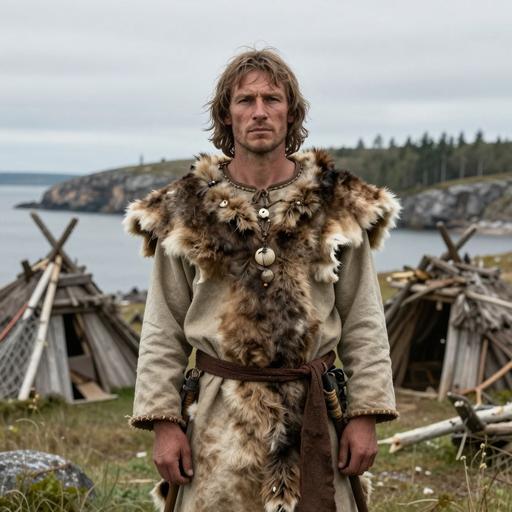
Portrait reconstruction of A man buried in Sweden in the Bronze Age era
Ancient Individual

A man buried in Sweden in the Bronze Age era

A man buried in Sweden during the Pitted Ware Culture, Sweden

A fragment of the ancient world, preserved across millennia in strands of DNA.

ajv54
3008 BCE - 2783 BCE
Male
Sweden
Scroll to begin
Chapter I

Identity

The biological and cultural markers that define this ancient individual

Sample ID

ajv54

Date Range

3008 BCE - 2783 BCE

Cultural Period

Pitted Ware Culture, Sweden

Biological Sex

Male

mtDNA Haplogroup

U5b1d2

Y-DNA Haplogroup

I2-M438

Chapter II

Place

Where this individual was discovered

Country Sweden
Locality Ajvide
Coordinates 57.2811, 18.1691
Chapter III

Time

When this individual lived in the broader context of human history

ajv54 3008 BCE - 2783 BCE
Chapter IV

Story

The narrative of this ancient life

The Pitted Ware Culture (circa 3200–2300 BCE) and the subsequent Nordic Bronze Age (circa 1700–500 BCE) represent significant periods in Sweden's prehistoric timeline, characterized by distinct cultural advancements and transformations.

The Pitted Ware Culture

Geographic Context and Environment: The Pitted Ware Culture emerged in coastal regions of Sweden, including areas surrounding the Baltic Sea, the Swedish mainland, and the islands of Gotland and Öland. This period was shaped by a postglacial environment rich in resources, where sea levels had an extensive influence on human settlement and lifestyle.

Society and Economy: The Pitted Ware Culture is primarily recognized for its maritime orientation. Communities heavily depended on marine resources, engaging in fishing, hunting marine mammals like seals, and gathering shellfish. This reliance on the sea is reflected in their settlement patterns, often situated near coastlines or waterways.

Material Culture: Pottery is the most distinctive artifact of this culture, known for its decorative pitted or dotted designs, which gave the culture its name. These ceramics were used for storage and possibly for ritual purposes. Other artifacts include bone and stone tools, emphasizing their expertise in crafting with available resources.

Burial Practices and Religion: Burials during this period often featured flexed (bent-knee) positions, with grave goods and red ochre pigmentation. Such practices indicate a spiritual or ritualistic aspect to their culture, although the specifics of their belief systems remain largely speculative.

Transition to the Nordic Bronze Age

The transition from the Pitted Ware Culture to the Nordic Bronze Age marks a significant shift in cultural practices and societal structure.

Bronze Introduction and Metallurgy: With the dawn of the Nordic Bronze Age, there was an introduction and increased use of bronze, primarily through trade with Central Europe. Sweden lacked natural copper and tin deposits necessary for bronze production, highlighting the importance of trade networks.

Social Stratification and Settlements: Society during the Nordic Bronze Age became more complex and stratified. The presence of larger settlements and the construction of monumental structures, such as barrows and stone ship settings, suggest increased social organization and hierarchy. The elite class likely played a key role in controlling trade and ritual activities.

Art and Iconography: The art of the Nordic Bronze Age is characterized by intricate rock carvings (petroglyphs), depicting scenes of boats, animals, and religious symbols. Such carvings are widespread in Sweden, conveying stories of daily life, cosmology, and mythological beliefs.

Trade and Economy: The economy expanded beyond maritime activities to include agriculture with crops like barley and wheat, animal husbandry with sheep and cattle, and continued hunting and fishing. This diversification reflects a complex economy that supported a growing population.

Religious Practices: Religion during the Nordic Bronze Age exhibited a move towards more organized and complex practices. Ritual bronze objects, such as swords and razors, were often deposited in bogs or bodies of water, indicating sacred landscapes and a belief system that involved offerings and possibly ancestor or fertility worship.

Legacy

Both the Pitted Ware Culture and the Nordic Bronze Age laid foundational cultural and social structures that would impact the later Germanic tribes of Scandinavia. The transition from a hunter-gatherer to a more settled and hierarchical society during the Nordic Bronze Age set the stage for the developments in technology, trade, religion, and societal complexity that followed in the Iron Age and beyond.

In summary, these periods illustrate the dynamic changes in prehistoric Sweden, from the resourceful and maritime-focused Pitted Ware communities to the complex, stratified society of the Nordic Bronze Age, rich in art and engaged in widespread trade.

Chapter V

Genetics

These comparisons show genetic similarity, not identity or origin. The populations listed are those whose genomes show statistical alignment to this ancient individual.

Similarity reflects shared history, not shared identity. These are analytical comparisons, not claims about who this person was.

Modern Genetic Admixture

This analysis compares the DNA profile with present-day reference populations, showing what percentage of genetic makeup resembles modern populations from different regions.

Europe 98.6%
Northwestern European 81.7%
English 25.5%
Scandinavian 24.0%
Finnish 19.9%
Northwestern European 12.4%
Eastern European 16.8%
Africa 1.4%
Northern East African 0.8%
Eastern African 0.8%
African Hunter-Gatherer 0.6%

Closest Modern Populations

These are the modern populations showing the closest statistical alignment to A man buried in Sweden in the Bronze Age era, ranked by genetic distance. Lower distance values indicate closer statistical similarity.

1
Swedish
2.5058
2
Polish Kashubian
2.6906
3
Czech
2.8855
4
Polish
2.9435
5
German Hamburg
2.9945
6
German East
3.2724
7
Polish Silesian
3.4521
8
Cossack Ukrainian
3.5728
9
Slovakian
3.5933
10
Danish
3.6336
Context

Related Samples

This individual exists within a broader network of ancient samples. No ancient genome stands alone.

Sample ID Culture/Period Date Location Action
ber1 Battle Axe Culture, Sweden 2622 BCE Bergsgraven, Sweden View
oll007 Battle Axe Culture, Sweden 2859 BCE Olljso, Sweden View
ajv54 Pitted Ware Culture, Sweden 3008 BCE Ajvide, Sweden View
ros005 Funnel Beaker Culture, Sweden 3096 BCE Rossberga, Sweden View
oll009 Late Neolithic Sweden 1931 BCE Olljso, Sweden View
ros3 Funnel Beaker Culture, Sweden 3331 BCE Rossberga, Sweden View
ber2 Battle Axe Culture, Sweden 2625 BCE Bergsgraven, Sweden View
oll010 Late Neolithic Sweden 1879 BCE Olljso, Sweden View
poz81 Corded Ware Culture, Poland 2881 BCE Oblaczkowo, Poland View
poz44 Corded Ware Culture, Poland 2866 BCE Oblaczkowo, Poland View
kar1 Corded Ware Culture, Estonia 2447 BCE Karlova, Estonia View
ros005_renamed Funnel Beaker Culture, Sweden 3096 BCE Rössberga, Sweden View
ber1 2622 BCE Bergsgraven, Sweden View
ber2 2625 BCE Bergsgraven, Sweden View
kar1 2447 BCE Karlova, Estonia View
ros005 3096 BCE Rossberga, Sweden View
ajv54 3008 BCE Ajvide, Sweden View
oll007 2859 BCE Olljso, Sweden View
oll009 1931 BCE Olljso, Sweden View
oll010 1879 BCE Olljso, Sweden View
poz44 2866 BCE Oblaczkowo, Poland View
poz81 2881 BCE Oblaczkowo, Poland View
ros3 3331 BCE Rossberga, Sweden View
Sample ID Culture/Period Date Location Action
Ajvide58 Pitted Ware Culture, Sweden 2900 BCE Gotland. Stora Karlsö, Sweden View
ajv54 Pitted Ware Culture, Sweden 3008 BCE Ajvide, Sweden View
Ajvide70 Pitted Ware Culture, Sweden 2900 BCE Gotland. Stora Karlsö, Sweden View
Ajvide52 Pitted Ware Culture, Sweden 2900 BCE Gotland. Stora Karlsö, Sweden View
Ire8 Pitted Ware Culture, Sweden 3100 BCE Gotland. Stora Karlsö, Sweden View
Ajvide53 Pitted Ware Culture, Sweden 2900 BCE Gotland. Stora Karlsö, Sweden View
Ajvide59 Pitted Ware Culture, Sweden 2900 BCE Gotland. Stora Karlsö, Sweden View
Sources

References

Scientific publications and genetic data that inform this profile.

Scientific Publication

The genomic ancestry of the Scandinavian Battle Axe Culture people and their relation to the broader Corded Ware horizon

Authors Malmström H, Günther T, Svensson EM, Juras A, Fraser M et al.
Abstract

The Neolithic period is characterized by major cultural transformations and human migrations, with lasting effects across Europe. To understand the population dynamics in Neolithic Scandinavia and the Baltic Sea area, we investigate the genomes of individuals associated with the Battle Axe Culture (BAC), a Middle Neolithic complex in Scandinavia resembling the continental Corded Ware Culture (CWC). We sequenced 11 individuals (dated to 3330-1665 calibrated before common era (cal BCE)) from modern-day Sweden, Estonia, and Poland to 0.26-3.24× coverage. Three of the individuals were from CWC contexts and two from the central-Swedish BAC burial 'Bergsgraven'. By analysing these genomes together with the previously published data, we show that the BAC represents a group different from other Neolithic populations in Scandinavia, revealing stratification among cultural groups. Similar to continental CWC, the BAC-associated individuals display ancestry from the Pontic-Caspian steppe herders, as well as smaller components originating from hunter-gatherers and Early Neolithic farmers. Thus, the steppe ancestry seen in these Scandinavian BAC individuals can be explained only by migration into Scandinavia. Furthermore, we highlight the reuse of megalithic tombs of the earlier Funnel Beaker Culture (FBC) by people related to BAC. The BAC groups likely mixed with resident middle Neolithic farmers (e.g. FBC) without substantial contributions from Neolithic foragers.

G25 Coordinates

These coordinates represent a position in genetic space, a tool for comparison, not a conclusion. You can use these to perform custom admixture analysis in G25 Studio.

ajv54,0.13505448,0.12594956,0.07229356,0.06513846,0.03880702,0.02969586,0.00652116,0.00791756,0.00374832,-0.013739,-0.00556518,-0.00110244,0.00602964,0.00948854,0.00886578,0.00597732,-0.00671224,0.00420604,0.00317954,0.00282448,0.0015287,-0.0029072,0.00865252,0.00553384,0.00118324
Continue in G25 Studio
Use code for 25% off Expires Jul 12