Menu
Currency
Main
Store
Blog

Loading Report

Preparing your ancestry journey

Connecting to ancient matches...

Preparing your report

Skip to main content
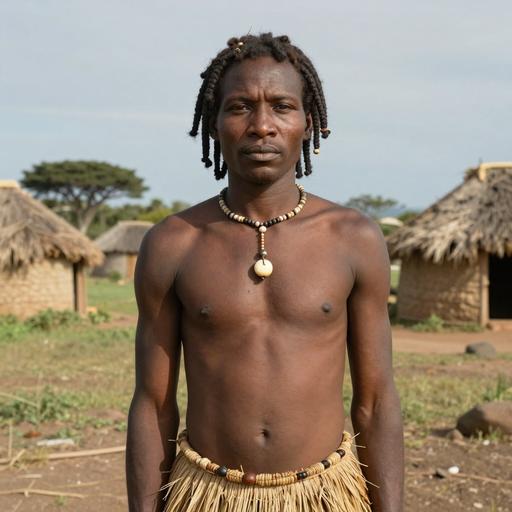
Portrait reconstruction of A man buried in South Africa in the Iron Age era
Ancient Individual

A man buried in South Africa in the Iron Age era

A man buried in South Africa during the South Africa 1900 Years Before Present

A fragment of the ancient world, preserved across millennia in strands of DNA.

baa001
38 BCE - 120 BCE
Male
South Africa
Scroll to begin
Chapter I

Identity

The biological and cultural markers that define this ancient individual

Sample ID

baa001

Date Range

38 BCE - 120 BCE

Cultural Period

South Africa 1900 Years Before Present

Biological Sex

Male

mtDNA Haplogroup

L0d2c1

Y-DNA Haplogroup

A1b1b2

Chapter II

Place

Where this individual was discovered

Country South Africa
Locality Ballito Bay A
Chapter III

Time

When this individual lived in the broader context of human history

baa001 38 BCE - 120 BCE
Chapter IV

Story

The narrative of this ancient life

South Africa, around 1900 years before present (BP), offers a fascinating insight into the cultural and historical developments of the region during the early Bantu expansion. This era, occurring roughly around 100 AD, marks a significant chapter in Africa's pre-colonial period characterized by the gradual spread of Bantu-speaking peoples across sub-Saharan Africa. Here's a detailed exploration of this period in South Africa's history:

Geographical Context

South Africa's landscape in this era was vast and varied, consisting of savannas, grasslands, semi-arid regions, and coastal areas. The movement of the Bantu-speaking peoples brought them into contact with diverse environments, each shaping their cultural and agricultural practices.

Bantu Expansion

The Bantu expansion is one of the most significant migratory events in ancient African history. Originating from the region around present-day Cameroon and Nigeria, Bantu-speaking groups gradually dispersed eastward and southward over many centuries, bringing with them new technologies, crops, and social structures. By 1900 BP, these groups had begun to settle into various parts of southern Africa.

Cultural Practices

  1. Agriculture and Economy: The arrival of Bantu-speaking peoples introduced mixed farming to the region. They cultivated crops such as sorghum, millet, and later, finger millet, alongside the practice of pastoralism. The adoption of ironworking technology also played a crucial role in transforming the local economies, as it allowed for more efficient farming tools and weapons.

  2. Social Organization: Bantu communities typically organized themselves into kinship groups or clans led by chiefs. Social structures were largely patriarchal, with lineage often traced through the father's line. These communities were characterized by a degree of fluidity and adaptability, which allowed them to integrate and sometimes assimilate indigenous Khoisan-speaking populations.

  3. Language and Communication: The spread of Bantu languages was a vital aspect of their migration. Over time, these languages diversified into hundreds of distinct languages and dialects spread across the African continent. Language played a crucial role in maintaining community cohesion and shared cultural practices.

Interaction with Indigenous Populations

As Bantu-speaking peoples moved into Southern Africa, they encountered the existing hunter-gatherer and pastoralist communities, primarily Khoisan-speaking groups. The interactions between these groups were complex, involving trade, cultural exchange, and sometimes conflict. Over time, these interactions led to mutual influences on languages, technologies, and social customs.

Technological Advancements

One of the hallmarks of the Bantu expansion was the spread of iron smelting technology, which allowed for significant changes in agriculture and warfare. The ability to produce iron tools and weapons facilitated the clearing of land for farming and improved hunting capabilities.

Religious and Spiritual Beliefs

Religious practices of Bantu communities during this period were often animistic, with a strong emphasis on the worship of ancestors and natural spirits. Rituals and ceremonies were vital components of community life, helping to solidify social bonds and cultural continuity.

Archaeological Evidence

Archaeological discoveries provide insights into this era, with sites revealing iron tools, pottery, and remnants of early agricultural practices. These findings underscore the transformative impact of the Bantu migrations on the southern African landscape and its people.

Conclusion

The period around 1900 years before present marks a transformative era in South African history as Bantu-speaking peoples settled and integrated into the region. Their migration and cultural practices laid the foundations for future societal developments, and their influence is still evident in the languages, customs, and demographics of modern southern Africa. This era represents a dynamic time of cultural synthesis and adaptation that shaped the historical trajectory of the African continent.

Chapter V

Genetics

These comparisons show genetic similarity, not identity or origin. The populations listed are those whose genomes show statistical alignment to this ancient individual.

Similarity reflects shared history, not shared identity. These are analytical comparisons, not claims about who this person was.

Modern Genetic Admixture

This analysis compares the DNA profile with present-day reference populations, showing what percentage of genetic makeup resembles modern populations from different regions.

Africa 98.6%
African Hunter-Gatherer 97.6%
Northern East African 1.0%
Ethiopian 1.0%
Asia 0.7%
Chinese & Southeast Asian 0.7%
Chinese 0.7%
Europe 0.5%

Closest Modern Populations

These are the modern populations showing the closest statistical alignment to A man buried in South Africa in the Iron Age era, ranked by genetic distance. Lower distance values indicate closer statistical similarity.

1
Mbuti
12.0745
2
Bakola
34.0017
3
Bedzan
34.9811
4
Baka
36.3329
5
Biaka
38.4145
6
Hadza
40.2800
7
Bantu S.E.
41.4400
8
Khomani San
42.0751
9
Bantu S.W.
43.2505
10
Ngumba
43.9171
Context

Related Samples

This individual exists within a broader network of ancient samples. No ancient genome stands alone.

Sample ID Culture/Period Date Location Action
cha001 South Africa 2200 Years Before Present 1504 CE Champagne Castle, South Africa View
ela001 South Africa 2200 Years Before Present 1419 CE Eland Cave, South Africa View
mfo001 South Africa 2200 Years Before Present 1483 CE Mfongosi, South Africa View
new001 South Africa 2200 Years Before Present 1445 CE Newcastle, South Africa View
doo001 South Africa 2000 Years Before Present 343 BCE Doonside, South Africa View
bab001 South Africa 2000 Years Before Present 163 BCE Ballito Bay B, South Africa View
baa001 South Africa 1900 Years Before Present 38 BCE Ballito Bay A, South Africa View
Sample ID Culture/Period Date Location Action
baa001 South Africa 1900 Years Before Present 38 BCE Ballito Bay A, South Africa View
UCT386 South Africa 1900 Years Before Present 88 BCE Faraoskop Rock Shelter, South Africa View
Sources

References

Scientific publications and genetic data that inform this profile.

Scientific Publication

Southern African ancient genomes estimate modern human divergence to 350,000 to 260,000 years ago

Authors Schlebusch CM, Malmström H, Günther T, Sjödin P, Coutinho A et al.
Abstract

Southern Africa is consistently placed as a potential region for the evolution of Homo sapiens We present genome sequences, up to 13x coverage, from seven ancient individuals from KwaZulu-Natal, South Africa. The remains of three Stone Age hunter-gatherers (about 2000 years old) were genetically similar to current-day southern San groups, and those of four Iron Age farmers (300 to 500 years old) were genetically similar to present-day Bantu-language speakers. We estimate that all modern-day Khoe-San groups have been influenced by 9 to 30% genetic admixture from East Africans/Eurasians. Using traditional and new approaches, we estimate the first modern human population divergence time to between 350,000 and 260,000 years ago. This estimate increases the deepest divergence among modern humans, coinciding with anatomical developments of archaic humans into modern humans, as represented in the local fossil record.

G25 Coordinates

These coordinates represent a position in genetic space, a tool for comparison, not a conclusion. You can use these to perform custom admixture analysis in G25 Studio.

baa001,-0.63469982,0.05738394,0.0245971,0.0305967,-0.00137372,0.00406094,0.28805132,-0.22875762,0.01688156,0.01336626,-0.00593736,0.1729507,0.08977442,-0.00161754,0.01101884,-0.00289272,0.00150834,-0.04799334,0.00612342,-0.00397396,0.00751808,0.00343262,-0.00471556,-0.00399014,0.00107731
Continue in G25 Studio
Use code for 25% off Expires Jul 13