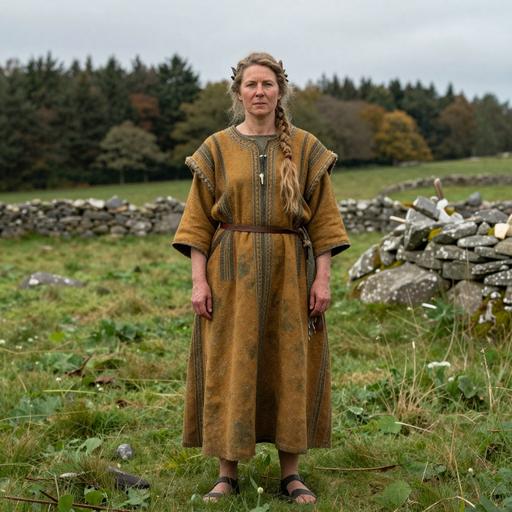
The Neolithic era in Ireland, which spanned approximately from 4000 BCE to 2500 BCE, marked a significant period of transformation and development in Irish prehistory. This era is not directly linked to the Celtic culture, as the Celts are considered to have arrived in Ireland much later, around 500 BCE during the Iron Age. However, examining Neolithic Ireland provides a rich context for understanding the foundation upon which later cultures, including the Celts, would build.
Settlements and Lifestyle
During the Neolithic period, people in Ireland began to transition from a nomadic, hunter-gatherer lifestyle to a more settled, agrarian way of life. This shift is often attributed to the advent of agriculture, which allowed communities to establish permanent settlements. The people cultivated crops such as wheat and barley and domesticated animals including cattle, sheep, and pigs. These developments facilitated the growth of more complex societies, supporting larger, more stable populations.
Permanent dwellings constructed from timber and wattle became common, and some communities built stone houses, indicative of their growing architectural skills. The establishment of these settlements also led to the development of new social structures and forms of governance, allowing for increased cooperation and resource management among communities.
Megalithic Monuments
One of the most striking legacies of Neolithic Ireland is its megalithic monuments, which provide significant insight into the cultural and spiritual life of the era. These structures include dolmens, passage tombs, court cairns, and portal tombs, with Newgrange in County Meath being one of the most famous examples. Built around 3200 BCE, Newgrange is a passage tomb aligned with the winter solstice sunrise, demonstrating sophisticated astronomical knowledge and architectural capabilities.
These monuments suggest a society with complex spiritual beliefs, possibly centered around ancestor worship or rituals related to death and the afterlife. The intricate carvings on the stones often feature spirals, zigzags, and other geometric patterns, indicating an advanced tradition of symbolic and artistic expression.
Trade and Economy
The Neolithic era in Ireland also saw the development of trade networks, both within the island and with neighboring regions. The exchange of materials such as flint, stone axes, and pottery suggests contact with Britain and continental Europe. This trade allowed for the diffusion of ideas and technologies, which further enriched Neolithic communities in Ireland.
Technology and Tools
The technological advancements of Neolithic Ireland included improved stone tool production, which greatly aided in agricultural practices. Polished stone axes were commonly used for land clearing, allowing for the expansion of farmland. The creation of pottery provided durable, watertight containers for storage and cooking, reflecting an increasingly settled lifestyle.
The Neolithic period also witnessed innovations in textile production, with evidence of weaving and possibly early forms of dyeing. These technological improvements were crucial in supporting the growing complexity and size of communities.
Social Organization and Culture
The shift to agriculture and settled living likely influenced social structures in Neolithic Ireland. Communities were possibly organized into kinship groups or clans, with leadership roles emerging to manage communal resources and decision-making. The construction of large communal monuments indicates a level of social organization that required cooperation and collective effort.
Religion and spiritual beliefs appear to have played a central role in Neolithic society, as evidenced by the construction and use of megalithic monuments. These structures likely served as focal points for communal gatherings and rituals, reinforcing social cohesion and shared cultural identity.
Conclusion
While Neolithic Ireland was distinct from the Celtic culture that emerged centuries later, it laid the foundation for Ireland's rich cultural tapestry. The developments in agriculture, settlement, social organization, and spiritual life during the Neolithic era set the stage for future societal advancements and influenced the cultural evolution of the island. These early communities left an indelible mark on the landscape and cultural memory of Ireland, providing a glimpse into the lives and beliefs of its first agricultural societies.