Menu
Store
Blog
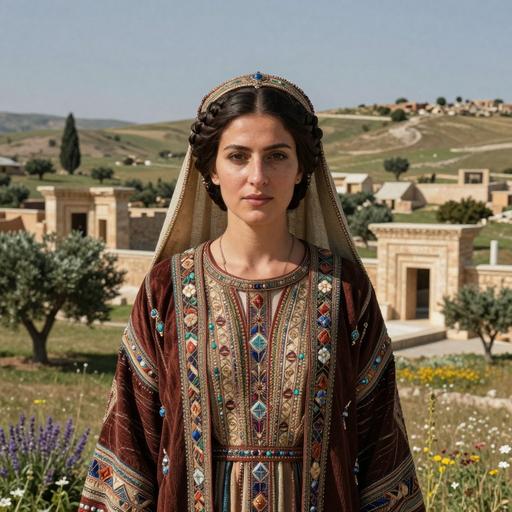
Portrait reconstruction of BOG028
Ancient Individual

A woman buried in Turkey in the Medieval-Modern era

BOG028
1000 CE - 1900 CE
Female
Modern Turkish (Boğazköy-Hattuša) 1000-1900 CE
Turkey
Scroll to begin
Chapter I

Identity

The biological and cultural markers that define this ancient individual

Sample ID

BOG028

Date Range

1000 CE - 1900 CE

Biological Sex

Female

mtDNA Haplogroup

HV1b3b

Cultural Period

Modern Turkish (Boğazköy-Hattuša) 1000-1900 CE

Chapter II

Place

Where this individual was discovered

Country Turkey
Locality Boğazköy-Ḫattuša (Çorum, Boğazkale)
Coordinates 40.0210, 34.6130
Chapter III

Time

When this individual lived in the broader context of human history

BOG028 1000 CE - 1900 CE
Chapter IV

Story

The narrative of this ancient life

The timeframe from 1000 to 1900 CE covers a significant portion of the Islamic and Ottoman periods in the region of what is now modern Turkey, particularly in relation to the ancient city of Boğazköy-Hattuša. However, some clarification is necessary as Boğazköy-Hattuša itself, the capital of the Hittite Empire, witnessed its period of major cultural and political prominence much earlier, around the 2nd millennium BCE. By the medieval and early modern periods (1000-1900 CE), the landscape and cultural significance had shifted. Nevertheless, the entire Anatolian region, including Boğazköy-Hattuša, is richly woven into the tapestry of Turkish history during these centuries, particularly within the context of the Byzantine period, Seljuk period, and, most significantly, the Ottoman Empire.

1. Context and Transformation (1000-1300 CE)

  • Byzantine Influence: Up until the arrival of the Seljuks, the areas around Hattuša were under Byzantine influence. The region was marked by smaller overlapping dominions and the persistence of Christian communities and Byzantine culture.

  • Seljuk Conquest and Influence: Following the Battle of Manzikert in 1071, the Seljuks gradually dominated much of Anatolia. The establishment of the Sultanate of Rum brought new Islamic cultural influences, architectural styles, and the development of Turkish as a lingua franca.

  • Cultural Synthesis: Under the Seljuks and the early Turkish Beyliks, there was a significant synthesis of Persian, Islamic, and Turkic elements, visible in architecture, literature, and art. Anatolian cities flourished as trade and cultural hubs connecting the East and West.

2. Rise of the Ottomans (1300-1600 CE)

  • Ottoman Emergence: The formation and expansion of the Ottoman Empire began around the late 13th century. By the 15th century, the Ottomans controlled a vast region extending into Europe, North Africa, and the Middle East, transforming the social and political landscape of Anatolia.

  • Constantinople/Istanbul: The conquest of Constantinople in 1453 marked a turning point, establishing the city (renamed İstanbul) as the capital and a vibrant center of political and cultural life. This period saw a remarkable renaissance in arts, architecture, and scholarship.

  • Suleiman the Magnificent: The 16th century, particularly under Suleiman the Magnificent, was a golden age with extensive legal reforms, architectural achievements such as the Süleymaniye Mosque, and cultural patronage. Art, music, poetry, and crafts thrived.

  • Diverse Society: The Ottoman Empire was marked by ethnic, linguistic, and religious diversity. The millet system allowed various communities to govern themselves under their own laws, contributing to a rich cultural mosaic.

3. The Transformation and Challenges (1600-1900 CE)

  • Administrative Changes and Decline: The later centuries saw periods of instability and attempts at reform. The empire struggled with military defeats, administrative inefficiencies, and the challenge of modernizing its institutions in the face of European ascendancy.

  • Tanzimat Reforms: In the 19th century, the Tanzimat reforms sought to modernize the empire’s bureaucracy, military, and education systems. Efforts included legal reforms aiming for greater equality and modernization inspired by Western models.

  • Cultural Shifts: Despite political challenges, cultural life continued to flourish, with greater exposure to European influences in art, education, and science. This era also saw a rise in nationalist sentiments both among various communities within the empire and within the broader Turkish population.

4. Local Context of Boğazköy-Hattuša

  • Archaeological Rediscovery: Hattuša was largely forgotten until its archaeological rediscovery in the late 19th century. The site of ancient Hittite significance began to receive attention from both Ottoman officials and European archaeologists.

  • Symbolic Significance: While not a major urban center, Boğazköy-Hattuša served as a symbolic bridge to Anatolia’s ancient past, crucial in the later nationalist narratives of the Turkish Republic.

Conclusion

The period from 1000 to 1900 CE in Anatolia, particularly within the context of the Ottoman Empire, was one of dramatic transformation. The blending and clashing of various cultures, coupled with the challenges of modernization, set the foundation for the developments of the 20th century, including the rise of the modern Turkish state. The rediscovery of ancient sites like Hattuša would eventually contribute to a renewed interest in Turkey’s distant past and cultural heritage.

Chapter V

Context

Other ancient individuals connected to this sample

Sources

References

Scientific publications and genetic data

Scientific Publication

Spatial and temporal heterogeneity in human mobility patterns in Holocene Southwest Asia and the East Mediterranean

Authors Koptekin D, Yüncü E, Rodríguez-Varela R
Abstract

We present a spatiotemporal picture of human genetic diversity in Anatolia, Iran, Levant, South Caucasus, and the Aegean, a broad region that experienced the earliest Neolithic transition and the emergence of complex hierarchical societies. Combining 35 new ancient shotgun genomes with 382 ancient and 23 present-day published genomes, we found that genetic diversity within each region steadily increased through the Holocene. We further observed that the inferred sources of gene flow shifted in time. In the first half of the Holocene, Southwest Asian and the East Mediterranean populations homogenized among themselves. Starting with the Bronze Age, however, regional populations diverged from each other, most likely driven by gene flow from external sources, which we term "the expanding mobility model." Interestingly, this increase in inter-regional divergence can be captured by outgroup-f3-based genetic distances, but not by the commonly used FST statistic, due to the sensitivity of FST, but not outgroup-f3, to within-population diversity. Finally, we report a temporal trend of increasing male bias in admixture events through the Holocene.

Use code for 40% off Expires Feb 27